
Introduction
Tulsi is one of the most loved plants in Indian homes. This guide explains practical Tulsi Plant Vastu for apartments, balconies, terraces, and independent houses with a calm educational approach.
This article is written for Indian homeowners, tenants, flat buyers, and property owners who want a practical approach. The aim is to explain what to do, what to avoid, and how to improve the home without creating fear or unnecessary renovation.
Table of contents
Best direction
Understand preferred zones and practical alternatives.
Apartment tips
Use rental-friendly, no-demolition solutions.
Checklist
Review mistakes, care, and daily maintenance.
Why Tulsi is important in Indian homes
Tulsi is associated with purity, daily care, freshness, and a respectful home routine. Many families keep it in a balcony, courtyard, terrace, or near a sunny window. In Vastu, Tulsi is often connected with positive daily habits, but it should never be treated with fear. A neglected plant in an ideal direction is not better than a healthy plant in a practical place.
Modern apartments make Tulsi placement slightly tricky because sunlight, balcony direction, society rules, and watering access vary. The best placement is one where the plant gets adequate light, fresh air, drainage, and regular care.
Best direction for Tulsi plant
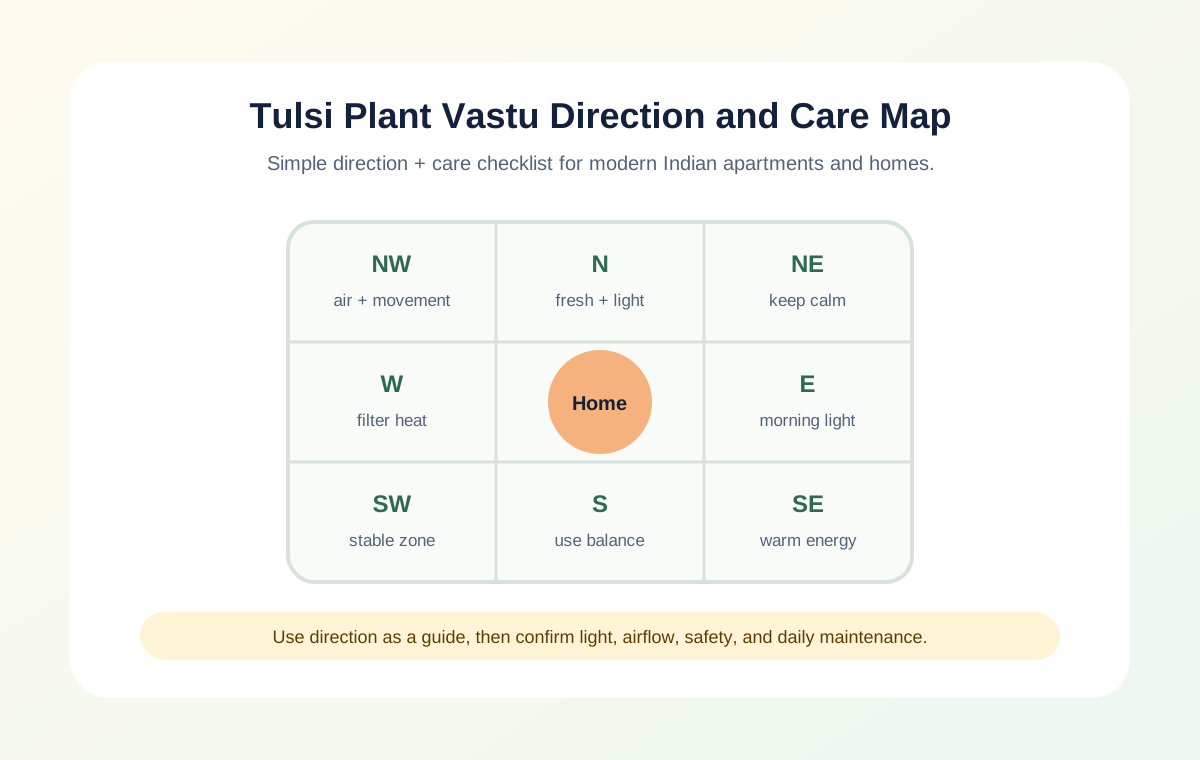
North, east, and north-east are commonly preferred for Tulsi placement in many Vastu traditions. These directions are associated with freshness, clarity, and morning light. If your balcony faces east, it is often a practical choice because Tulsi usually receives gentle morning sunlight.
If north-east is not available, do not panic. Choose a bright, clean spot where the plant can survive well. Plant health is a practical priority. Avoid dark corners, closed bathrooms, dirty utility spaces, and places where water stagnates.
Tulsi in apartment balconies
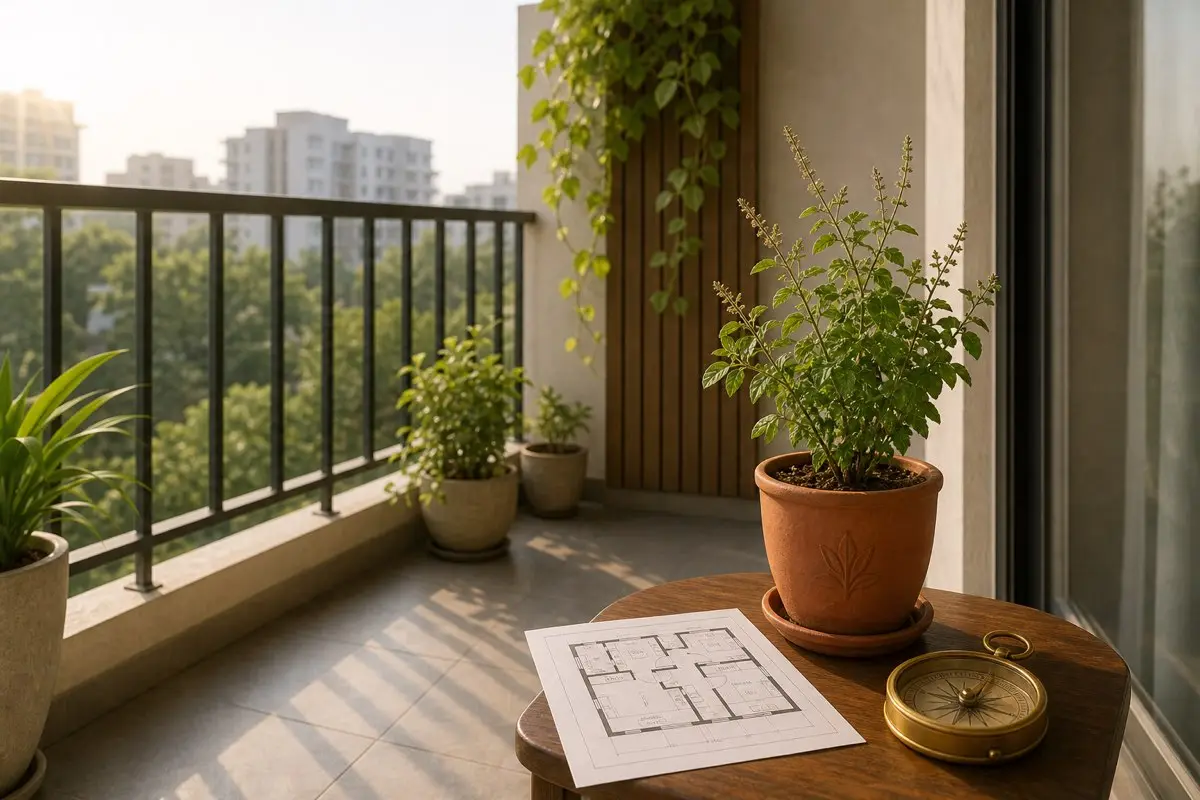
For flats, the balcony is usually the best location if it receives enough light. Keep the pot stable, avoid blocking the walking path, and ensure water does not drip onto lower floors. Use a saucer carefully, but do not allow stagnant water to become a mosquito problem.
If the balcony is west-facing and gets harsh evening sun, give the plant filtered light or shift it slightly. If the balcony is shaded, use the brightest available corner. Apartment Vastu must work with real sunlight and building design.
Tulsi in independent houses
In independent houses, Tulsi may be kept in a courtyard, front garden, terrace, or open verandah. Keep the area clean and accessible. If using a raised Tulsi planter, make sure it is stable and not blocking entrance movement. The plant should feel cared for, not abandoned as a symbolic object.
Avoid placing Tulsi in a dirty corner near waste, drainage smell, or heavy clutter. If the front area is too dusty or polluted, choose a cleaner sunny location inside the compound.
Pot, soil, watering, and care
Terracotta pots are popular because they breathe well and look natural. Ensure drainage holes are open. Use healthy soil, avoid overwatering, and trim dry leaves gently. A plant that is overwatered or underlit will struggle even in a preferred direction.
Tulsi care is a routine. Check sunlight, water, pests, and soil. In hot summers, it may need protection from extreme heat. In monsoon, drainage becomes important. Vastu-friendly plant placement includes seasonal care.
Comparison table
The table below helps compare common Tulsi placement options for Indian homes and flats.
Common mistakes
Common mistakes include keeping Tulsi in a dark corner, overwatering, allowing stagnant water, placing the pot in a dirty utility space, and keeping a dead plant for sentimental reasons. If the plant has dried completely, compost or remove it respectfully and start fresh.
Another mistake is copying someone else’s direction without checking your own sunlight. A north-east balcony in one building may be bright; another may be blocked by a neighbouring tower. Observe your home first.
Modern examples
In a compact 2BHK with an east balcony, keep Tulsi near the railing where it gets morning light but does not block movement. In a north-facing apartment with limited sunlight, use the brightest window ledge or balcony corner. In a villa with a courtyard, a neat raised planter can become a beautiful daily-care point.
For rental homes, use a movable pot rather than permanent construction. If society rules restrict balcony plants, use a small stable pot and avoid water dripping. Practical responsibility is also part of good Vastu.
Best practices checklist
Choose north, east, or north-east when practical. Prioritize sunlight and drainage. Keep the area clean. Avoid stagnant water. Remove dry leaves. Use a stable pot. Do not block balcony movement. Respect society rules. Keep the plant healthy rather than symbolic only.
Daily care routine for Tulsi
A Tulsi plant becomes meaningful when it is part of a respectful routine. Check the soil before watering instead of watering automatically. If the soil is still wet, wait. If the plant is drooping because of heat, water gently and move it to filtered light. Remove dry leaves and keep the pot area clean. These small actions create a sense of care and order in the home.
Morning light is helpful for many Tulsi plants, but harsh heat can be stressful. In summer, the plant may need partial shade during the strongest hours. In monsoon, make sure the pot drains properly. In winter, growth may slow down. Vastu advice should respect the living needs of the plant across seasons.
If you travel often, arrange simple plant care instead of leaving the pot to dry. A self-watering system, helpful neighbour, or temporary shaded position may help. A healthy Tulsi plant reflects maintenance, not just placement.
Tulsi placement for different apartment types
In a 1BHK apartment, the balcony may also be used for drying clothes, storage, and utility work. Keep Tulsi in a stable corner where it receives light but does not get crowded by laundry stands. Do not place detergent bottles, old mops, or waste near the plant. A small clean corner is enough.
In a 2BHK or 3BHK flat with multiple balconies, choose the brighter and cleaner balcony. If one balcony faces a busy road and the other receives calmer morning light, the calmer balcony may be better even if the direction is not textbook perfect. Practical observation is important.
In high-rise apartments, wind can be strong. Use a heavier pot or safe stand so the plant does not fall. Never place pots loosely on narrow railings. Safety for people below is more important than any direction rule.
Respectful mistakes to avoid
Avoid turning Tulsi placement into anxiety. If a plant dries because of weather, pests, travel, or watering mistakes, learn from it and replant. Do not keep a dead plant in the same place for weeks. Remove it respectfully, clean the pot, refresh the soil, and start again if you wish.
Avoid overcrowding Tulsi with too many decorative objects. Keep the area simple. If your family follows spiritual routines, keep them clean and personal. If you are using Tulsi mainly as a plant, care for it as a living plant. Both approaches require cleanliness and respect.
Avoid using chemical sprays carelessly near food plants. If pests appear, identify the issue and use safe methods. The goal is a healthy plant and a clean balcony, not a symbolic item neglected in a corner.
Tulsi care during festivals and travel
During festivals, many homes clean balconies and entrances more carefully. This is a good time to refresh the Tulsi area, remove dry leaves, wash the pot exterior, and check whether the stand is stable. Do not overload the plant area with temporary decorations that block light or make watering difficult. A simple, clean setup usually feels more respectful than a crowded one.
When travelling, move the pot to a safer position where it receives filtered light and does not dry out too quickly. If a neighbour or family member waters it, explain the amount clearly because overwatering can damage Tulsi as much as underwatering. For longer trips, use a larger saucer only if mosquito risk is controlled. Practical planning keeps the plant healthy and avoids returning to a dried or waterlogged pot.
Comparison table
| Situation | Best practice | Avoid |
|---|---|---|
| Modern apartment | Use movable, clean, easy-maintenance solutions. | Permanent changes without checking light, rules, and space. |
| Independent house | Plan placement with direction, use, airflow, and access. | Copying a flat layout without considering site conditions. |
| Rental home | Choose non-damaging, portable corrections. | Drilling, heavy installations, or risky changes without approval. |
Related Vastu guides
Continue with these helpful internal guides:
- Homepage
- Balcony Vastu
- Balcony Garden Vastu
- Vastu Plants
- Balcony Garden Tips
- Apartment Vastu
- Direction Vastu
- Vastu FAQ
Summary
The best Vastu choice is usually the one that supports direction, cleanliness, light, movement, safety, and daily use together. Start with practical improvements first. A clean, healthy, well-maintained home detail is more valuable than a symbolic placement that is neglected.
Final review checklist before you decide
Before making the final choice, review the area at three different times: morning, afternoon, and evening. Notice how light enters, where shadows fall, how people move, and whether the placement creates any cleaning or safety problem. This simple observation is especially useful in Indian apartments because the same direction can feel very different depending on nearby buildings, balcony depth, road dust, and window size.
Next, ask whether the solution is easy to maintain. If it needs constant cleaning, difficult watering, expensive hardware, or frequent shifting, it may not be practical for your family. Good Vastu should support routine, not create a new burden. Choose the option that stays neat during normal working days, not only when the home is freshly arranged.
Finally, connect the choice with the whole home. A curtain, plant, or décor item should not fight the entrance, block a window, crowd the balcony, or disturb a work desk. The best result comes when direction, design, maintenance, and family habits agree. That is the calm, long-term approach readers can trust.
Frequently asked questions
Which direction is best for Tulsi plant?
North, east, and north-east are commonly preferred, but plant health, sunlight, and cleanliness are also important.
Can Tulsi be kept in balcony?
Yes, a balcony is often practical if it provides light, air, drainage, and safe placement.
Can Tulsi be kept in west-facing balcony?
It can be managed if the plant is protected from harsh heat and receives suitable care.
Should Tulsi be kept indoors?
It may be kept near a bright window, but it usually needs good light and airflow.
What should be avoided near Tulsi?
Avoid dirt, waste, stagnant water, clutter, and dark neglected corners.
Which pot is good for Tulsi?
Terracotta or breathable pots with proper drainage are practical choices.
What if Tulsi dries?
Remove it respectfully, check the cause, and replant with better light, water, and soil conditions.
Is Tulsi suitable for rented flats?
Yes, use a movable pot and follow balcony or society rules.
Conclusion
Use Vastu as a thoughtful planning guide, not as pressure. Choose a direction where possible, but confirm that the placement works in real life. For apartments and rental homes, small changes often bring the best results because they are affordable, reversible, and easy to maintain.