
Introduction
Curtains are one of the easiest Vastu-friendly changes for a rented flat or modern apartment because they do not need construction. This guide explains how to choose curtain colours, fabric weight, direction, and placement for windows and doors without fear-based claims.
This article is written for Indian homeowners, tenants, flat buyers, and property owners who want a practical approach. The aim is to explain what to do, what to avoid, and how to improve the home without creating fear or unnecessary renovation.
Table of contents
Best direction
Understand preferred zones and practical alternatives.
Apartment tips
Use rental-friendly, no-demolition solutions.
Checklist
Review mistakes, care, and daily maintenance.
Why curtains matter in Vastu
Curtains control light, privacy, heat, dust, and the way a room feels. In Vastu, doors and windows are openings through which light, air, sound, and movement enter the home. A curtain is not a magical object, but it can soften a harsh window, hide an unpleasant view, reduce glare, and make the home feel more settled.
For Indian apartments, curtains are especially useful because many flats face another building, a busy road, a shaft, or strong west sunlight. You may not be able to change the window location, but you can choose fabric, colour, length, and layering wisely. That makes curtains a practical no-demolition remedy.
Best curtain colours by direction
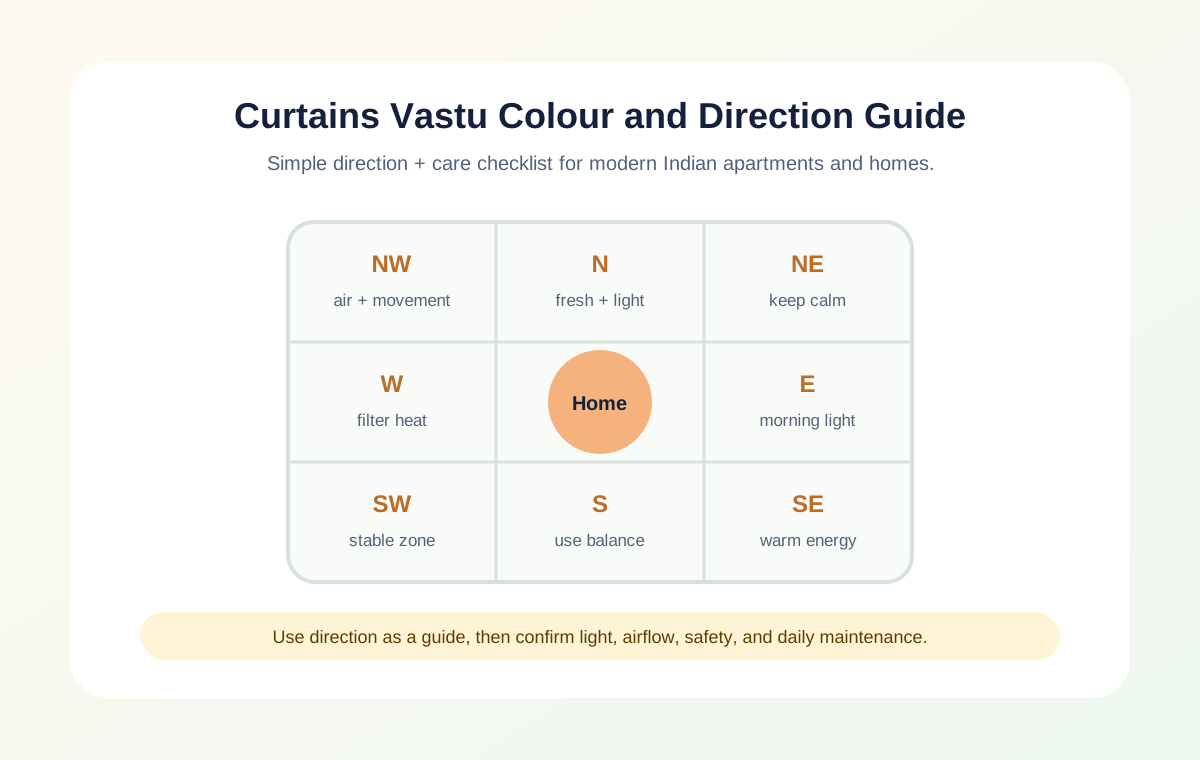
For east-facing windows, use soft yellow, cream, white, pale peach, or light green because these colours support morning brightness. For north windows, use white, mint, light blue, or gentle green to keep the space fresh and open. For west windows, beige, cream, earthy brown, or layered curtains can reduce harsh evening glare.
For south and south-west windows, choose grounded neutrals, beige, taupe, warm grey, or heavier fabrics where privacy and heat control are needed. Avoid making the room gloomy. The best curtain colour is the one that supports direction, daylight, furniture, and room purpose together.
Curtains for main door and entrance
Many homes use a curtain near the main door when the entrance opens directly into the living room. This can create privacy, but it should not make the entrance dark or blocked. Use a clean, well-maintained curtain in a welcoming colour. Avoid torn, dusty, or overly heavy curtains at the entrance.
If the main door faces a long passage or another door, a light screen curtain can soften direct visibility. Keep it easy to move and avoid fabrics that drag on the floor. For deeper entrance planning, connect this with main door Vastu and direction checking.
Living room curtain tips
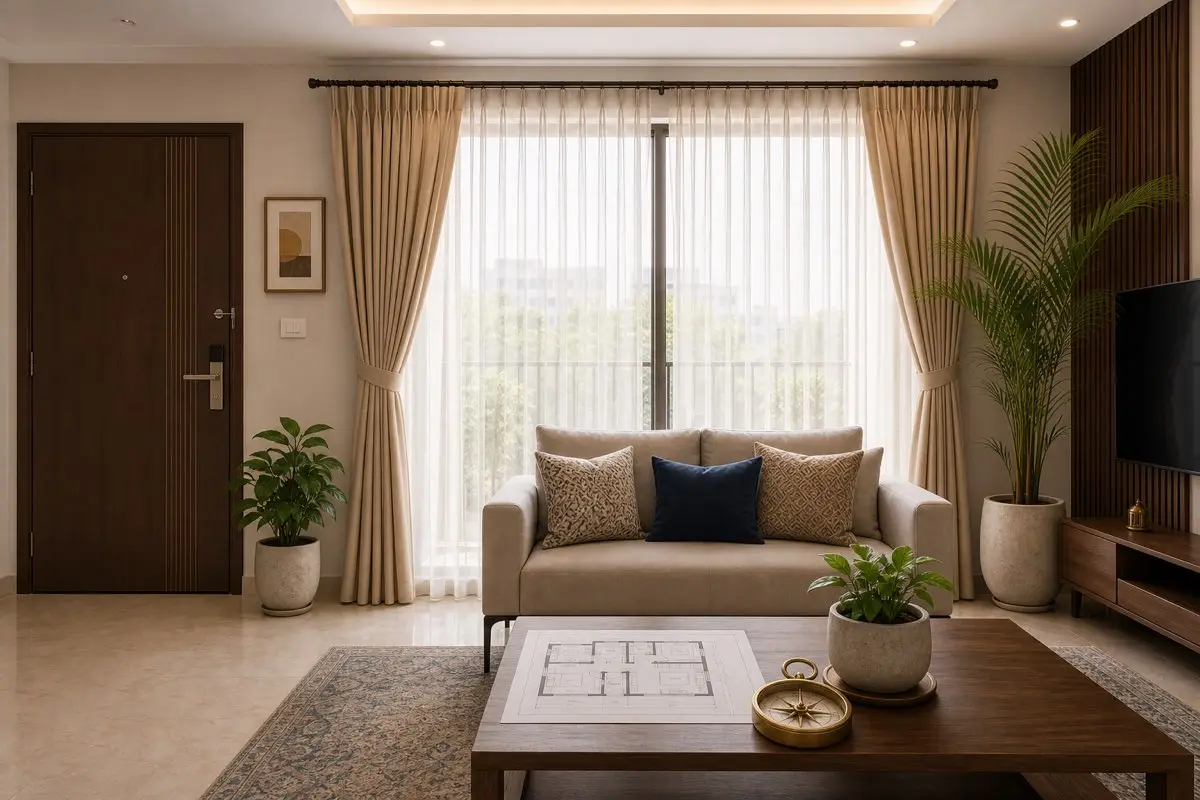
Living room curtains should make the space feel welcoming. Cream, beige, light gold, sage, soft green, and warm neutrals work well in most Indian homes. If the living room is small, avoid very dark curtains across the full wall. They may look dramatic online but can make a compact flat feel smaller.
Layering is useful: a sheer curtain for daylight and privacy, plus a thicker curtain for evening. This gives flexibility without changing the window. A living room with clean curtains, balanced light, and less clutter instantly feels more premium.
Bedroom curtain tips
Bedroom curtains should support rest. Use calmer shades such as beige, cream, muted green, soft blue, dusty rose, or warm grey. Avoid loud patterns directly opposite the bed if they keep the mind active. Blackout curtains can be practical in cities, but choose a colour that does not make the room feel heavy during the day.
If the bed faces a window, curtains can soften the visual pull of the opening. Keep them clean and ensure they open during the day for air and light. A permanently closed bedroom becomes dull, regardless of Vastu direction.
Fabric, length, and maintenance
Cotton, linen blends, and washable fabrics work well for most Indian homes. Heavy velvet may look luxurious but can trap dust in polluted cities. Kitchens and balconies need easy-clean fabrics. Floor-length curtains look elegant, but they should not collect dirt, block airflow, or become a trip hazard.
Maintenance matters. Dusty curtains affect air quality and make the home feel neglected. Wash or vacuum curtains regularly, especially near roads, kitchens, and balconies. Vastu is stronger when cleanliness supports the material choice.
Comparison table
Use the comparison table below as a simple buying guide before choosing curtains for a flat, villa, or rental home.
Common mistakes
Common mistakes include choosing curtains only by trend, ignoring direction, making small rooms too dark, using damaged rods, letting fabric drag on dirty floors, and never washing curtains. Another mistake is using the same curtain colour in every room even when each room has different light and purpose.
Avoid fear-based thinking. If you already have a less ideal colour, start with cleaning, better tiebacks, sheer layering, or lighter accessories. Curtains are easy to change gradually.
Modern apartment examples
In a 1BHK flat with a west-facing living room, use cream sheers with thicker beige curtains to reduce heat. In a north-facing study corner, use light green or white curtains to keep the area fresh. In a bedroom facing a busy road, use double-layer curtains for privacy and sound softening.
For rented homes, use adjustable rods, clip rings, or non-damaging hooks where possible. Choose curtains you can carry to the next house. This makes the solution practical and budget-friendly.
Best practices checklist
Choose colours based on direction and room use. Keep entrance curtains clean and easy to move. Use sheers for daylight privacy. Use heavier layers only where heat, light, or privacy requires it. Wash curtains regularly. Avoid damaged rods and dusty fabric. Test the room in morning and evening light before finalising.
Practical examples for Indian homes
Example one: a 2BHK flat has a west-facing living room with strong afternoon heat. Instead of choosing very dark curtains, the family can use a white sheer layer and a beige blackout layer. During the day the sheer keeps privacy without blocking all light. In the evening the thicker curtain controls glare and heat. This gives practical comfort without making the living room heavy.
Example two: a rented apartment has a main door that opens directly into the sofa area. A light neutral curtain or folding screen near the entrance can create privacy, but it should not block the door or make the entrance look narrow. The curtain must be clean, easy to move, and proportionate. If shoes, parcels, or bags collect behind it, the solution becomes clutter instead of improvement.
Example three: a bedroom window faces another building. A double curtain setup helps privacy and rest. Use a soft inner sheer and a restful outer curtain in beige, muted green, or warm grey. Avoid loud red or harsh patterns directly opposite the bed. This improves sleep atmosphere while still allowing daylight when opened.
Buying guide for curtains
Before buying curtains, measure the window width, rod height, floor clearance, and wall colour. Curtains should usually be wider than the window so they fall naturally. If the curtain is too narrow, it looks stretched and cheap. If it is too long for a dusty balcony door, it becomes difficult to maintain. Practical measurement is part of good Vastu because it prevents daily irritation.
Choose fabric based on room use. Living rooms can use elegant linen blends, cotton blends, or layered sheers. Bedrooms may need privacy and blackout lining. Kitchens and utility areas need washable, lightweight fabrics. Balcony doors need fabric that can handle dust and frequent movement. A beautiful curtain that cannot be cleaned easily is not ideal for Indian weather.
Also check the curtain rod, brackets, rings, and tiebacks. A weak rod or broken bracket makes even expensive curtains look neglected. Tiebacks should hold fabric neatly without damaging it. If using rented-home fixtures, choose lightweight curtains and removable hardware.
How curtains work as no-demolition remedies
Curtains are useful because they can soften a fixed problem without changing structure. If a window faces a busy road, curtains reduce visual disturbance. If a balcony receives harsh sunlight, curtains control heat. If a room feels exposed from the main door, curtains provide privacy. These are practical remedies, not supernatural guarantees.
Use curtains along with cleaning, furniture placement, and lighting. For example, if the living room window is west-facing and hot, curtains help, but ventilation, plants, and lighter wall colours also matter. If the bedroom is too dark, heavy curtains may worsen the issue. Always solve the actual problem: glare, privacy, dust, heat, or visual imbalance.
Comparison table
| Situation | Best practice | Avoid |
|---|---|---|
| Modern apartment | Use movable, clean, easy-maintenance solutions. | Permanent changes without checking light, rules, and space. |
| Independent house | Plan placement with direction, use, airflow, and access. | Copying a flat layout without considering site conditions. |
| Rental home | Choose non-damaging, portable corrections. | Drilling, heavy installations, or risky changes without approval. |
Related Vastu guides
Continue with these helpful internal guides:
- Homepage
- Direction Vastu
- Living Room Vastu
- Bedroom Vastu
- Curtain Colour Vastu
- Windows Vastu
- Main Door Mistakes
- Vastu FAQ
Summary
The best Vastu choice is usually the one that supports direction, cleanliness, light, movement, safety, and daily use together. Start with practical improvements first. A clean, healthy, well-maintained home detail is more valuable than a symbolic placement that is neglected.
Final review checklist before you decide
Before making the final choice, review the area at three different times: morning, afternoon, and evening. Notice how light enters, where shadows fall, how people move, and whether the placement creates any cleaning or safety problem. This simple observation is especially useful in Indian apartments because the same direction can feel very different depending on nearby buildings, balcony depth, road dust, and window size.
Next, ask whether the solution is easy to maintain. If it needs constant cleaning, difficult watering, expensive hardware, or frequent shifting, it may not be practical for your family. Good Vastu should support routine, not create a new burden. Choose the option that stays neat during normal working days, not only when the home is freshly arranged.
Finally, connect the choice with the whole home. A curtain, plant, or décor item should not fight the entrance, block a window, crowd the balcony, or disturb a work desk. The best result comes when direction, design, maintenance, and family habits agree. That is the calm, long-term approach readers can trust.
Frequently asked questions
Which curtain colour is best as per Vastu?
Cream, white, beige, soft yellow, sage green, and light blue are safe choices depending on room direction and purpose.
Which curtains are best for west-facing windows?
Use beige, cream, earthy tones, or layered curtains to reduce harsh evening sunlight while keeping the room balanced.
Can curtains be used at the main door?
Yes, if they improve privacy without blocking light, movement, or cleanliness at the entrance.
Are black curtains bad in Vastu?
Black curtains are not automatically bad, but full black curtains can make small rooms heavy. Use them carefully, mainly for practical blackout needs.
Which curtains are best for bedroom?
Soft, restful colours with good privacy work best. Muted green, beige, cream, soft blue, and warm grey are practical options.
Should curtains touch the floor?
They can, if kept clean. Avoid fabric dragging on dusty floors or blocking doors and windows.
Can curtains fix a bad window direction?
They cannot change direction, but they can soften glare, privacy issues, dust, and harsh views.
How often should curtains be cleaned?
In Indian homes, clean or wash them regularly, especially near roads, kitchens, and balconies.
Conclusion
Use Vastu as a thoughtful planning guide, not as pressure. Choose a direction where possible, but confirm that the placement works in real life. For apartments and rental homes, small changes often bring the best results because they are affordable, reversible, and easy to maintain.