
On this page
Quick answer: why HOA rules matter for Vastu buyers
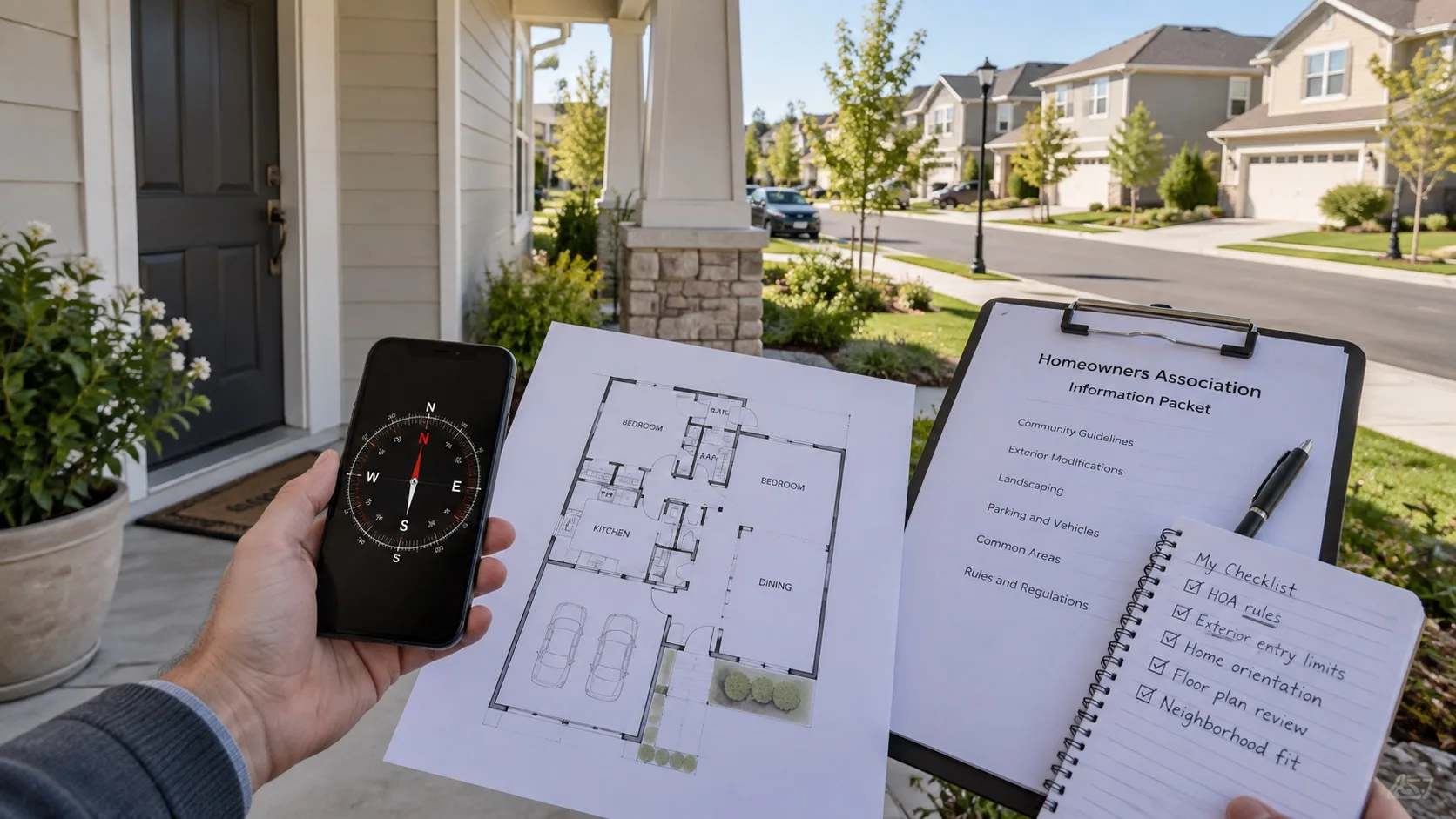
An HOA can affect how much you can change after buying. A detached house, townhouse, condo or planned community may have rules for exterior paint, doors, plants, fences, lighting, window coverings, parking, patios, balconies, solar panels, satellite dishes, rental use and architectural approvals. For a Vastu-focused buyer, those rules matter because many popular corrections are outside the front door, near windows, in the garden or on visible exterior surfaces.
This does not mean HOA homes should be avoided. Many association communities are clean, safe, well maintained and practical for busy families. The goal is to know the rules before you fall in love with staging. If the basic layout is strong and the needed improvements are mostly indoor, movable and rule-compliant, the home may still be excellent.
Use Vastu as one part of due diligence. It should sit beside inspection, financing, insurance, property taxes, commute, school needs, community fees and legal review. This guide is educational only and is not legal, real estate, inspection or financial advice.
What HOA documents can control
Start with the covenants, conditions and restrictions, architectural guidelines, bylaws, rules and meeting notes when available. In condos, also review the master deed, strata or condominium documents, reserve information and rules for common elements. These papers may feel boring, but they can decide whether your preferred Vastu changes are simple, delayed or impossible.
Exterior doors are a common example. A buyer may want to repaint the main door, change hardware, add a symbol, install a different light or place a large planter. Some communities allow these with approval; others require a fixed color and style. If entry appearance is central to your plan, check it before removing contingencies.
Window treatments also matter. Many communities require white or neutral window coverings facing the street. If a room receives harsh west light, your practical solution may be curtains, shades or films. The interior side may be flexible, but the exterior-facing side may be regulated. A good remedy is the one that improves comfort without creating a violation.
For broader buyer review, pair this checklist with Open House Vastu Checklist for USA Home Buyers and Vastu and Resale Value for USA Home Buyers.
Entry, exterior approach and daily arrival
The main entrance is important in Vastu because it shapes arrival, visibility and movement into the home. In an HOA setting, the entrance is also a controlled exterior feature. Check the direction of the actual door, the path from parking, lighting at night, drainage near the threshold, package delivery location and whether plants or decor are allowed near the front.
Do not judge only by the formal front door. In many USA homes, families enter through a garage, side gate, building lobby or elevator corridor. That daily entrance should be safe, bright and easy to keep clean. If the official main door has a favorable direction but the family never uses it, the practical experience of the home may come from another route.
Look for clutter traps. Narrow porches, shared hallways, small condo vestibules and garage mudrooms can become crowded with shoes, sports items, packages and recycling. A home that allows a clean arrival routine will usually feel better than a home where the entrance becomes a storage problem. For more detail, read Main Door Vastu.
Landscaping, plants, fences and colors
Many Vastu suggestions use plants, water, light and color to soften a space. In HOA communities, these can be regulated. Front-yard plant choices, tree removal, lawn standards, raised beds, artificial turf, fence height, gate style and exterior color may need approval. Before buying, ask whether your intended changes are maintenance choices or architectural changes.
Plants are often the easiest place to adapt. If a front-yard change is not allowed, use permitted containers, indoor plants near good light or balcony plants that meet size and drainage rules. Avoid blocking paths or windows. A plant that is poorly suited to the climate, neglected or placed where it creates maintenance problems is not a good remedy.
Water features need extra care. A visible fountain, pond or exterior bowl may violate community rules, attract pests, create slip risk or need electrical work. If water symbolism is important to your tradition, keep it simple and safe. Indoor decor can be easier than exterior construction, but even indoor aquariums should be reviewed for weight, maintenance and family routine.
Condos, townhomes, patios and balconies
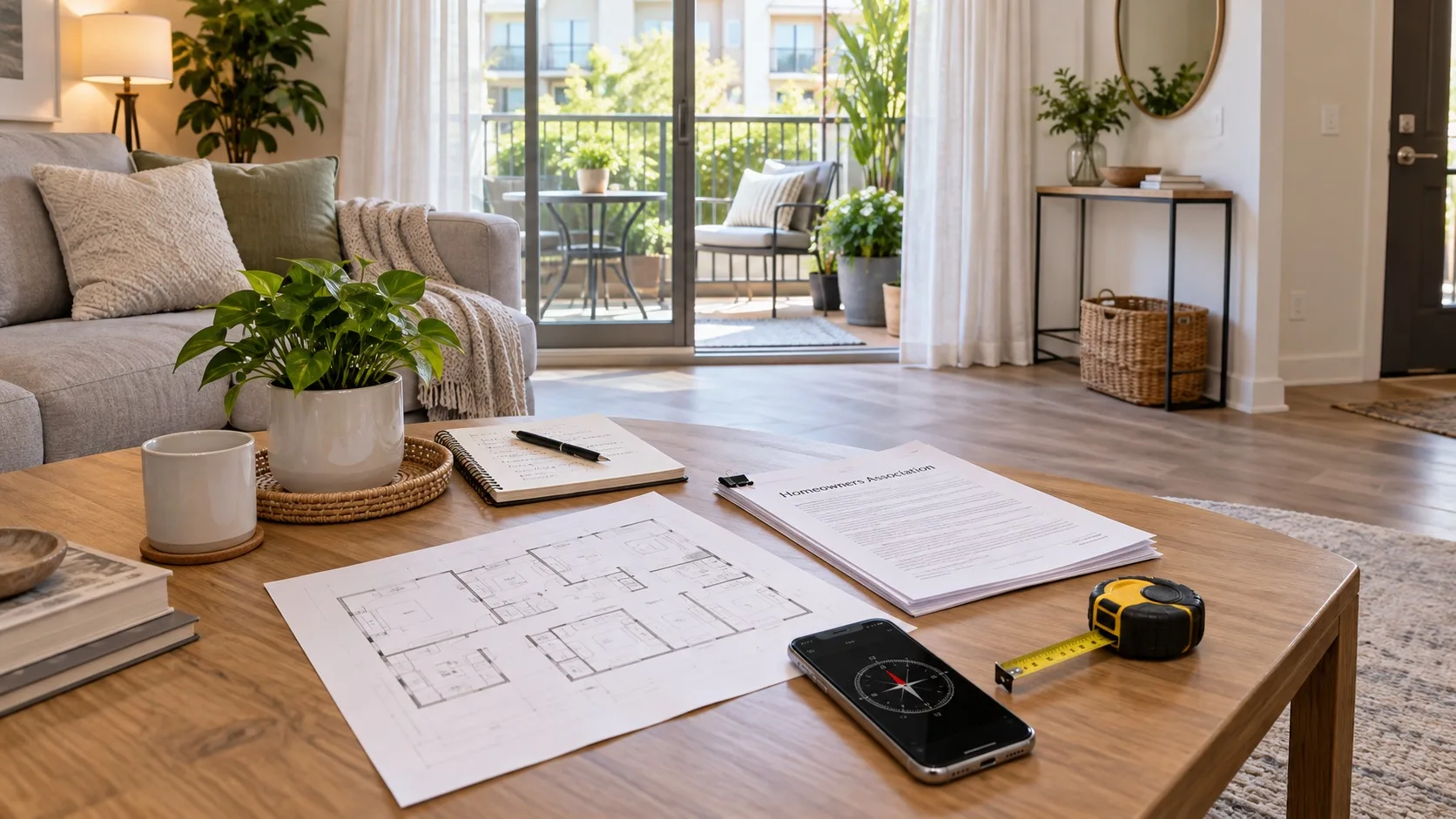
Condos and townhomes can be excellent choices for international families because they reduce exterior maintenance. They also create Vastu constraints. You may share walls, floors, roofs, hallways, elevators, parking areas, plumbing stacks and exterior surfaces. Before judging the unit, identify what you own privately and what belongs to the association or building.
Balconies and patios deserve special attention. Rules may limit planters, grills, lights, storage, curtains, screens, rugs, furniture size and anything attached to railings. A balcony can support fresh air and plants, but only when drainage, safety and rules are respected. For more room-level ideas, see Balcony Garden Vastu.
Townhomes often use garage entries and stairs. Check whether the garage door, mudroom, stairs and kitchen create a natural daily flow. Shared-wall noise can affect bedrooms and work areas. In condos, elevator noise, trash rooms and mechanical rooms may matter more than textbook direction. Use the practical principle behind Vastu: clean arrival, safe fire area, restful sleep, healthy air and low clutter.
For a focused property-type checklist, continue with Vastu for USA Condos and Townhomes.
HOA-safe Vastu remedies to prefer first
The safest remedies are usually reversible, indoors and aligned with ordinary home comfort. Use lighting for dark corners, curtains or shades for glare, rugs for warmth and sound, closed storage for clutter, plants where there is real light, better cleaning routines, practical furniture placement and calm colors that do not affect exterior appearance.
Do not drill, paint, change exterior doors, install permanent fixtures or alter landscape until you know the rules. Even inside the home, condos may have restrictions for flooring, plumbing, walls, exhaust fans and structural changes. A remedy that leads to fines, neighbor complaints or insurance problems does not create peace.
Separate fixed concerns from fixable concerns. Fixed concerns include unit orientation, building location, shared walls, plumbing shafts, stair placement, garage position and exterior control. Fixable concerns include bed placement, desk direction, lighting, curtains, storage, plants and daily routine. A home with fixable issues may be a strong purchase; a home with serious fixed issues needs slower review.
For no-demolition ideas, read Vastu Remedies Without Demolition and Renting Before Buying: Vastu Checklist.
HOA and Vastu comparison table
| Topic | Check before buying | Vastu concern | Low-risk response |
|---|---|---|---|
| Main door | Paint, hardware, decor and lighting rules | Entry impression and direction | Improve cleanliness, mat, indoor lighting and storage first |
| Windows | Visible curtain and shade standards | Glare, heat, privacy and light | Use approved interior curtains or shades |
| Landscape | Plant list, lawn rules and approval process | Greenery, approach and balance | Choose permitted plants and easy maintenance |
| Balcony | Planters, grills, lights, screens and storage | Air, plants and outdoor use | Use safe movable items within rules |
| Garage | Parking, storage and exterior visibility | Daily entry and clutter | Keep clear path, light and organized storage |
| Renovation | Architectural approval and permits | Kitchen, walls, doors and utilities | Use professional review before structural changes |
Realistic buyer examples
Townhome with strict front-door color
The buyer cannot repaint the door, but the entry has good light and a clean path. They plan an approved mat, indoor console, warm lamp and organized shoe storage.
Condo with west-facing glass
The view is bright but hot in summer. The HOA requires neutral window coverings, so the buyer chooses approved shades and places the work desk away from glare.
Detached home with landscape limits
The association controls front-yard plants. The family keeps the required exterior simple and uses permitted containers plus indoor plants near natural light.
Garage-entry family
The main door is rarely used. The buyer reviews the garage-to-kitchen route, adds better light after closing and keeps the path free from storage clutter.
International buyer
The buyer asks for HOA documents before the offer deadline and has a local agent record the entry, patio, parking and interior light at different times.
Rental-restricted community
The property layout is good, but rental rules affect future flexibility. The buyer reviews resale plans instead of treating Vastu alone as the deciding factor.
Offer-period checklist
During the offer or contingency period, request the HOA packet early. Mark every rule that could affect your preferred changes. Ask your real estate professional which items are easy approvals, which are commonly rejected and which require board review. If the home has a patio, balcony, front yard or visible entry, compare the rulebook with your actual plans.
- Confirm the true daily entrance direction and path.
- Read exterior door, paint, lighting and decor restrictions.
- Check allowed plants, pots, fences, screens and patio items.
- Review garage, parking and storage rules.
- Check window covering standards for street-facing rooms.
- Ask about flooring, plumbing, exhaust and wall-change approvals in condos.
- Separate permanent construction from removable decor.
- Confirm fees, reserves and special assessment risk with professionals.
- Look at meeting notes for recurring disputes or maintenance problems.
- Do not rely on a verbal approval for a major change.
When to pause or walk away
Pause if the home needs a major exterior change to feel acceptable to you and the HOA is unlikely to approve it. Pause if the entry is unsafe, the drainage is poor, the building has unresolved maintenance problems or the documents reveal rules that conflict with your family plans. Also pause if the monthly fee, future assessments or rental rules affect affordability or resale more than expected.
On the other hand, do not reject a good home because one decorative idea is not allowed. Many Vastu improvements are about living habits, furniture, light, cleanliness, ventilation and organization. If those can be handled indoors, the association may not be a serious obstacle.
Related buyer guides
Use this article with Neighborhood Vastu Checklist for USA Home Buyers, Final Walkthrough Vastu Checklist, Vastu Home Inspection Checklist and Apartment Vastu. If you are still comparing property types, read Vastu for USA Single-Family Homes.
Frequently asked questions
Can I apply Vastu in an HOA community?
Yes. Use Vastu as a planning checklist for entry, light, rooms, storage and comfort while respecting HOA documents, local code and written approvals.
Should I buy a home if the HOA does not allow exterior Vastu changes?
It depends on the home. If the fixed layout is comfortable and most improvements can be done indoors with removable decor, the restriction may be manageable.
What HOA rules should Vastu buyers read first?
Read rules for exterior doors, paint, landscaping, fences, window treatments, balconies, patios, satellite dishes, solar panels, parking, rentals and architectural approvals.
Are plants, lights and curtains usually HOA-safe Vastu remedies?
Often yes when they are indoors or comply with community rules. Exterior plants, patio lights and visible window coverings should be checked against HOA documents first.
Can Vastu advice replace HOA or legal review?
No. This guide is educational only. Buyers should review HOA documents with qualified real estate, legal, inspection and financial professionals as needed.
What is the safest Vastu approach before closing in an HOA community?
Separate fixed layout concerns from removable improvements, read the HOA documents before the contingency period ends and avoid any permanent change without written approval.
Conclusion
HOA rules do not make a home good or bad by themselves. They simply define what can be changed, what needs approval and what should remain consistent for the community. For Vastu buyers, that clarity is useful. It prevents unrealistic plans and helps you focus on improvements that are practical, permitted and peaceful.
The best approach is calm due diligence: verify the direction, read the documents, inspect the daily entrance, study light and airflow, understand fixed limits and choose remedies that support real life. When Vastu and HOA rules are reviewed together before purchase, the home can be judged with less fear and better judgment.