
Quick answer: how should USA condo buyers use Vastu?
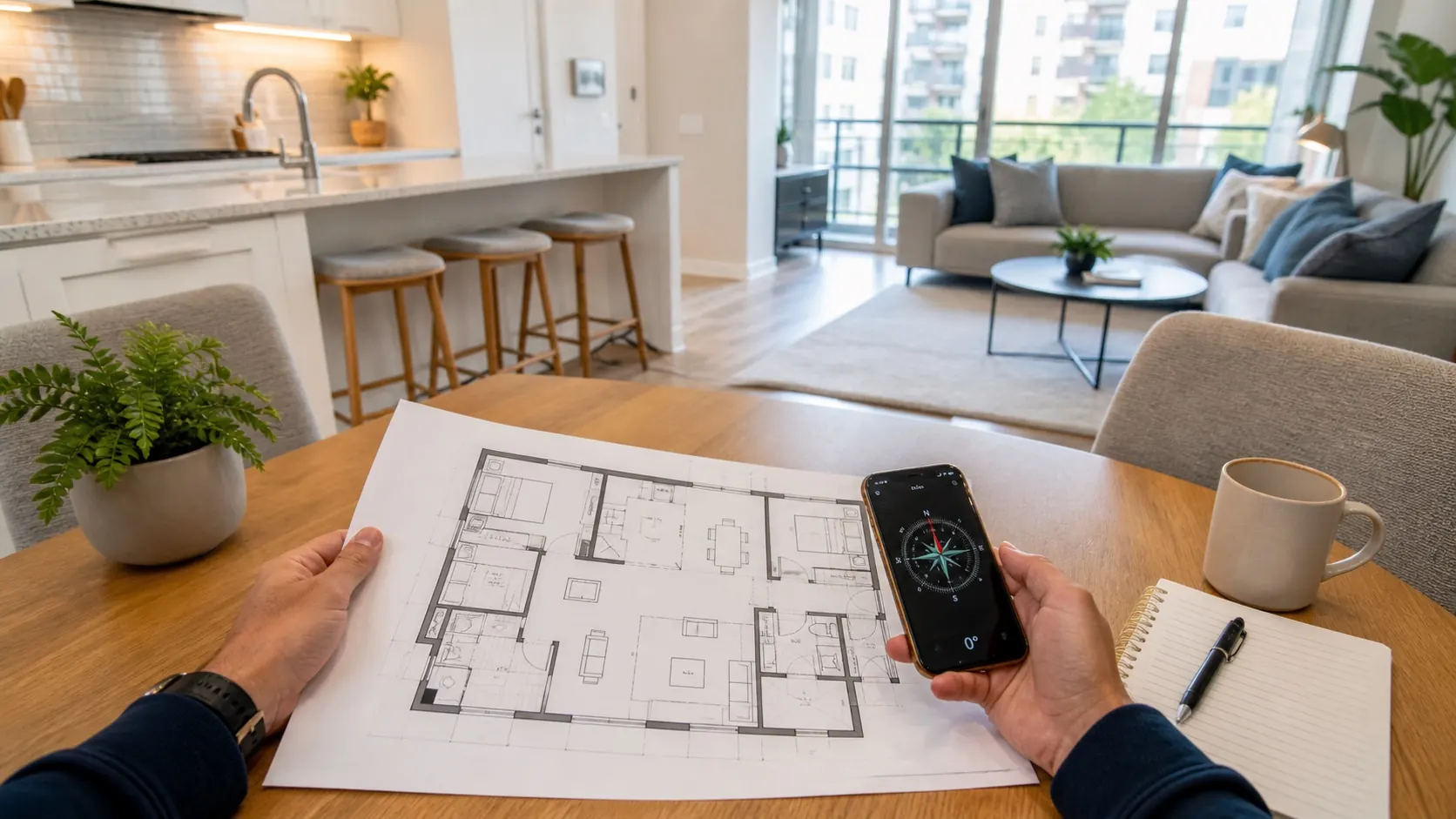
Use Vastu as a practical property-review checklist. Confirm the true daily entrance, check compass direction, study the floor plan, observe natural light, review kitchen ventilation, inspect bedrooms, understand bathroom placement and decide what is fixed by the building. Do this before focusing on small remedies or decorative changes.
A condo or townhome can be very comfortable even when it is not a perfect textbook layout. What matters is whether the home supports clean entry flow, safe cooking, restful sleep, good air movement, reasonable privacy and easy maintenance. A direction rule that ignores HOA restrictions, shared plumbing or structural walls is not useful for a real buyer.
How USA condos differ from independent houses
In a condo, you rarely control the whole building. You may share walls, floors, ceilings, corridors, elevators, trash rooms, parking garages and utility shafts. This means your Vastu review must be practical. You can evaluate the unit, but you cannot move the building entrance, elevator core or plumbing stack.
Start with the unit entrance. Is it bright and easy to identify from the corridor? Does the door open without feeling cramped? Is there space for shoes, coats and daily bags inside the unit? Many US condos have small foyers, so clutter control matters. A correct direction with no entry storage can still feel stressful after move-in.
Next, look at windows. Condos may have windows only on one side. That affects light, airflow and furniture placement. A north-facing unit in one climate may feel calm, while the same exposure in another city may feel dark. A west-facing glass wall can be beautiful but hot. Vastu works best when direction and climate are read together.
Townhome Vastu: garage entry, stairs and levels
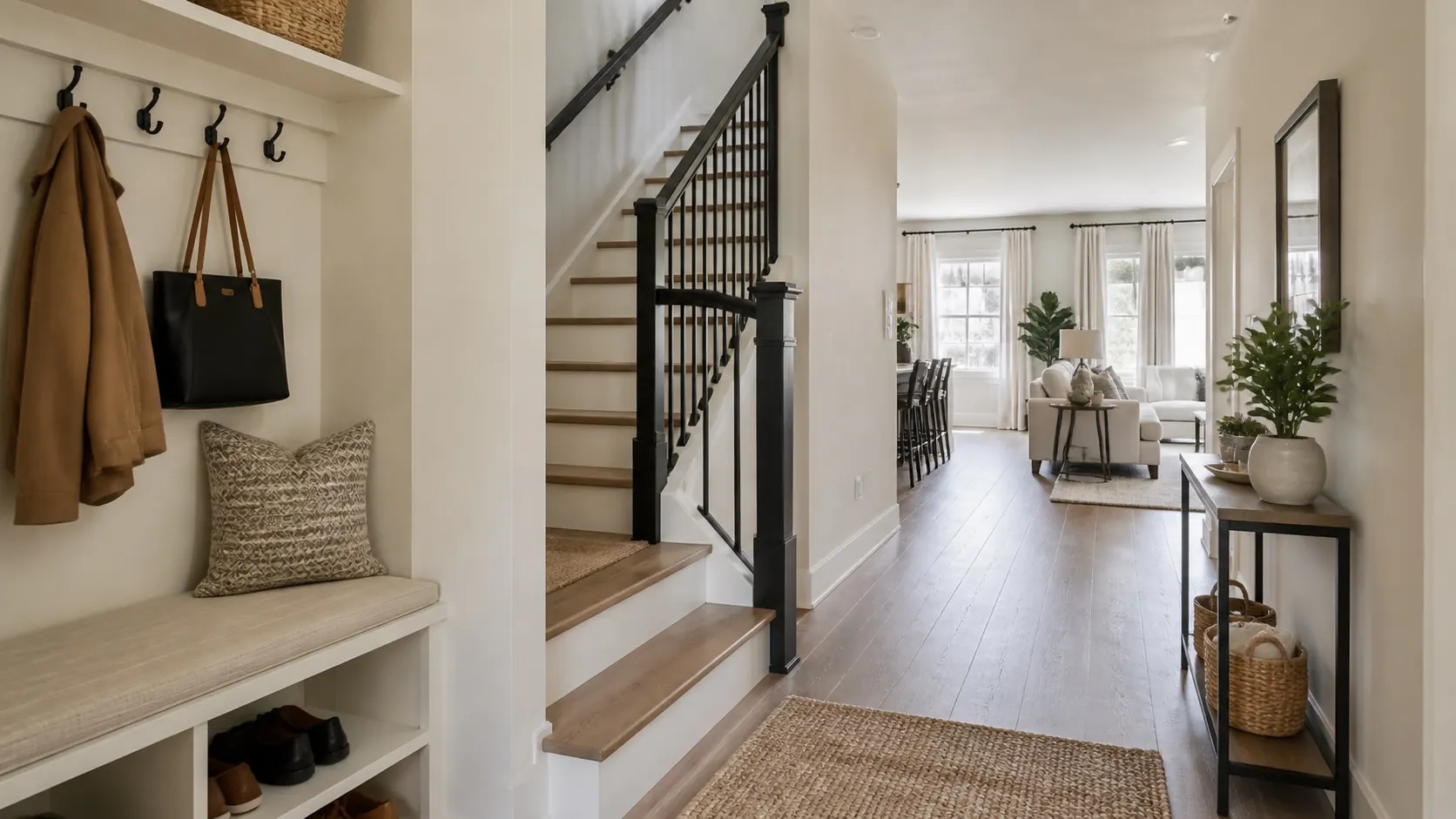
Townhomes often have multiple levels, attached garages and stairs close to the entry. The formal front door may be used for guests, while the family enters through the garage every day. From a practical Vastu view, the daily entrance matters. If the garage entry is dark, cluttered or full of storage, the home begins with pressure even if the front door looks beautiful.
Stairs are another major townhome feature. Check whether the staircase is safe, well lit and not blocking the center of daily movement. A stair beside the foyer can work if the entry path remains clear. A cramped stair that forces awkward turns with groceries, children or luggage may become tiring.
Also check bedroom levels. In many townhomes, bedrooms are upstairs and living areas are in the middle. This can be comfortable when the staircase feels easy and private zones are quiet. If a bedroom shares a wall with a garage, mechanical room or busy street, noise and temperature may matter more than compass direction.
Fixed vs fixable Vastu issues in condos and townhomes
Fixed issues include unit orientation, entrance location, structural walls, window positions, plumbing stacks, bathroom locations, staircase position, garage entry, balcony exposure and major HVAC routes. These should receive the most attention before you make an offer. If a fixed issue also creates practical discomfort, take it seriously.
Fixable issues include furniture, bed position, lighting, curtains, mirrors, rugs, plants, artwork, shoe storage, desk placement and daily routines. These are important, but they should not carry the same weight as a damp wall or impossible furniture layout. Many buyers become anxious about small Vastu points while ignoring inspection risks.
When reviewing a property, make two lists. The first list is "cannot change or expensive to change." The second list is "can improve after closing." A home with a few fixable Vastu concerns may be a good purchase. A home with several fixed problems needs deeper review, even if it has an attractive price.
Room-by-room checklist
Entrance and corridor
Check whether the entry is clean, bright and easy to use. In a condo corridor, avoid units where the door opens directly into a dark or awkward pinch point if furniture cannot solve it. Inside the unit, plan one neat landing area for shoes, keys, coats and bags. Read Main Door Vastu for detailed entrance principles.
Open kitchen
Open kitchens are common in US condos. Do not reject them automatically. Check stove-sink spacing, exhaust, island clearance, refrigerator access and whether cooking smells will travel into bedrooms. A kitchen that is easy to clean and ventilate is stronger than a symbolic placement that functions poorly. For details, see Kitchen Sink and Stove Vastu.
Bedrooms
Each bedroom should allow a stable bed wall, privacy from the door and enough clearance around furniture. If every possible bed position sits under a window or beside a closet door, measure carefully. A bedroom with calm light, usable storage and a supported headboard often works better than a directionally preferred but cramped room.
Bathrooms and laundry
Check exhaust fans, water pressure, drainage, smell, caulking, dampness and whether laundry noise affects sleep. In condos, bathroom and laundry positions are usually fixed because they connect to shared services. A dry, ventilated bathroom is more important than a fear-based reaction to its direction.
Balcony, patio and windows
Balconies can add light and air, but exposure matters. West-facing glass may need heat control. North-facing units may need warmer lighting in darker climates. Check whether the balcony can hold plants safely under HOA rules. For plant and balcony guidance, use Balcony Garden Vastu.
Comparison table for buyers
| Feature | Good sign | Warning sign | Buyer action |
|---|---|---|---|
| Daily entry | Bright, clear, easy storage | Dark garage entry or cramped corridor | Test daily routine, not just guest entry |
| Open kitchen | Good exhaust and island clearance | Stove crowded by sink, sofa or passage | Measure and check ventilation |
| Bedroom | Stable bed wall and quiet zone | No workable bed position | Draw furniture before offer |
| Bathroom | Dry, ventilated, no smell | Dampness, mold or weak exhaust | Inspection priority |
| Stairs | Safe, bright, comfortable turns | Dark or awkward movement | Walk with daily-use items in mind |
| HOA rules | Clear and compatible with plans | No changes allowed where needed | Read documents before closing |
Practical USA buyer examples
Downtown condo
The unit has a west glass wall and open kitchen. Add heat-control curtains, confirm exhaust quality and keep the living path clear before worrying about smaller decor remedies.
Suburban townhome
The family enters from the garage. Improve the garage-side route with lighting, a bench, coat hooks and closed shoe storage so the daily entrance feels clean.
Ground-floor condo
The patio adds light but also privacy concerns. Use curtains, plants allowed by HOA and furniture placement that keeps the bedroom restful.
Remote NRI buyer
Ask for a floor plan with north marked, a slow video from entry to each room and inspector notes for dampness, HVAC, plumbing and electrical panels.
New-build unit
Before choosing upgrades, verify appliance layout, island clearance, outlet positions, lighting and whether the bed wall works in each bedroom.
Rental before buying
If you rent first, test routines: entry clutter, grocery path, work-from-home noise, bedroom darkness and kitchen smell after cooking.
HOA, inspection and Vastu should work together
USA buyers must read HOA or condo association rules carefully. Rules may affect balcony plants, door changes, flooring, exterior decor, window treatments, satellite dishes, EV charging and renovations. A Vastu remedy that violates the association rules is not a good remedy. It creates stress and possible fines.
Inspection is equally important. Vastu should never replace professional checks for structure, roof, plumbing, electrical, HVAC, mold, pest issues or drainage. If an inspector finds dampness, unsafe wiring or ventilation problems, fix those before buying symbolic items. Practical repair is often the most powerful correction.
For broader international buying guidance, read Vastu Checklist for USA and International Home Buyers. Use this condo and townhome article when the property has shared ownership, fixed services and daily-entry complications.
No-renovation improvements after move-in
Once you buy, start with reversible improvements. Add warm entry lighting, use closed shoe storage, choose curtains for glare and privacy, position the bed against the best supported wall, keep mirrors away from disturbing sleep and create a tidy work corner. These changes are usually allowed and low risk.
In condos, avoid drilling into fire-rated doors, exterior walls or shared structural surfaces without approval. Use freestanding shelves, removable hooks where permitted, floor lamps and furniture layout before permanent work. In townhomes, keep garage and mudroom storage under control because that path often becomes the real front door.
Daily maintenance matters most. Clean vents, dry bathrooms, organize entry storage, repair loose door hardware and keep windows usable. A well-maintained condo with imperfect direction can feel calmer than a directionally preferred home full of clutter and postponed repairs.
Offer-stage checklist
- Identify the true daily entrance: front door, garage, elevator corridor or patio.
- Take compass readings away from metal, appliances and parked cars.
- Confirm window direction and natural light at different times if possible.
- Check kitchen exhaust, sink-stove distance and island clearance.
- Draw the bed position in every bedroom before making an offer.
- Inspect bathrooms, laundry and basement areas for smell or dampness.
- Walk the stairs and entry path as if carrying groceries or luggage.
- Read HOA rules before planning balcony plants or exterior changes.
- Separate fixed layout concerns from fixable decor concerns.
- Use inspection findings and Vastu review together, not separately.
Frequently asked questions
Can Vastu be applied to USA condos and townhomes?
Yes. Apply Vastu as a practical checklist for direction, entry flow, light, ventilation, kitchen safety, bedroom comfort and fixed constraints while respecting HOA rules and building codes.
What is the first Vastu check for a condo?
Confirm the real daily entrance, compass direction, window light, kitchen position, bathroom ventilation and whether furniture can fit without blocking movement.
Is garage entry important in townhome Vastu?
Yes. If the family enters through the garage daily, treat that route like a main entrance: keep it bright, clean, safe and uncluttered.
Should buyers reject a condo because the kitchen is open?
No. Open kitchens can work when ventilation, stove-sink spacing, island clearance, cleanliness and living-room flow are good.
What Vastu issues are hardest to fix in condos?
Entrance location, plumbing shafts, bathrooms, structural walls, window direction, stairs, garage position and balcony exposure are usually harder to change than decor or furniture.
What can renters or condo owners fix without renovation?
Lighting, curtains, mirrors, storage, plants, desk position, bed support, shoe organization and cleaning routines are usually easy no-renovation improvements.
Conclusion
Vastu for USA condos and townhomes is strongest when it respects real ownership limits. Check direction, but also check the entrance you actually use, shared walls, open kitchen flow, stairs, bedrooms, bathrooms, balcony rules and inspection findings. The goal is a home that feels clean, bright, safe and livable.
Before making an offer, mark the floor plan and list fixed versus fixable issues. If the fixed layout supports daily life and the remaining concerns can be improved with furniture, light and storage, the home may be a good fit. Continue with How to Check Directions Correctly, Vastu remedies without renovation and the international buyer checklist.