
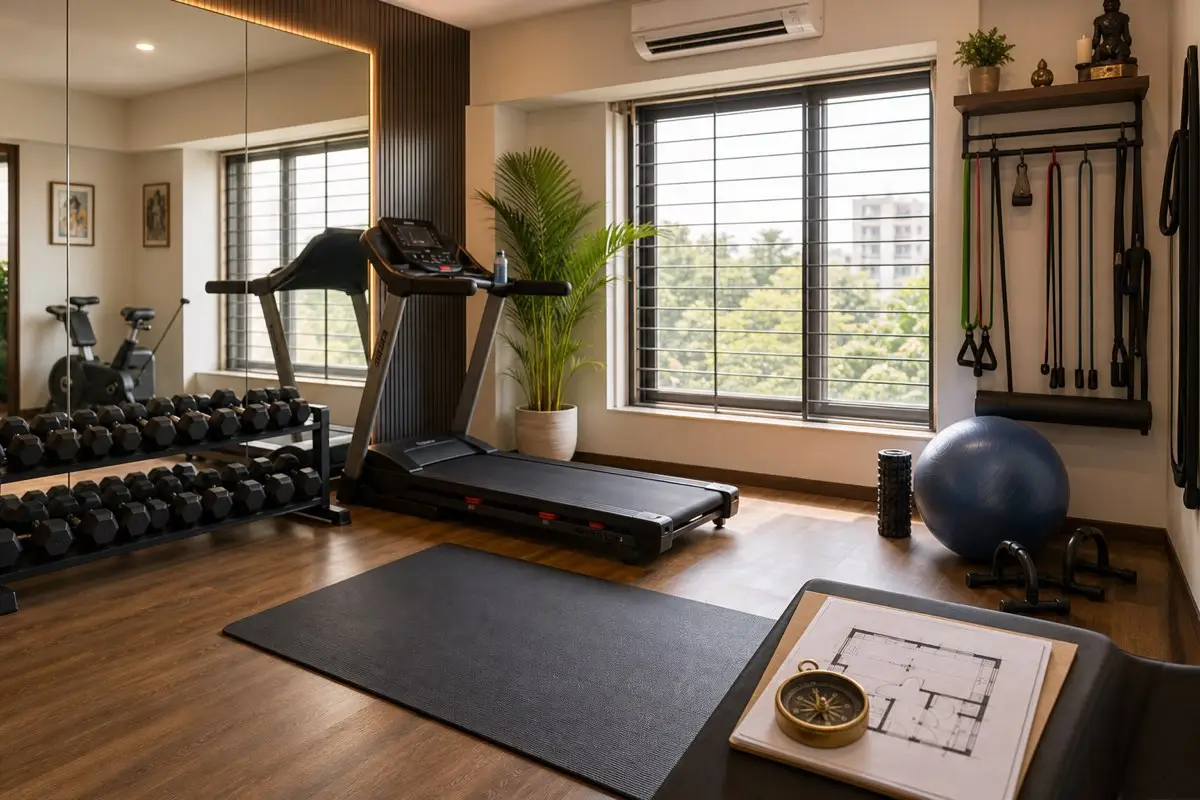
Why home gym Vastu matters
Exercise spaces carry movement, weight, heat, sound, mirrors, and strong physical energy. If placed carelessly, a gym can create noise near bedrooms, vibration on floors, clutter in living areas, or safety risks for children. A planned gym supports health without disturbing the home.
In Vastu terms, a gym is a high-activity space. It should not dominate calm zones such as prayer, meditation, or sleep. In modern planning, it should have good ventilation, safe flooring, equipment clearance, and enough light. These two ways of thinking work well together.
Best direction for home gym
South, west, south-west, or north-west zones are often considered workable for heavier and more active functions, depending on the full layout. A gym in these areas can keep weight and movement away from lighter spiritual or entrance zones. North-east is usually avoided for heavy exercise equipment.
If you live in a flat, the builder’s structure and floor load matter. Do not place very heavy machines without checking floor capacity, vibration, and neighbour disturbance. A yoga mat and dumbbells are different from a treadmill, multi-gym, or heavy rack.
Home gym planning grid
Use this grid before turning a spare room, balcony, bedroom corner, or terrace area into a workout zone.
Direction
Choose a zone that matches the room’s activity, privacy, weight, and calmness.
Comfort
Check light, ventilation, access, safety, noise, and daily usability before decorating.
Remedy
Use clean layout, clutter control, lighting, maintenance, and respectful room purpose first.
Equipment placement and safety
Keep heavy equipment on stable flooring with enough clearance around it. Treadmills need space behind them, bikes need ventilation, and weights need a safe drop zone. Avoid placing equipment where doors hit, children run through, or sharp furniture corners create risk.
Use anti-slip mats and protect flooring from sweat and impact. Keep wires organized. If the gym is on an upper floor, reduce vibration with proper mats. Safety is not separate from Vastu; a room that causes injury cannot be called balanced.
Mirror placement in a home gym
Mirrors are useful for posture checks and making a compact room feel open. In a gym, mirrors may be placed where they help alignment without reflecting clutter, toilets, or the bed. Avoid mirror placement that distracts or creates glare during workout.
Do not overuse mirrors in a small room. A single clean mirror wall or panel is often enough. Keep it stable, safely fixed, and easy to clean. Broken or stained mirrors should be repaired or replaced.
Home gym do’s and don’ts
This table gives a quick practical checklist for modern Indian homes.
| Do | Don’t |
|---|---|
| Keep the room clean, purposeful, safe, and well ventilated. | Use the room as a dumping zone or leftover corner. |
| Plan furniture, movement, light, and access before buying items. | Force heavy items into calm or sacred zones without need. |
| Respect privacy, comfort, and maintenance access. | Ignore leaks, smell, poor wiring, or unsafe placement. |
| Connect the room with related guides and full home layout. | Judge one room without checking the whole plan. |
Ventilation, colours, and lighting
A gym needs fresh air. Openable windows, balcony access, exhaust, fan, or air circulation is important. Poor ventilation creates smell, dampness, and low motivation. Keep towels, shoes, and mats dry after use.
Use energetic but not harsh colours. Whites, greys, earthy tones, muted greens, warm wood, or small accents of orange can work. Avoid making the space too dark. Good lighting prevents injuries and keeps the room inviting.
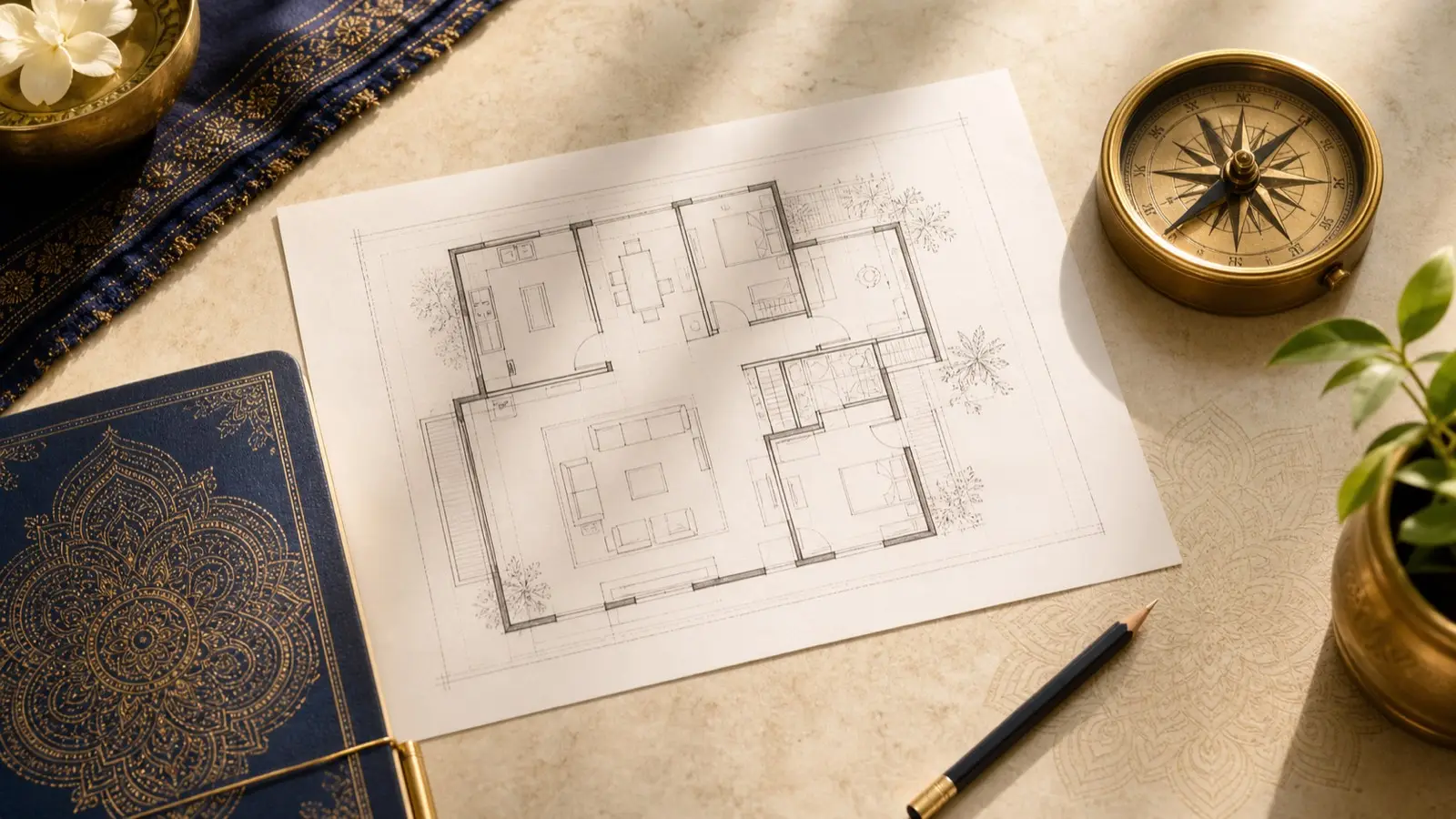
Home gym in apartments
Apartment gyms must respect neighbours. Avoid jumping or dropping weights late at night. Use shock-absorbing mats and place equipment away from shared bedroom walls. If space is small, choose foldable benches, resistance bands, dumbbells, yoga mats, and wall storage.
Balcony workouts need safety checks. Do not overload balcony slabs with heavy equipment. Avoid blocking drainage, railings, or emergency access. A light yoga or stretching zone may be better than a full heavy gym in a balcony.
Common home gym mistakes
The biggest mistake is buying equipment before measuring the room. The second mistake is placing gym items in a bedroom so the room feels neither restful nor active. The third mistake is ignoring ventilation and cleaning.
Another mistake is keeping unused equipment as guilt clutter. If a machine is not used for months, sell it, move it, or redesign the routine. A gym should inspire movement, not become a storage room.
Simple remedies for a fixed gym location
If your gym is in a compromise location, reduce clutter, improve airflow, use proper mats, keep mirrors clean, and store equipment neatly after use. Face east or north during yoga or breathing practices if possible, while strength training can follow equipment safety.
Separate active workout time from meditation or sleep time. Clean sweat, dry mats, and open windows after workouts. These practical steps make the room feel fresh and disciplined.
Frequently asked questions
Can a gym be in the north-east? It is generally avoided for heavy equipment, but light yoga may be manageable if no other space exists. Where should mirrors be? Place them for posture checks, not reflecting clutter or beds. Can gym be in bedroom? It is possible in small flats, but keep equipment minimal and storage neat.
Apartment and modern home tips
Modern Indian homes often need flexible room use. One room may become a meditation corner in the morning, work area in the afternoon, and guest space at night. Another room may serve fitness, storage, or staff support depending on family needs. Vastu should help you organize these uses instead of making the home rigid.
For apartments, avoid permanent changes until you understand the building’s structure, drainage, wiring, and society rules. Use movable furniture, foldable mats, smart storage, better lighting, and clear daily routines. In a rental home, choose non-damaging improvements first. Cleanliness, ventilation, and respect for room purpose are powerful no-demolition remedies.
What to check before buying or renovating
When buying a flat or house, do not look only at bedroom count and living room size. Open every door and check whether support rooms, spare rooms, and service corners can actually be used well. Check window placement, privacy, bathroom access, wall seepage, electric points, noise, and whether furniture can fit without blocking movement.
If renovating, ask your architect or designer for a furniture plan before final work. Mark the main direction, entrance, kitchen, bedrooms, toilets, staircase, and service zones. This helps you decide whether the new meditation room, gym, or staff room supports the whole home instead of creating a hidden problem.
Daily routine and long-term maintenance
The room will stay balanced only if the routine is realistic. A meditation space needs a few quiet minutes and a clean mat. A gym needs equipment wiped after use, shoes kept dry, and enough airflow. A staff room needs bedding, bathroom maintenance, storage, and privacy respected every day. These simple habits matter more than buying decorative items.
Create a monthly check. Look for dust, dampness, loose wires, broken furniture, blocked windows, unused items, and anything that makes the room unpleasant. Repair small issues early. A cracked mirror in a gym, a dusty diya shelf in a meditation corner, or a leaking staff bathroom slowly changes the room’s energy and practical comfort.
Privacy, sound, and emotional comfort
Every room has an emotional effect. A meditation room should feel protected from noise. A gym can be active, but it should not shake the bedroom wall or disturb neighbours. A servant room should never feel like a storage leftover; it should support rest and dignity. Good Vastu reads how the room feels, not only where it sits on a compass.
Use curtains, rugs, door seals, plants, better lighting, and smart furniture placement to improve comfort without renovation. If a room is multipurpose, define the main purpose clearly. For example, if a spare room is both a gym and meditation corner, keep the heavy equipment to one side and leave a clean, quiet wall for breathing or prayer.
Helpful content checklist for readers
For Google and for real homeowners, the best guidance is specific, safe, and honest. Avoid fear-based decisions. Instead, ask: is the room clean, safe, well-lit, ventilated, easy to use, and connected correctly to the rest of the home? If the answer is yes, the room is already moving in the right direction.
Also remember that Vastu is not a replacement for professional advice. Structural load, waterproofing, electrical safety, fire safety, legal habitability, and society rules must be checked when needed. A room becomes premium when traditional guidance and practical building sense support each other.
Related guides
Room planning
Read Room-wise Vastu, Pooja Room Vastu, and Home Office Vastu.
Home layout
Use Home Vastu, Balanced Layout, and Direction Vastu.
Corrections
For existing homes, see Vastu Remedies Without Demolition, Vastu FAQ, and Direction Checking.
Final thoughts
A good Vastu room is not only directionally correct; it is usable, clean, safe, and emotionally comfortable. Whether the space is for silence, exercise, or household support, give it a clear purpose and maintain it with care. That is how traditional planning becomes practical for modern Indian families.