
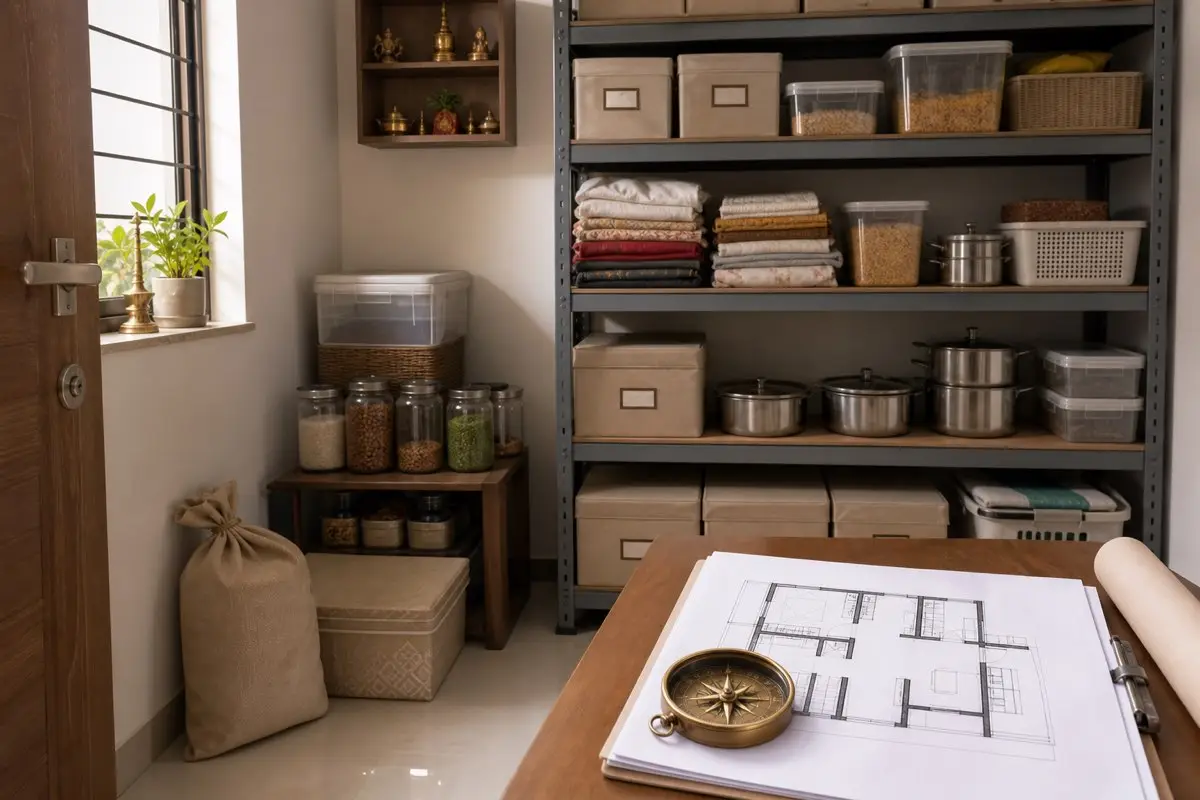
Why store room Vastu matters
A store room affects a home because it collects physical weight and visual heaviness. When storage is planned well, the home feels ordered, easy to maintain, and peaceful. When it becomes a dumping corner, it can block movement, collect dust, attract pests, and create stress whenever someone opens the door.
In Indian homes, storage is especially important because families keep festival items, grains, luggage, spare utensils, documents, tools, school materials, and seasonal bedding. Vastu does not ask you to throw away useful items. It asks you to keep weight, clutter, and rarely used objects in a sensible location with cleanliness and access.
Ideal direction for a store room
Many Vastu traditions prefer heavier storage toward south, west, or south-west zones because these directions are associated with stability and weight. If the house layout allows it, a store room in these zones can support a calm arrangement. North and east areas are usually kept lighter, brighter, and more open.
In flats, you may not have a dedicated store room. A wardrobe wall, loft, pantry, or utility cabinet may serve the same purpose. The principle remains: keep heavy, rarely used items away from the most open and sacred zones, and avoid clutter near the entrance, pooja space, kitchen fire zone, or bedroom circulation.
Store room planning grid
Use this grid before deciding where to create storage. It keeps the discussion simple for apartments, independent houses, villas, and rental homes.
Direction
Place support functions where weight, water, storage, and service movement make sense.
Hygiene
Keep the space dry, ventilated, easy to clean, and free from broken or expired items.
Daily Use
Plan shelves, doors, appliances, drains, and access around real family routines.
What to keep and what to avoid
Store rooms are suitable for dry grains, extra vessels, festival decor, tools, luggage, cleaning supplies in sealed containers, spare bedding, and household stock. Keep everything on shelves rather than directly on the floor where possible. Label boxes clearly, but avoid turning the room into a warehouse that nobody can enter.
Avoid storing broken clocks, damaged idols, torn photographs, expired medicines, leaking chemicals, old electronics, wet clothes, food in open packets, and documents without protection. Broken and decaying items are not only symbolically heavy; they also create dust, smell, insects, and fire or health risks.
Best colours, light, and ventilation
Use calm earthy shades, warm neutrals, light browns, creams, soft yellows, or muted whites for a store room. Dark colours can make a small room feel heavier and hide dust or insects. Good lighting matters because a store room should be easy to inspect and clean.
Ventilation is important even if the room is rarely used. Damp storage damages grains, clothes, books, and wooden items. If there is no window, use an exhaust or ventilation gap where practical. Moisture control is a real remedy, not just a design preference.
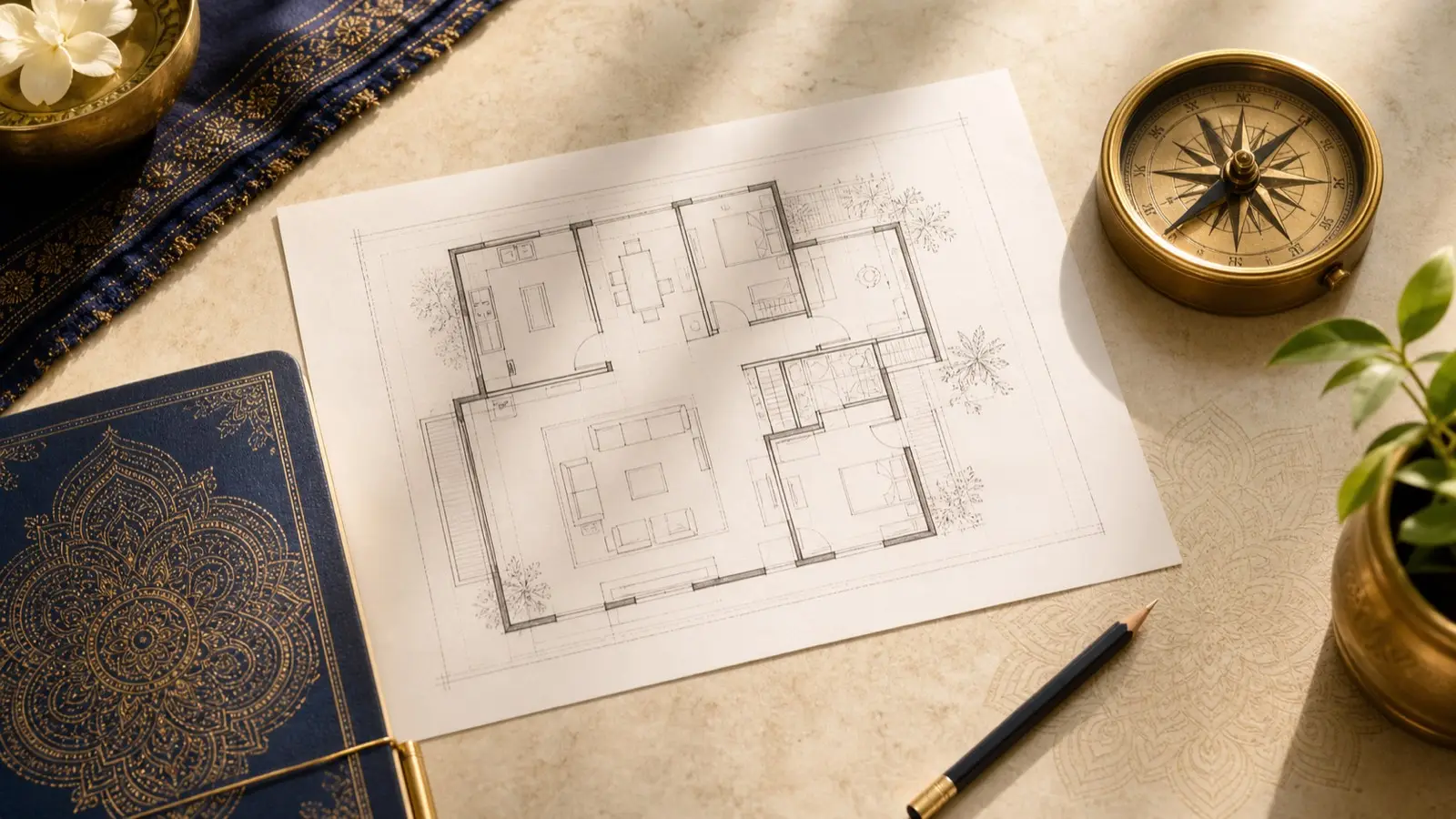
Store room do’s and don’ts
The table below makes store room Vastu easier for busy homeowners. Follow the practical side first, then add traditional choices where the layout supports them.
| Do | Don’t |
|---|---|
| Keep the area clean, dry, bright, and well ventilated. | Allow dampness, smell, dust, or pests to collect. |
| Use closed storage, shelves, hooks, and clear zones. | Dump everything on the floor or behind doors. |
| Repair leaks, cracks, loose pipes, and blocked drains quickly. | Treat maintenance problems as only a Vastu issue. |
| Link the room with kitchen, bathroom, balcony, and service needs. | Ignore practical access for cleaning and repairs. |
Store room Vastu in apartments
Most apartments do not provide a separate store room. Use vertical storage, loft cabinets, under-bed drawers, utility shelves, and wardrobe zones carefully. Keep the north-east corner light and clean if possible. Do not block balcony doors, windows, electrical panels, or bathroom ventilation with stored items.
Rental homes need extra care because tenants often avoid permanent changes. Use movable shelves, breathable storage bags, and stackable boxes. Keep the entrance clean. Avoid storing unused things behind the main door or under the pooja unit just because space is limited.
Common store room mistakes
The biggest mistake is treating the store room as a place for everything unwanted. This creates stagnant energy and practical problems. The second mistake is mixing food, chemicals, old clothes, paper, and tools in one damp space. The third mistake is blocking access so that cleaning becomes impossible.
Another mistake is keeping valuable documents or jewellery in an unprotected storage area. Important items need dry, secure, and easily retrievable storage. Vastu balance includes responsibility and safety.
No-demolition remedies for a heavy store room
Start by removing broken, expired, leaking, and unused items. Clean the floor, improve light, repair seepage, and create clear shelf zones. Keep heavier boxes lower and toward stable walls. Use closed storage for visual calm. Add a simple cleaning schedule once a month.
If your store room sits in a less ideal direction, compensate by keeping it clean, dry, organized, and not overloaded. A well-maintained store in a compromise location is better than a neglected store in a textbook location.
Frequently asked questions
Can a store room be in the north-east? It is generally avoided because that zone is kept light and open, but apartment constraints may require careful minimal storage. Can grains be stored in the kitchen? Yes, if dry and organized. Should broken items be kept for future repair? Only if you have a real repair plan; otherwise remove them.
Modern homeowner checklist
Check how the space works in daily use, not only how it looks on a traditional diagram. Before finalising a support space, check door swing, appliance clearance, shelf depth, power points, plumbing, waterproofing, ventilation, and cleaning access. Also check whether the room creates noise near bedrooms or smell near living spaces.
For flats, ask the builder where service shafts, drains, and electrical points are located. For independent houses, coordinate these rooms early with the architect so pipes do not cross awkwardly through premium rooms. Practical planning makes the Vastu advice stronger because the space actually works after move-in.
Apartment and rental home tips
In many Indian apartments, support spaces are decided by the builder and cannot be shifted easily. That does not mean the homeowner is helpless. Use movable shelves, wall hooks, waterproof mats, covered baskets, compact cabinets, and good lighting to make the existing zone more balanced. Keep the floor as open as possible so cleaning is easy and dampness does not hide under clutter.
Rental homes need non-damaging solutions. Avoid drilling too much without permission. Use freestanding racks, adhesive hooks where safe, breathable storage bags, stackable boxes, and washable containers. If a direction is not ideal, focus on cleanliness, order, dryness, and daily usability. A rented flat can still feel harmonious when every support area has a clear purpose and a regular cleaning rhythm.
Make the room support your daily routine
Vastu becomes practical when it supports how the family actually lives. A working couple may need quick access and low-maintenance storage. A family with children may need child-safe locks and higher shelves for chemicals. A joint family may need bulk storage and separate zones for groceries, tools, and cleaning supplies. A senior-friendly home needs bright light, non-slip floors, and no awkward bending or reaching.
Before buying racks or cabinets, write down the top five tasks performed in this area. Then place the most-used items at hand height, heavy items lower, and rarely used items higher. This simple arrangement reduces daily irritation. In Vastu language, it reduces stagnation; in modern language, it improves workflow. Both meanings help the home feel lighter and more premium.
Simple monthly maintenance calendar
Once a month, empty one shelf or one cabinet and check expiry dates, leaks, insects, loose hinges, damp patches, and unused items. Once every three months, deep clean the floor, wipe walls, inspect drains, and reorganize boxes. Before monsoon, pay extra attention to ventilation, waterproofing, and smell control. Before festivals, remove broken items instead of pushing them deeper into storage.
This calendar may sound ordinary, but it is one of the strongest no-demolition remedies. Many Vastu problems in support rooms are not caused by direction alone; they are caused by neglect. Clean, dry, accessible, and purposeful spaces support mental calm. They also make the home easier to show to buyers, tenants, guests, and family members.
What to check before buying a flat or house
When visiting a property, open every support-space door. Check whether the store room, laundry corner, or utility area has enough light, ventilation, drainage, and access. Smell the space gently; damp odour can reveal hidden leakage. Look behind appliances, under sinks, and near balcony drains. Ask whether waterproofing work has been done and whether any seepage complaint exists in the building.
Also check whether these rooms disturb important areas. A noisy washing machine wall beside a bedroom, a smelly utility near dining, or a cluttered store at the entrance can reduce comfort. Good property buying is not only about living room size and bedroom count. The hidden support spaces decide how easy the home is to maintain after the first excitement fades.
Related guides
Room-wise planning
Read Room-wise Vastu, Kitchen Vastu, and Bathroom Vastu.
Home planning
Use Home Vastu, Apartment Vastu, and Balanced Layout.
Corrections
For existing homes, see Vastu Remedies Without Demolition, Vastu FAQ, and Direction Checking.
Final thoughts
Support rooms may not look glamorous, but they decide how premium a home feels every day. A clean store, fresh laundry corner, or well-arranged utility area reduces stress, protects hygiene, and makes the main rooms feel lighter. Treat these spaces with the same care as bedrooms and kitchens, and your Vastu planning becomes practical, human, and long-lasting.