
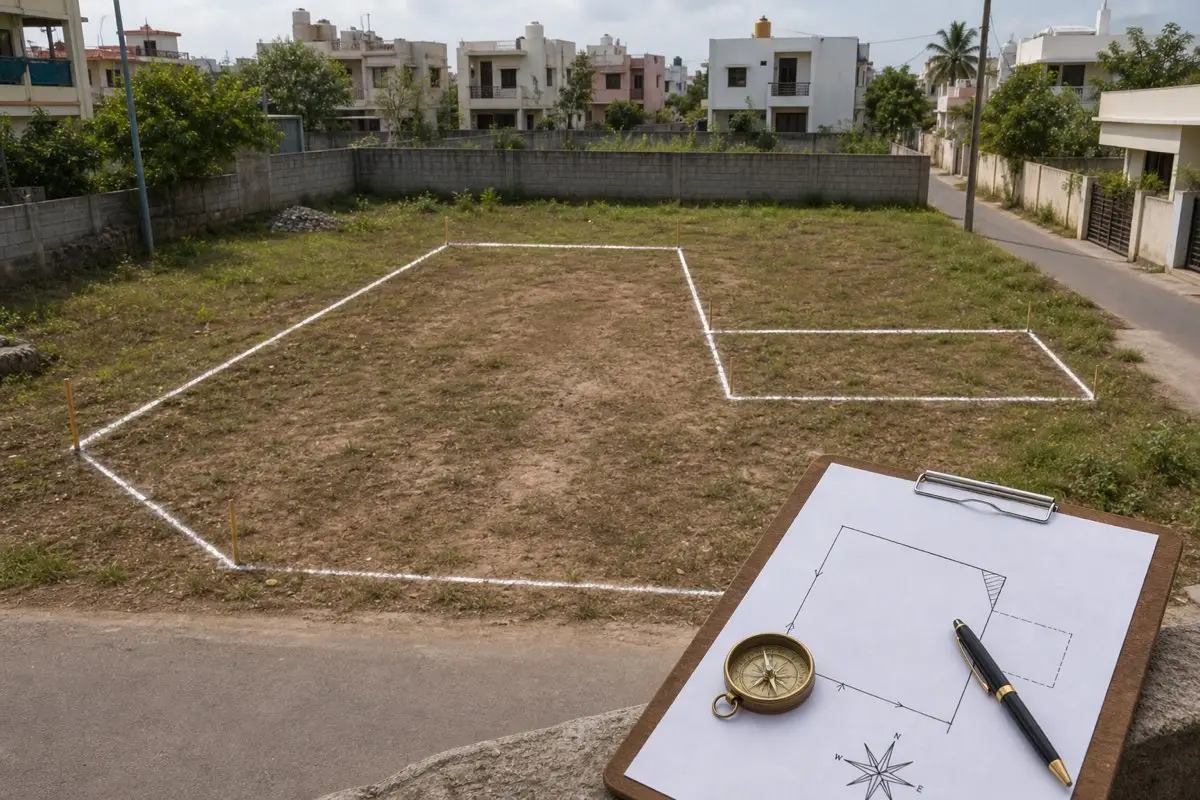
What are cut corners and extensions?
A cut corner means a portion of a directional corner is missing from the regular plot shape. An extension means a corner or side projects beyond the main rectangle or square. In simple words, the land is not balanced like a clean box. This may happen because of road alignment, subdivision, old boundaries, inheritance, or layout adjustments.
Vastu reads these shapes as changes in directional strength. Modern planning reads them as changes in usable area, structure, setback, and circulation. Both viewpoints are useful. A cut corner may reduce important open space or make the building footprint awkward. An extension may create a pocket that is hard to use or maintain.
Why direction of the cut or extension matters
The same shape problem can have different meanings depending on direction. A north-east cut is often treated more seriously because north-east is traditionally linked with clarity, prayer, water, and openness. A south-west cut is also watched because south-west is linked with weight, stability, and master spaces. Extensions in certain directions may be considered supportive or problematic depending on size and use.
Do not judge from memory. Draw the plot accurately with the north line. Then compare the actual boundary with a regular rectangle around it. Mark which side is cut and which side extends. This visual step reduces confusion and prevents wrong advice.
Start with documents and survey
Before discussing remedies, confirm the plot boundary legally. Check the sale deed, layout approval, survey sketch, encumbrance records, and measured dimensions. Many corner issues are misunderstood because fences, stones, or old walls do not match documents. A licensed survey is the safest starting point.
If the cut exists because of road widening or public drain reservation, you may not be able to build or correct it freely. If the extension is not approved, it may create legal risk. Vastu planning should never ignore ownership and approval clarity.
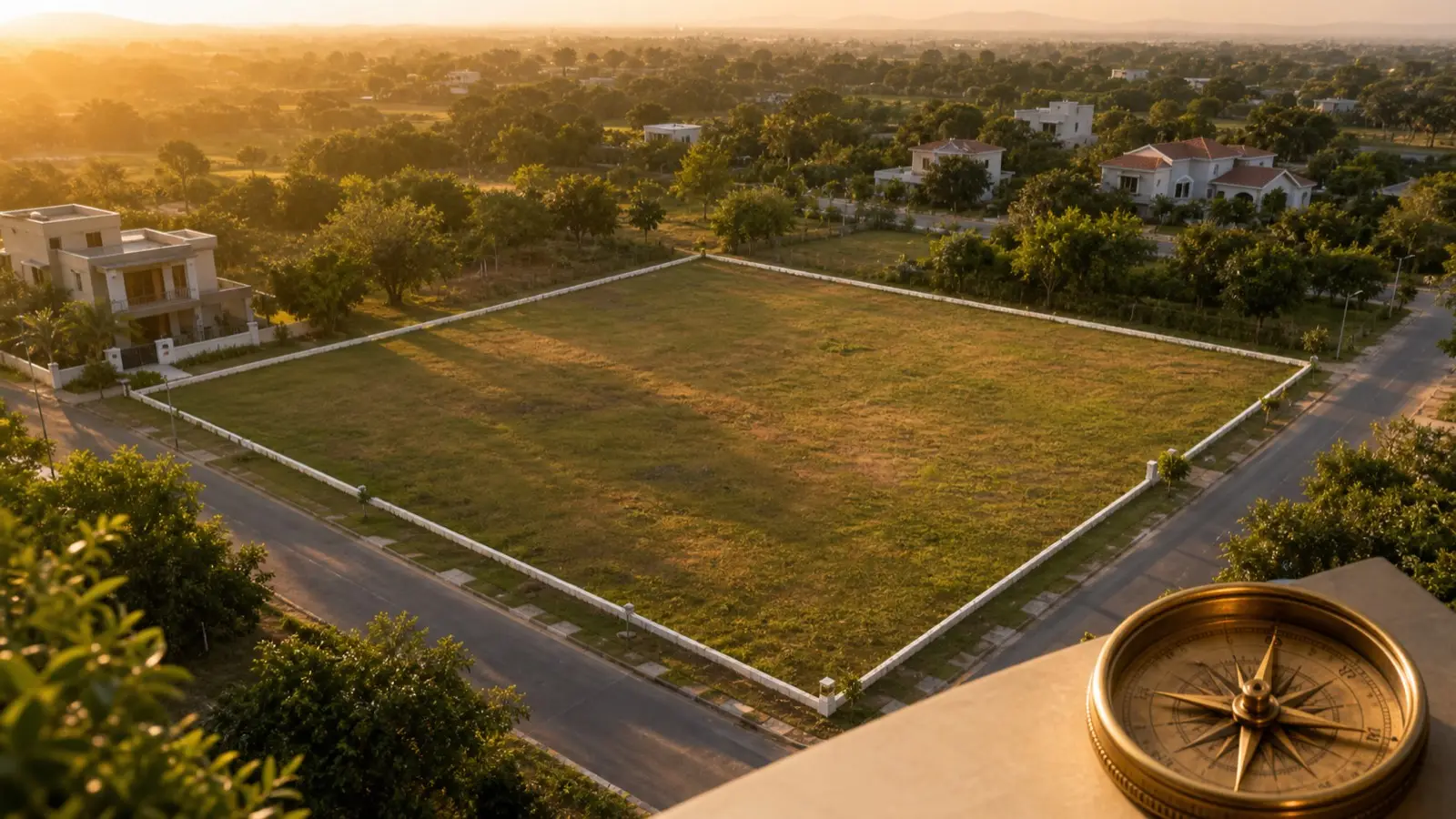
Cut and extension checking grid
Use this grid before purchase or design. It helps you decide whether the issue is minor, manageable, or serious enough to pause the decision.
Direction
Confirm north, facing, road line, slope, and the affected zone before judging the plot.
Practical Risk
Check safety, drainage, legal approvals, parking, privacy, and construction cost.
Correction
Prefer clean planning, buffers, boundaries, levels, lighting, and useful open spaces.
North-east cut or extension
A north-east cut is usually considered sensitive. If you already own such a plot, try to keep the remaining north and east open, clean, bright, and light. Avoid placing heavy storage, septic tanks, clutter, or dark service corners in the available north-east. If construction is still pending, create internal openness and a calm prayer or study zone where practical.
A north-east extension may be considered better than a cut by many traditions, but it still needs practical planning. Do not turn the extension into a dirty utility pocket just because it exists. Keep it clean, safe, and visually integrated with the house.
South-west cut or extension
A south-west cut may make the plot feel less anchored in traditional Vastu reading. Practical responses include strengthening the boundary, placing heavier landscape or storage where legal and useful, and avoiding excessive openness in that weak corner. The main bedroom or stable functions may need careful placement inside the regular buildable zone.
A south-west extension is not automatically good if it creates an unusable or unsafe area. It may suit heavier uses only when structure, setbacks, light, and maintenance work properly. Every extension should have a clear purpose.
Direction-wise quick comparison
The table below is a beginner-friendly overview. It should be used with drawings, not as a final verdict from words alone.
| Condition | What to check | Best response |
|---|---|---|
| Minor issue | Small level, shape, or road concern with legal clarity. | Manage through design and maintenance. |
| Moderate issue | Affects entrance, parking, drainage, or one major room. | Get concept plan and correction cost before buying. |
| High risk | Legal uncertainty, flooding, unsafe road, or unusable shape. | Pause purchase and seek professional advice. |
Planning a house on such plots
A useful approach is to create a regular internal building footprint even if the outer land is irregular. Keep major rooms rectangular and comfortable. Use leftover pockets for garden, services, setback, parking adjustment, or landscape buffers. Do not force triangular bedrooms, awkward toilets, or dark stores just to fill every part of land.
For small plots, furniture planning is essential. A cut corner may remove just enough space to make a bedroom uncomfortable. Test bed, wardrobe, door swing, study desk, and circulation before approving the plan. A shape issue becomes a daily problem only when it affects actual use.
Practical remedies for cut corners and extensions
Remedies may include boundary correction where legal, compound wall alignment, paving, raised platforms, garden treatment, lighting, clean use of extensions, and creating a balanced internal floor plan. In some cases, a low wall, planter, or landscape edge visually regularises the usable zone without pretending to change the legal boundary.
Avoid fear-based spending. A symbolic remedy cannot replace legal correction, structural safety, drainage, or good planning. Start with measurement, then layout, then maintenance, then traditional support if desired.
Buying checklist before final decision
Ask for exact dimensions, approved plan, road widening information, setback rules, and measured survey. Compare document area with physical area. Check whether the cut or extension affects parking, staircase, kitchen, bedrooms, toilets, borewell, septic tank, and overhead tank planning.
If the price is lower because of shape, calculate the real cost of correction. Extra compound work, filling, retaining, design complexity, wasted space, and resale hesitation can reduce the apparent saving. A clean rectangular plot may cost more upfront but save money later.
Frequently asked questions
Are all cut corners bad? No. Direction, size, legality, and layout decide seriousness. Can an extension be beneficial? Sometimes, if it is in a supportive direction and used cleanly. Can remedies fully fix a cut corner? Practical remedies can improve use and balance, but they cannot change legal land shape unless boundary correction is permitted.
Before booking: the buyer checklist
A useful blog page should help the reader take action, not only read rules. Before booking any plot, create one folder with the sale deed copy, approved layout, survey sketch, tax receipt, encumbrance certificate, road width information, zoning details, and any builder or developer brochure. Then add your own photos from all four sides of the land. This simple folder makes it easier to compare Vastu advice with legal and physical reality.
Next, ask for a concept drawing before paying a large non-refundable amount. The drawing does not need expensive final detail. It should only show the north line, road, gate, main door, living room, kitchen, main bedroom, toilets, staircase, parking, borewell or water sump, septic tank, and overhead tank. If these basics fit comfortably, the land is easier to develop. If every function feels forced, the plot may create stress after purchase.
Think about your family’s real use
Many land decisions are made emotionally. A buyer likes the location, the broker says the price will rise, and family members feel pressure to decide quickly. Vastu should slow this moment down. Ask who will live there in five years: parents, children, guests, tenants, pets, or a home-office user. A plot that looks good today should still support sleep, study, cooking, parking, storage, and maintenance later.
For example, if older parents may live on the ground floor, the plot must allow a bedroom with safe bathroom access. If you expect two cars, parking should not block the main entrance. If you work from home, the plan should allow a quiet study or office. These practical needs do not dilute Vastu; they make it meaningful in daily life.
How to discuss this with an architect or Vastu consultant
Take measurements, photos, and questions to your consultation. Avoid asking only, “Is this plot good or bad?” A better question is, “What are the risks, what can be corrected, and what will it cost?” Ask the architect to explain structure, drainage, setbacks, and buildability. Ask the Vastu consultant to explain direction, entrance, open-space balance, and room placement. When both answers support each other, confidence improves.
If advice conflicts, do not panic. Safety, legality, and water management should come first. Then refine the entrance, zoning, colours, rituals, and remedies. This order keeps the home grounded. Google also rewards content that is clear, helpful, and trustworthy, so each page on your site should encourage responsible decisions rather than fear-based shortcuts.
Quick answers for search readers
Can remedies replace a good plot plan?
No. Remedies can support a home, but they should not replace drainage, legal verification, safe access, structural planning, and comfortable room sizes.
Should I decide only by facing direction?
No. Facing is only one part. Shape, slope, road condition, entrance position, services, and the final layout are equally important.
What is the safest first step?
Verify the north direction, documents, dimensions, road level, drainage, and a basic concept plan before making a major payment.
Related guides
Plot basics
Start with Plot & Land Vastu, Plot Shape Analyzer, and Balanced Layout.
Direction checks
Use Direction Vastu, Direction Finder, and How to Check Directions Correctly.
Room planning
Connect land decisions with Kitchen Vastu, Bedroom Vastu, and Vastu Remedies.
Final thoughts
Good Vastu content should help a buyer make a safer, calmer decision. Do not judge any plot from one word, one direction, or one fear-based comment. Verify the land, draw the plan, check the services, and then apply Vastu principles in a practical way. That is how a plot becomes a strong foundation for a peaceful home.