
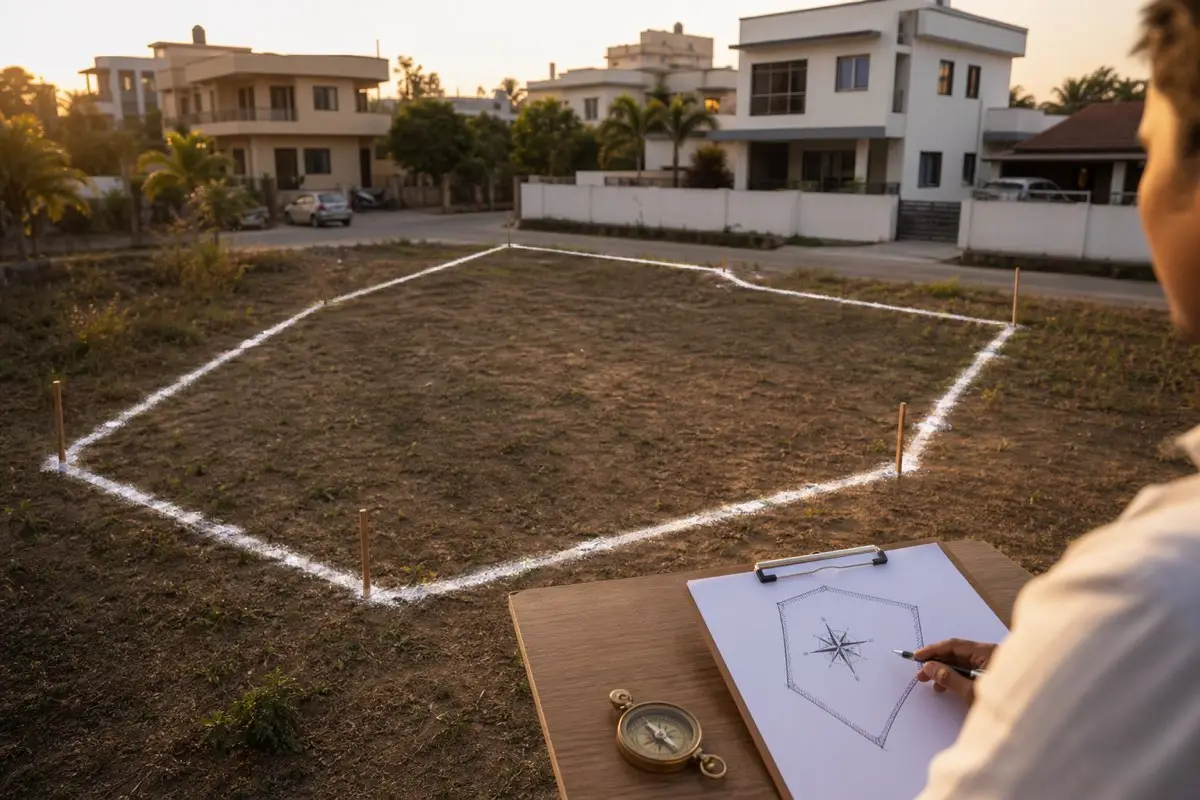
Why plot shape matters
A regular square or rectangle is usually easier to plan because rooms, structure, parking, setbacks, and services fit cleanly. Irregular plots demand more attention. A cut corner, projection, tapering side, triangular edge, or curved boundary may affect where the building can sit and how open space is distributed.
In Vastu, shape is not only visual. It influences balance, movement, and the distribution of weight and openness. In modern planning, shape also affects column grids, waterproofing, compound walls, drainage, and resale value. A calm review protects both tradition and money.
Common irregular plot types
The most common types are tapered plots, L-shaped plots, triangular plots, plots with missing corners, plots with extended corners, and plots with curved or road-cut boundaries. Each type needs a different response. Do not assume all irregular plots are rejected. Some can be corrected with boundary planning and intelligent building placement.
The most sensitive discussion usually happens around cut and extended corners. A north-east cut is often treated more seriously because that zone is traditionally associated with openness and clarity. South-west cuts are also examined carefully because that zone is associated with stability. Final judgment should include measurements, road level, and actual usable area.
Start with a licensed survey
Before applying Vastu remedies, confirm the legal boundary. Many irregular plots become risky because the buyer relies on a sketch, old fence, or neighbour’s statement. Get a measured survey, compare it with documents, and mark the true north direction. Check if any road widening, drain, easement, or setback rule reduces the usable area.
A proper survey also shows whether the irregularity is minor or severe. A small chamfer near a corner is different from a deep missing section. The correction strategy changes with size, direction, and impact on the proposed building.

Practical correction principles
The most practical remedy is to create a regular usable building zone inside the irregular boundary. This may be done with compound walls, landscaping, paving, utility pockets, garden corners, or service areas. The idea is to make the main house plan balanced even if the outer land shape is not perfect.
Do not build awkward rooms just to consume every inch. A triangular bedroom, narrow toilet, dark kitchen, or unusable store can create more discomfort than the original shape. Sometimes leaving a difficult edge as landscape, setback, or service zone is wiser.
Irregular plot decision grid
Use this grid to decide whether a plot is manageable. If several items fall into the high-risk column, get professional help before purchase. A low price should not hide expensive structural, legal, or design compromises.
Direction
Verify the north line, facing, entrance zone, and road approach before judging the site.
Buildability
Check setbacks, structure, parking, drainage, services, and room sizes before purchase.
Corrections
Prefer practical corrections such as layout balance, clean entry, lighting, privacy, and maintenance.
Cut corners and extensions
A cut corner means part of a directional zone is missing. An extension means one direction projects beyond the regular shape. Traditional Vastu reads these conditions carefully because they can change the perceived balance of the plot. Modern planning reads them for buildability, circulation, and safety.
If the north-east is cut, try to keep the remaining north/east open, clean, and light. If the south-west is weak or cut, avoid making that area even lighter with large voids or water features. If an extension creates a useless pocket, consider landscape, storage, or service treatment rather than forcing a major room there.
Building layout on an irregular plot
The building footprint should ideally be more regular than the plot. Keep important rooms in clear rectangular spaces. Use leftover edges for garden, parking, services, shafts, verandahs, or buffers. Place staircases and toilets only after checking structure, ventilation, and plumbing routes.
For narrow or tapered sites, furniture planning becomes critical. A room can look fine on paper but fail when a bed, wardrobe, study table, and door swing are added. Always test furniture before approving the plan.
Buying checklist for irregular land
Check title clarity, survey dimensions, access road, road widening risk, setbacks, soil, drainage, electricity, water, and municipal approvals. Compare the document area with the measured area. Ask whether the irregular boundary is accepted in the approved layout. If the plot is inherited or subdivided, legal verification is essential.
Also check resale. Some buyers hesitate with irregular land, even when the house is well designed. A clean correction strategy, approved drawings, and sensible layout improve confidence.
Mistakes to avoid
Avoid buying first and planning later. Avoid assuming a vastu pyramid, mirror, or colour will fix legal or structural problems. Avoid placing a borewell, septic tank, or heavy overhead tank only to fill an awkward corner. Every service needs safety clearance and maintenance access.
Also avoid fear. Many irregular plots can become comfortable homes when planned carefully. The goal is not superstition; it is order, safety, light, ventilation, and a balanced daily experience.
Frequently asked questions
Is an irregular plot always bad? No. It depends on the type, direction, severity, legality, and layout. Can remedies help? Practical remedies such as compound treatment, landscaping, and a regular building footprint can help. Should I buy an irregular plot? Only after survey, legal verification, concept planning, and cost review. If the irregularity is small, cleanly documented, and outside the main building footprint, it may be manageable. If it affects access, setbacks, drainage, or room sizes, treat it as a major decision point.
Modern planning checks that support Vastu
When assessing a plot, consider both traditional Vastu preferences and practical checks. Before finalising any land, review the approved layout, road access, flood history, soil strength, power connection, water source, sewage route, and local building rules. These checks are not separate from Vastu; they decide whether the Vastu plan can actually become a comfortable home.
Indian families often buy land with future dreams: parents may move in later, children may need study rooms, a home office may become important, or a rental floor may be added. Keep this future use in mind while judging direction and shape. A plot that supports flexible planning, natural light, safe parking, and clear services usually remains more valuable than a plot selected only because one direction sounds favourable.
Mini case study: how a buyer should compare two plots
Imagine two plots in the same locality. The first has a more popular facing but poor drainage, unclear boundary markings, and a narrow road where parking blocks the entrance. The second has a less fashionable facing but a clean rectangular buildable area, verified documents, better road width, and enough space to place the kitchen, bedrooms, staircase, and toilets sensibly. A mature Vastu reading would not blindly choose the first plot.
The better decision is made by combining direction, documentation, environment, and layout. Ask for a rough concept plan before booking. Mark where the main door, living room, kitchen, bedrooms, toilets, staircase, parking, borewell, septic tank, and overhead tank could go. If the plan feels forced at this early stage, the problem will become bigger during construction. If the plan feels calm and logical, the plot is more likely to support long-term prosperity.
Do’s and don’ts for plot selection
| Do | Don’t |
|---|---|
| Verify direction with a compass, map, and site plan. | Trust only a broker’s verbal facing description. |
| Check legal documents, setbacks, road width, and drainage. | Buy only because the price looks attractive. |
| Test a basic house layout before paying a large advance. | Assume remedies can fix every structural or legal issue. |
| Keep entrances clean, bright, safe, and proportionate. | Block the main approach with clutter, vehicles, or dustbins. |
| Explore related guides for more detailed room-planning advice. | Judge the plot without connecting it to kitchen, bedroom, and services. |
More buyer questions
Can a plot with average Vastu still become a good home?
Yes. A practical layout, clean entrance, correct services, good ventilation, safe structure, and sensible room placement can improve many average plots. Extreme legal, drainage, or structural problems should not be ignored.
Should I check Vastu before or after buying land?
Check before paying a major advance. Once land is purchased, your options reduce. A pre-purchase concept plan is one of the smartest steps for Indian homeowners and investors.
Are online compass readings enough?
No. Use the phone compass only as a first check. Confirm with a traditional compass, Google Maps, survey drawing, and the site’s actual road alignment.
Related guides
Plot planning
Read Plot & Land Vastu, Plot Shape Analyzer, and Balanced Layout.
Direction checks
Use Direction Vastu, Direction Finder, and How to Check Directions Correctly.
Rooms and remedies
Connect your plot decision with Kitchen Vastu, Bedroom Vastu, and Vastu Remedies Without Demolition.
Final thoughts
A plot should not be judged by one label. Check direction, entrance, shape, slope, road level, drainage, legality, and the layout that can actually be built. Vastu becomes useful when it helps you slow down, ask better questions, and create a home that feels bright, stable, practical, and peaceful.