
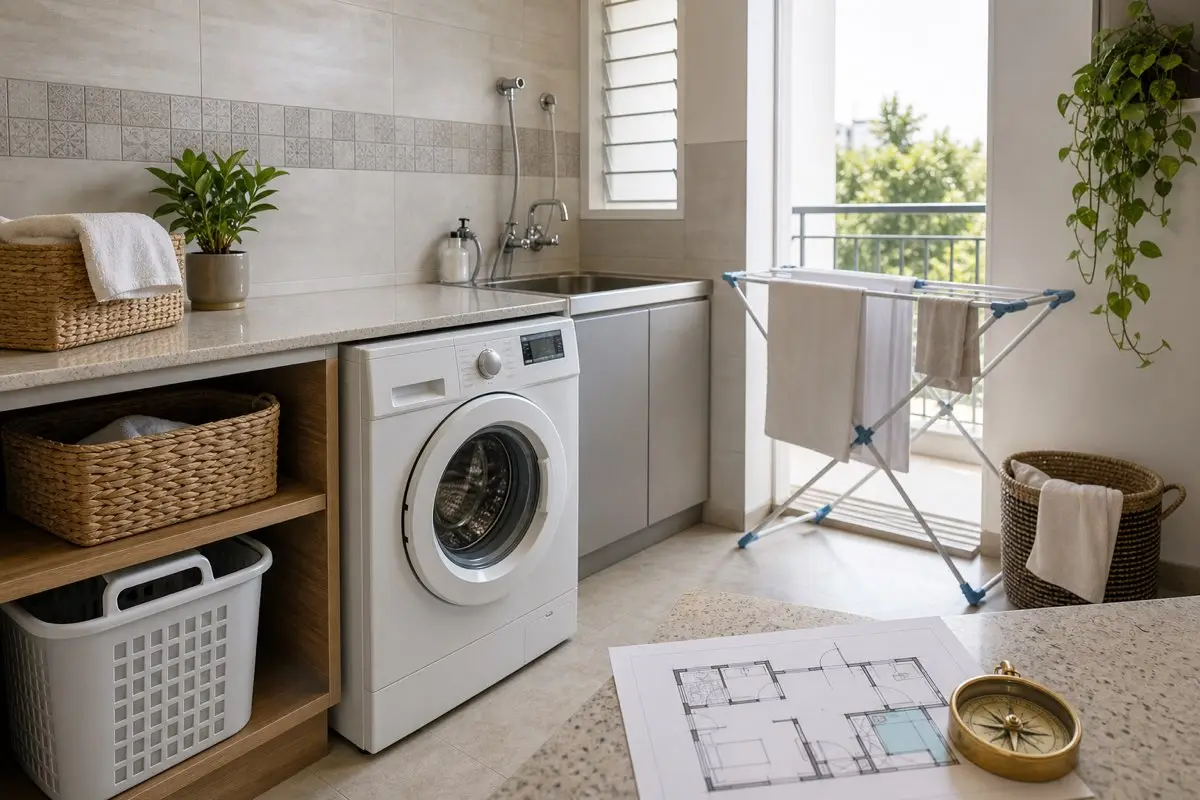
Why laundry room Vastu matters
Laundry is not only about a washing machine. It includes dirty clothes, detergent, water inlet, drain outlet, drying, ironing, storage, ventilation, and sometimes balcony access. If this area is ignored, moisture and clutter spread into the rest of the home.
Vastu treats clean movement and hygiene as part of balance. Modern planning agrees. A laundry room should be easy to clean, ventilated, safe from electrical hazards, and separated from food preparation and prayer areas. It should support routine rather than become a hidden stress point.
Best direction for laundry area
Many homeowners place laundry near the bathroom, balcony, or utility area because water and drainage are available. Some Vastu traditions favour south-east, north-west or west-side service zones and keeping the north-east relatively open. These are traditional preferences, not appliance installation requirements or evidence of an outcome caused by direction.
The washing machine needs level flooring, safe electrical supply, drain access, and ventilation. Direction preference should never override water safety. A machine placed in a technically wrong corner may leak, vibrate, or create electrical risk.
Laundry planning grid
Walk a load through the space before deciding where to put shelves or a second appliance.
Sort and load
Leave room for a basket and the fully opened washer door or lid.
Wash and drain
Confirm inlet, outlet and electrical arrangements against the machine's installation instructions.
Dry and put away
Allow for the rack when unfolded and a clean place to fold dry clothes.
Washing machine placement
Place the washing machine on a level surface with enough space behind it for pipes and maintenance. Avoid blocking ventilation or balcony doors. Keep the plug point away from direct water splash. If possible, keep detergents in a closed cabinet rather than on the machine top.
Front-load machines need door clearance. Top-load machines need overhead clearance. Both need a stable drain. If the machine shakes loudly, ask the installer to investigate the cause rather than attributing it to direction.
Sink, drain, and water flow
A utility sink is useful for handwashing, soaking, and cleaning. Keep it easy to rinse and dry. Avoid stagnant water around the drain. Clean lint, soap residue, and hair regularly because blocked drains create smell and pests.
Water flow should be predictable. If balcony rain enters the laundry area, use proper slope and a clean drain path. Do not store cardboard boxes, shoes, or electrical items directly on wet floors.
Drying area and sunlight
Drying clothes release moisture that must be managed. Use a suitable permitted drying area, with enough room between garments and ventilation appropriate to the conditions. Keep racks out of circulation routes. Do not hang items into a shared service shaft or obstruct required ventilation.
Follow garment care labels for drying and sun exposure. During wet weather, reduce the amount hung at once if it exceeds the available drying capacity. A fan moves air but does not remove moisture from a closed room; persistent dampness needs an appropriate ventilation or moisture-control solution.
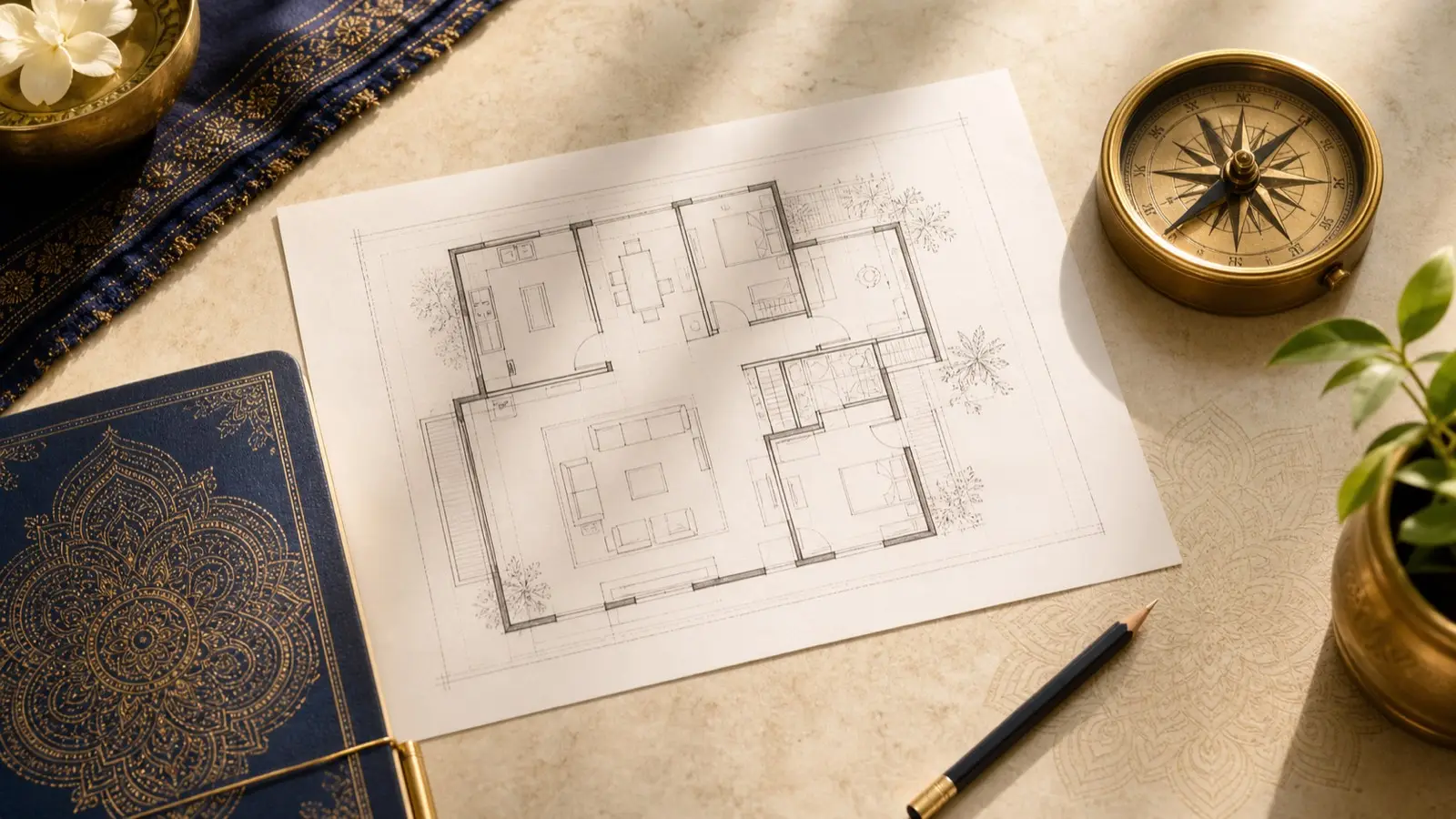
Laundry do's and don'ts
Choose the appliance position by checking a complete wash day, not just whether its cabinet fits.
| Do | Don't |
|---|---|
| Measure door or lid clearance before adding a counter. | Box in a top-loader beneath an unusably low shelf. |
| Keep hose connections and service access reachable. | Compress hoses behind a tightly fitted machine. |
| Plan a drying place for the load you actually wash. | Block the balcony exit with an unfolded rack. |
| Use the manufacturer's maintenance schedule. | Wait for a generic monthly cleaning day to address a leak. |
Colours and materials
Light colours, whites, soft greys, pale blues, creams, and clean tile finishes work well for laundry spaces. They make the area feel fresh and help you notice stains, leakage, or insects. Avoid very dark corners that hide dampness.
Use anti-skid flooring, washable walls, and rust-resistant shelves. Keep the space simple. A laundry area does not need heavy decor; it needs cleanliness, airflow, and safe services.
Common laundry Vastu mistakes
The most common mistake is keeping wet clothes piled for long hours. The second mistake is storing detergent, old brushes, buckets, and cleaning supplies in open clutter. The third mistake is ignoring leaks because the area is not visible to guests.
Another mistake is using the laundry balcony as a junk zone. When laundry, storage, shoes, dustbins, and plants all fight for one small space, the whole home feels messy. Give every item a place.
No-renovation laundry remedies
Clean the drain, fix leaks, level the machine, add a rack, use closed storage, improve lighting, and create a weekly laundry rhythm. Keep detergents dry and out of children’s reach. Remove broken buckets, cracked baskets, and unused cleaning items.
If the laundry is in a compromise location, keep it extra clean and ventilated. A fresh, functional utility space supports the home more than a decorative but damp corner.
Laundry layout questions
Can the washing machine stay on a balcony?
Only if the appliance's specified installation conditions and the building's rules allow the location. Rain protection alone does not establish suitability. Have drainage, weather exposure and the electrical supply checked before installing it.
Can I stack a dryer on my washer to save space?
Use only a manufacturer-approved combination and stacking arrangement, installed as instructed. Two appliances with similar widths are not necessarily compatible. Check service access and dryer ventilation or condensate arrangements before buying.
Does a noisy spin cycle mean the direction is wrong?
No. Check the operating instructions and ask the installer about loading, levelling, transit fixings and the supporting floor. Persistent movement or abnormal noise calls for appliance attention, not a directional remedy.
What if the laundry is fixed in the north-east?
Some traditions prefer that zone to remain light and open, but this does not establish that your machine must move. Retain compliant connections and solve actual leaks, access or drying difficulties before considering relocation.
Design a washer-to-drying workflow
Measure the appliance with its door or lid open, not just the closed cabinet. Then add the person loading it and the basket they carry. Locate the drying rack so wet laundry can be transferred without stepping over hoses or carrying it through a cooking area. Keep a separate clean basket or folding surface for dry clothes; the sink edge used for soaking is not automatically a suitable folding spot.
If adding a dryer, identify its type before planning cabinetry. Vented, condenser and heat-pump models have different installation and maintenance needs. Follow the specific manual for clearances, airflow, exhaust or condensate disposal. An enclosed cupboard that fits a washer is not necessarily suitable for a dryer.
Adapt to existing apartment connections
Start with the approved water inlet, drain and socket locations. Ask a qualified installer whether the intended machine can use them as supplied. Do not improvise a longer drain route across a walking path or move power close to splash zones to satisfy a compass preference. A fold-away drying rack may help, provided its fixings are approved and it does not obstruct the exit when loaded.
In a rental, agree with the owner who handles a leaking tap, failed outlet or appliance removal. Record the initial condition of the connections. Keep fittings accessible rather than concealing them behind permanent shelves.
Example: the rack fits only when folded
In an illustrative apartment, a washer and drying rack fit neatly on a utility balcony. During use, however, the open rack leaves no route to unload the machine. Moving the rack to an approved position along the other wall restores access. Reducing the load to the available drying capacity may also be more workable than washing several loads without somewhere to hang them. Check the route again with actual clothes and baskets in place.
Use appliance-specific care intervals
Follow the washer's instructions for detergent drawers, accessible filters and cleaning cycles; not every filter is intended for user removal. Report damaged hoses or recurring leaks promptly. For dryers, the US Fire Administration's dryer safety guidance stresses lint-filter and vent maintenance. Follow your model's instructions, and use an appropriate professional for installation or inaccessible duct work.
Keep detergent in its labelled packaging and secured away from children. Store it where it stays dry but remains within the intended user's reach. Do not use the top of a moving machine as an unsecured shelf for heavy bottles.
Inspect the laundry provision before purchase
Take the dimensions of the machine you intend to use. Check the route through the flat, the operating clearance and whether the connections remain reachable after installation. Ask about previous leaks or vibration complaints, especially where the appliance backs onto a bedroom. Look for stains around pipes without moving someone else's appliance or touching electrical fittings.
Finally, locate the drying space during wet weather. A machine niche without a realistic drying arrangement is only half a laundry plan. Clarify any building restrictions on external hangers, balcony screens or dryer exhausts before relying on them.
Related guides
Room-wise planning
Read Room-wise Vastu, Kitchen Vastu, and Bathroom Vastu.
Home planning
Use Home Vastu, Apartment Vastu, and Balanced Layout.
Corrections
For existing homes, see Vastu Remedies Without Demolition, Vastu FAQ, and Direction Checking.
A laundry plan should finish the whole load
The useful test is whether clothes can move from sorting to washing, drying and storage without blocked routes or unsafe connections. Keep traditional preferences secondary to the appliance specification and the building's services. Improve the stage that fails in practice rather than relocating a working machine solely for direction.