
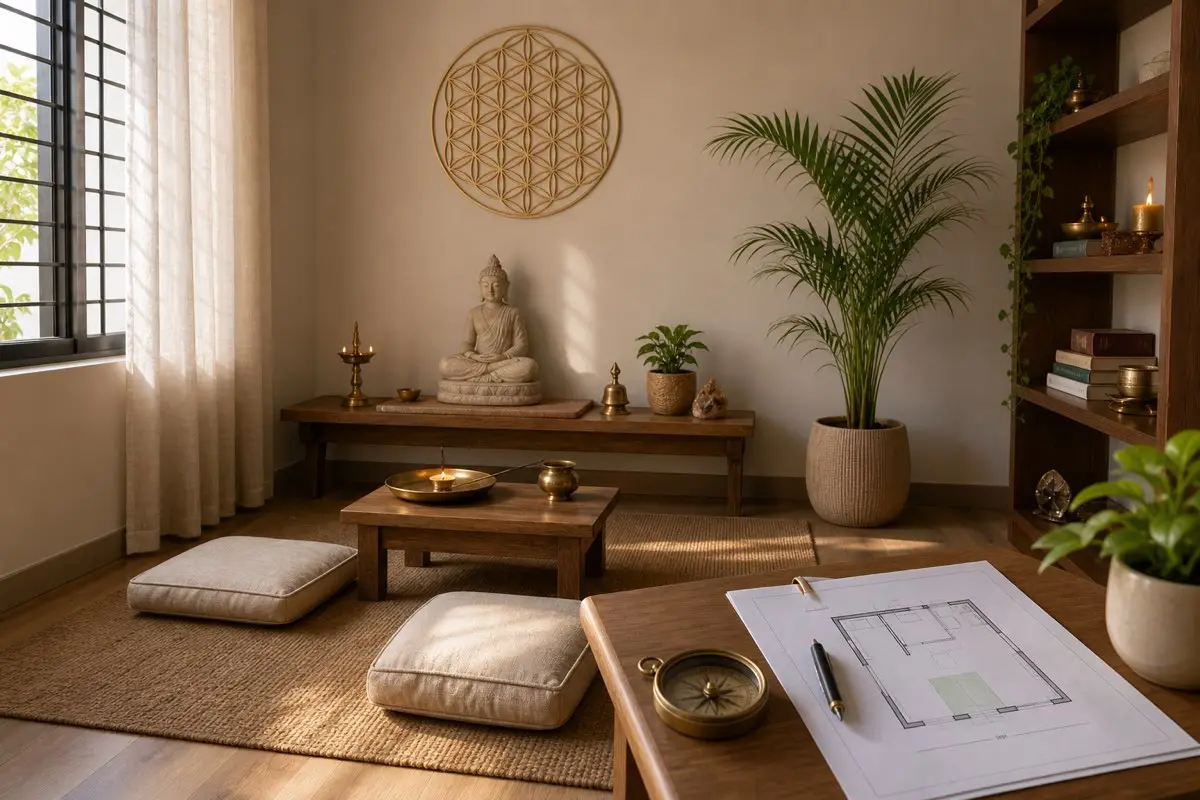
Why meditation room Vastu matters
Meditation, prayer, breathing practice, journaling, and quiet reflection need a different quality of space from entertainment or work. In Vastu, this kind of room is connected with clarity, lightness, purity, and inward focus. In modern home planning, the same idea appears as low noise, minimal clutter, comfortable seating, clean air, and stable routine.
Many Indian homes do not have a dedicated meditation room. That is perfectly fine. A small corner, cabinet, balcony niche, or quiet part of a bedroom can work if it is treated with respect. The goal is to create a repeatable peaceful spot where the body and mind understand that this is a place to slow down.
Best direction for meditation room
North-east is commonly preferred for meditation and prayer because it is traditionally associated with clarity, spiritual focus, and gentle energy. East and north are also often considered good alternatives when north-east is not available. These directions usually support morning light, freshness, and a calm start to the day.
If your apartment layout does not allow these locations, choose the quietest and cleanest available corner. Avoid placing the meditation seat beside a dustbin, shoe rack, laundry pile, television, or heavy storage. A practical peaceful corner in a compromise direction is better than a textbook direction that is noisy, damp, or cluttered.
Meditation setup grid
Use this grid to create a simple meditation area in flats, villas, rental homes, or independent houses.
Direction
Choose a zone that matches the room’s activity, privacy, weight, and calmness.
Comfort
Check light, ventilation, access, safety, noise, and daily usability before decorating.
Remedy
Use clean layout, clutter control, lighting, maintenance, and respectful room purpose first.
Seating, posture, and floor setup
Use a clean mat, cushion, low wooden seat, or comfortable chair depending on your body. Vastu should not force painful posture. If older adults or people with knee issues meditate, a chair with good support is perfectly practical. Keep the seat steady and avoid constantly shifting it.
Face east or north during practice if possible. Keep the wall behind you calm and uncluttered. If you use a lamp, diya, incense, or candle, place it safely on a stable surface away from curtains and children. Peaceful practice should also be physically safe.
Best colours, lighting, and decor
Soft whites, creams, pale yellow, light beige, gentle green, and muted earthy shades suit meditation spaces. Avoid aggressive red, very dark colours, and busy patterns in the main visual field. The room should help the eyes rest.
Use natural light where possible. Harsh tube lights can make the space feel clinical, while very dim corners can feel dull. A warm lamp, indirect light, and a clean window can create a premium but simple atmosphere. Keep decor minimal: one meaningful picture, plant, lamp, or shelf is enough.
Meditation room do’s and don’ts
This table helps beginners avoid the most common mistakes in spiritual or quiet corners.
| Do | Don’t |
|---|---|
| Keep the room clean, purposeful, safe, and well ventilated. | Use the room as a dumping zone or leftover corner. |
| Plan furniture, movement, light, and access before buying items. | Force heavy items into calm or sacred zones without need. |
| Respect privacy, comfort, and maintenance access. | Ignore leaks, smell, poor wiring, or unsafe placement. |
| Connect the room with related guides and full home layout. | Judge one room without checking the whole plan. |
Meditation corner in apartments
Apartments often require smart compromises. A north-east corner of the living room, a quiet east wall, a clean balcony corner, or a small pooja cabinet can become a meditation space. Use a foldable mat and a small closed basket if the area must return to normal family use later.
Avoid placing the meditation setup under a beam if another option exists. Avoid sharing the same shelf with medicines, keys, random bills, and broken items. The space should feel intentional even if it is small.
Common meditation room mistakes
The biggest mistake is over-decorating. Too many idols, lights, artificial flowers, crystals, bells, books, and framed images can make the mind busy. The second mistake is ignoring cleanliness. Dust, old incense ash, dried flowers, and clutter reduce the peaceful effect of the room.
Another mistake is placing the meditation corner where family traffic constantly interrupts practice. Choose a realistic time and location. A daily ten-minute practice in a simple clean corner is better than a beautiful room that nobody uses.
Simple remedies for an existing meditation space
Clean the area, remove unrelated clutter, improve light, add a fresh mat, and keep one small storage box for practice items. If the space is near noise, use soft curtains, a rug, or a better time of day. If the direction is not ideal, face east or north while sitting if possible.
Keep the space dry and fragrant in a mild way. Avoid strong smoke in poorly ventilated rooms. The best remedy is consistency: a clean space used daily gains meaning over time.
Frequently asked questions
Can meditation be done in the bedroom? Yes, if the corner is clean and quiet. Is north-east compulsory? No, it is preferred, but peace and cleanliness matter. Can I use plants? Yes, use healthy low-maintenance plants and avoid dried or dying plants.
Apartment and modern home tips
Modern Indian homes often need flexible room use. One room may become a meditation corner in the morning, work area in the afternoon, and guest space at night. Another room may serve fitness, storage, or staff support depending on family needs. Vastu should help you organize these uses instead of making the home rigid.
For apartments, avoid permanent changes until you understand the building’s structure, drainage, wiring, and society rules. Use movable furniture, foldable mats, smart storage, better lighting, and clear daily routines. In a rental home, choose non-damaging improvements first. Cleanliness, ventilation, and respect for room purpose are powerful no-demolition remedies.
What to check before buying or renovating
When buying a flat or house, do not look only at bedroom count and living room size. Open every door and check whether support rooms, spare rooms, and service corners can actually be used well. Check window placement, privacy, bathroom access, wall seepage, electric points, noise, and whether furniture can fit without blocking movement.
If renovating, ask your architect or designer for a furniture plan before final work. Mark the main direction, entrance, kitchen, bedrooms, toilets, staircase, and service zones. This helps you decide whether the new meditation room, gym, or staff room supports the whole home instead of creating a hidden problem.
Daily routine and long-term maintenance
The room will stay balanced only if the routine is realistic. A meditation space needs a few quiet minutes and a clean mat. A gym needs equipment wiped after use, shoes kept dry, and enough airflow. A staff room needs bedding, bathroom maintenance, storage, and privacy respected every day. These simple habits matter more than buying decorative items.
Create a monthly check. Look for dust, dampness, loose wires, broken furniture, blocked windows, unused items, and anything that makes the room unpleasant. Repair small issues early. A cracked mirror in a gym, a dusty diya shelf in a meditation corner, or a leaking staff bathroom slowly changes the room’s energy and practical comfort.
Privacy, sound, and emotional comfort
Every room has an emotional effect. A meditation room should feel protected from noise. A gym can be active, but it should not shake the bedroom wall or disturb neighbours. A servant room should never feel like a storage leftover; it should support rest and dignity. Good Vastu reads how the room feels, not only where it sits on a compass.
Use curtains, rugs, door seals, plants, better lighting, and smart furniture placement to improve comfort without renovation. If a room is multipurpose, define the main purpose clearly. For example, if a spare room is both a gym and meditation corner, keep the heavy equipment to one side and leave a clean, quiet wall for breathing or prayer.
Helpful content checklist for readers
For Google and for real homeowners, the best guidance is specific, safe, and honest. Avoid fear-based decisions. Instead, ask: is the room clean, safe, well-lit, ventilated, easy to use, and connected correctly to the rest of the home? If the answer is yes, the room is already moving in the right direction.
Also remember that Vastu is not a replacement for professional advice. Structural load, waterproofing, electrical safety, fire safety, legal habitability, and society rules must be checked when needed. A room becomes premium when traditional guidance and practical building sense support each other.
Related guides
Room planning
Read Room-wise Vastu, Pooja Room Vastu, and Home Office Vastu.
Home layout
Use Home Vastu, Balanced Layout, and Direction Vastu.
Corrections
For existing homes, see Vastu Remedies Without Demolition, Vastu FAQ, and Direction Checking.
Final thoughts
A good Vastu room is not only directionally correct; it is usable, clean, safe, and emotionally comfortable. Whether the space is for silence, exercise, or household support, give it a clear purpose and maintain it with care. That is how traditional planning becomes practical for modern Indian families.