
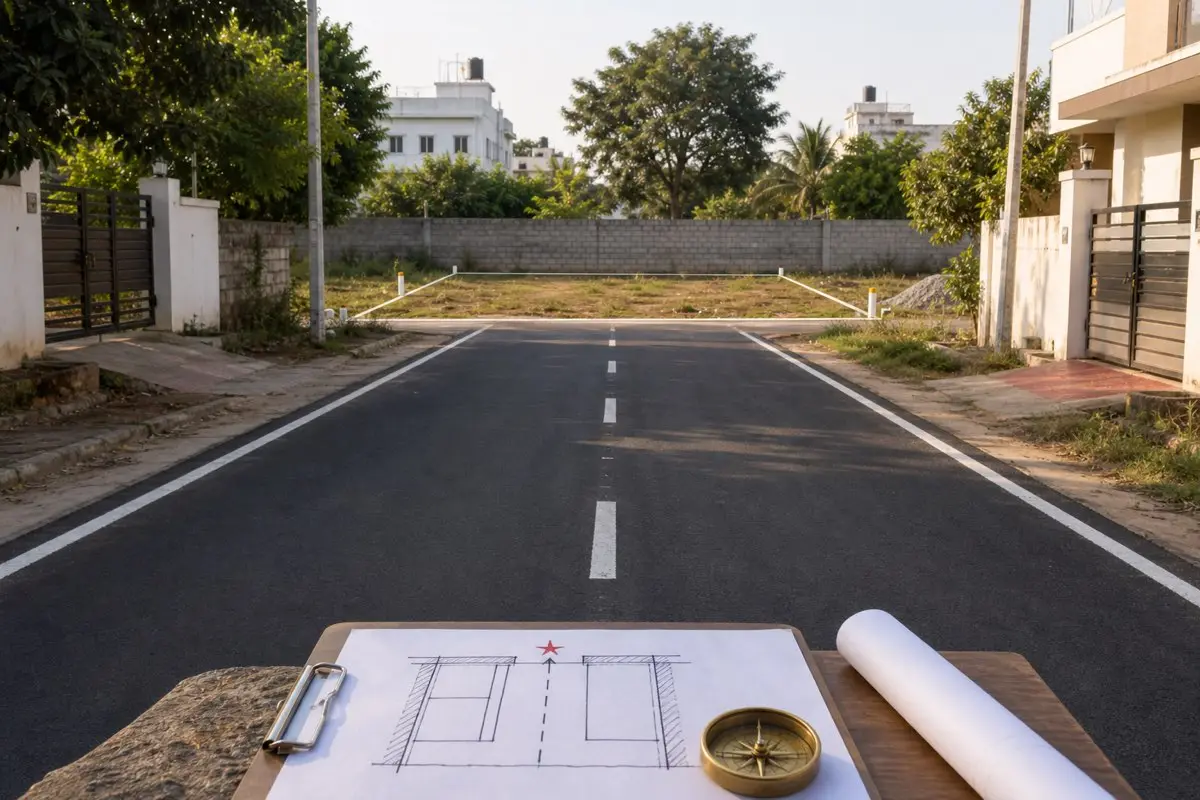
What is a road-hitting plot?
A road-hitting plot is not simply a plot on a road. It usually means a road, lane, or street line ends at the plot, meets it directly, or visually pushes movement toward a specific boundary or corner. In many Indian neighbourhoods, such plots are found at T-junctions, dead-end roads, layout turns, and old village streets.
Vastu discussions treat road impact carefully because movement, noise, headlights, dust, and public attention are directed toward the site. Modern planning also recognises the issue as a safety, privacy, drainage, and traffic concern. The best evaluation combines both views instead of reacting with fear.
Does direction of road hit matter?
Traditional opinions vary, but many consultants study which direction the road comes from and which part of the plot it hits. A road approaching the north-east is often discussed differently from one striking the south-west. A road hitting the exact centre, a corner, or the main gate may produce different planning suggestions.
The exact geometry matters. A broad road that gently curves is different from a narrow fast lane ending directly at your gate. A road that points to an open garden can be managed differently from one pointing to the main door or bedroom wall. Measure and observe before concluding.
How to inspect the site calmly
Stand inside the plot and look toward the road. Notice whether vehicles, headlights, water, and pedestrian attention naturally move toward the property. Visit during morning, evening, and after rain. Check if traffic slows safely, if people use the plot edge for turning, and if stormwater rushes from the road.
Take photographs from the road and from inside the plot. Mark the road axis on a simple plan. Then identify whether the hit touches north, east, south, west, a corner, or the proposed entrance. This simple exercise makes the discussion factual and avoids unnecessary panic.
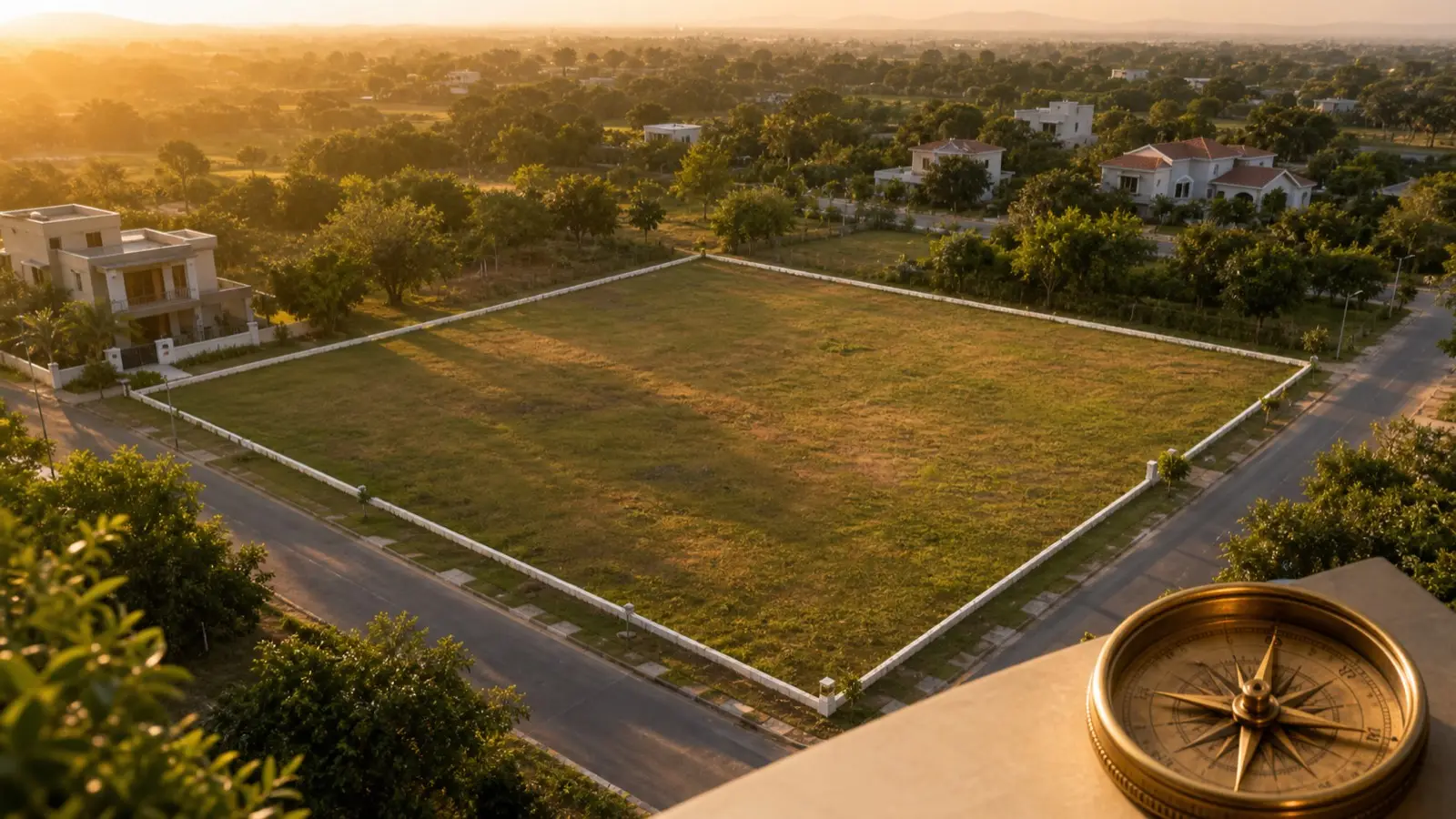
Road-hit decision grid
Use this grid to separate symbolic concern from practical risk. A mild visual alignment may be manageable. A high-speed road striking the main entrance is a different matter.
Direction
Confirm north, facing, road line, slope, and the affected zone before judging the plot.
Practical Risk
Check safety, drainage, legal approvals, parking, privacy, and construction cost.
Correction
Prefer clean planning, buffers, boundaries, levels, lighting, and useful open spaces.
Entrance, gate, and compound wall remedies
Many road-hitting concerns can be reduced by shifting the gate, angling the approach, adding a buffer garden, strengthening the compound wall, using a screen, or avoiding a direct line from road to main door. The goal is to slow movement and create a dignified transition from public road to private home.
Do not place the main door exactly where headlights, dust, or water hit first. A foyer, verandah, planting strip, or side entry can soften the impact. Good lighting and a clear name plate help visitors, while privacy screens protect the family without making the house look closed.
Safety and privacy matter as much as Vastu
If vehicles can accidentally enter the plot during a turn, install proper boundary protection according to local rules. If the road is used for turning, keep parking inside the property safe and visible. If pedestrians gather at the plot edge, plan windows and balconies with privacy in mind.
A road-hitting plot can also receive more dust and noise. Use landscape, setback, compound design, and room placement to protect bedrooms. Avoid putting children’s play areas or quiet meditation corners on the most exposed edge.
Common road-hit situations and responses
The table below helps beginners understand why every veedhi shoola case is not the same. Use it as a discussion tool before speaking with your designer or consultant.
| Condition | What to check | Best response |
|---|---|---|
| Minor issue | Small level, shape, or road concern with legal clarity. | Manage through design and maintenance. |
| Moderate issue | Affects entrance, parking, drainage, or one major room. | Get concept plan and correction cost before buying. |
| High risk | Legal uncertainty, flooding, unsafe road, or unusable shape. | Pause purchase and seek professional advice. |
Buying checklist for road-hitting plots
Before buying, check road width, traffic volume, future road expansion, drainage direction, corner visibility, and whether the plot edge is used for informal parking or turning. Ask neighbours about accidents, water flow, and night-time disturbance. A plot may look peaceful in the afternoon but feel very different at peak hours.
Also verify approvals and setback rules. Sometimes road widening can reduce usable land later. If the property is at a junction, confirm whether compound wall height, gate swing, and driveway entry are permitted. Legal clarity prevents expensive redesign.
No-demolition remedies for an existing home
If you already live in a road-hitting property, start with practical improvements. Keep the entrance clean and bright, create a visual buffer, avoid clutter at the gate, repair broken compound walls, improve drainage, and soften the direct line with planting or screens. Inside, avoid placing important seating or sleeping positions directly in the road line when alternatives exist.
Traditional remedies such as symbols, thresholds, lamps, and protective entrance styling may be used if they suit your belief system, but they should not replace safety planning. Road alignment is both a Vastu topic and a real-world movement issue.
Mistakes to avoid
Avoid rejecting every T-junction property automatically. Also avoid buying one casually because it is cheaper. The right response is investigation. Check direction, speed, privacy, noise, drainage, and correction options. A small lane in a quiet colony is different from a busy road aiming at the plot.
Do not overdo remedies that make the entrance dark or confusing. A home should remain welcoming. The best correction creates calm arrival, safe boundaries, and a balanced internal layout.
Frequently asked questions
Is veedhi shoola always bad? No. Its impact depends on direction, road size, traffic, drainage, and where the road line touches the property. Can remedies help? Yes, especially gate shift, buffer planting, compound treatment, drainage fixes, and internal layout adjustment. Should I buy a road-hitting plot? Only after practical inspection and professional advice.
Before booking: the buyer checklist
A useful blog page should help the reader take action, not only read rules. Before booking any plot, create one folder with the sale deed copy, approved layout, survey sketch, tax receipt, encumbrance certificate, road width information, zoning details, and any builder or developer brochure. Then add your own photos from all four sides of the land. This simple folder makes it easier to compare Vastu advice with legal and physical reality.
Next, ask for a concept drawing before paying a large non-refundable amount. The drawing does not need expensive final detail. It should only show the north line, road, gate, main door, living room, kitchen, main bedroom, toilets, staircase, parking, borewell or water sump, septic tank, and overhead tank. If these basics fit comfortably, the land is easier to develop. If every function feels forced, the plot may create stress after purchase.
Think about your family’s real use
Many land decisions are made emotionally. A buyer likes the location, the broker says the price will rise, and family members feel pressure to decide quickly. Vastu should slow this moment down. Ask who will live there in five years: parents, children, guests, tenants, pets, or a home-office user. A plot that looks good today should still support sleep, study, cooking, parking, storage, and maintenance later.
For example, if older parents may live on the ground floor, the plot must allow a bedroom with safe bathroom access. If you expect two cars, parking should not block the main entrance. If you work from home, the plan should allow a quiet study or office. These practical needs do not dilute Vastu; they make it meaningful in daily life.
How to discuss this with an architect or Vastu consultant
Take measurements, photos, and questions to your consultation. Avoid asking only, “Is this plot good or bad?” A better question is, “What are the risks, what can be corrected, and what will it cost?” Ask the architect to explain structure, drainage, setbacks, and buildability. Ask the Vastu consultant to explain direction, entrance, open-space balance, and room placement. When both answers support each other, confidence improves.
If advice conflicts, do not panic. Safety, legality, and water management should come first. Then refine the entrance, zoning, colours, rituals, and remedies. This order keeps the home grounded. Google also rewards content that is clear, helpful, and trustworthy, so each page on your site should encourage responsible decisions rather than fear-based shortcuts.
Quick answers for search readers
Can remedies replace a good plot plan?
No. Remedies can support a home, but they should not replace drainage, legal verification, safe access, structural planning, and comfortable room sizes.
Should I decide only by facing direction?
No. Facing is only one part. Shape, slope, road condition, entrance position, services, and the final layout are equally important.
What is the safest first step?
Verify the north direction, documents, dimensions, road level, drainage, and a basic concept plan before making a major payment.
Related guides
Plot basics
Start with Plot & Land Vastu, Plot Shape Analyzer, and Balanced Layout.
Direction checks
Use Direction Vastu, Direction Finder, and How to Check Directions Correctly.
Room planning
Connect land decisions with Kitchen Vastu, Bedroom Vastu, and Vastu Remedies.
Final thoughts
Good Vastu content should help a buyer make a safer, calmer decision. Do not judge any plot from one word, one direction, or one fear-based comment. Verify the land, draw the plan, check the services, and then apply Vastu principles in a practical way. That is how a plot becomes a strong foundation for a peaceful home.