
How to Use the Checker
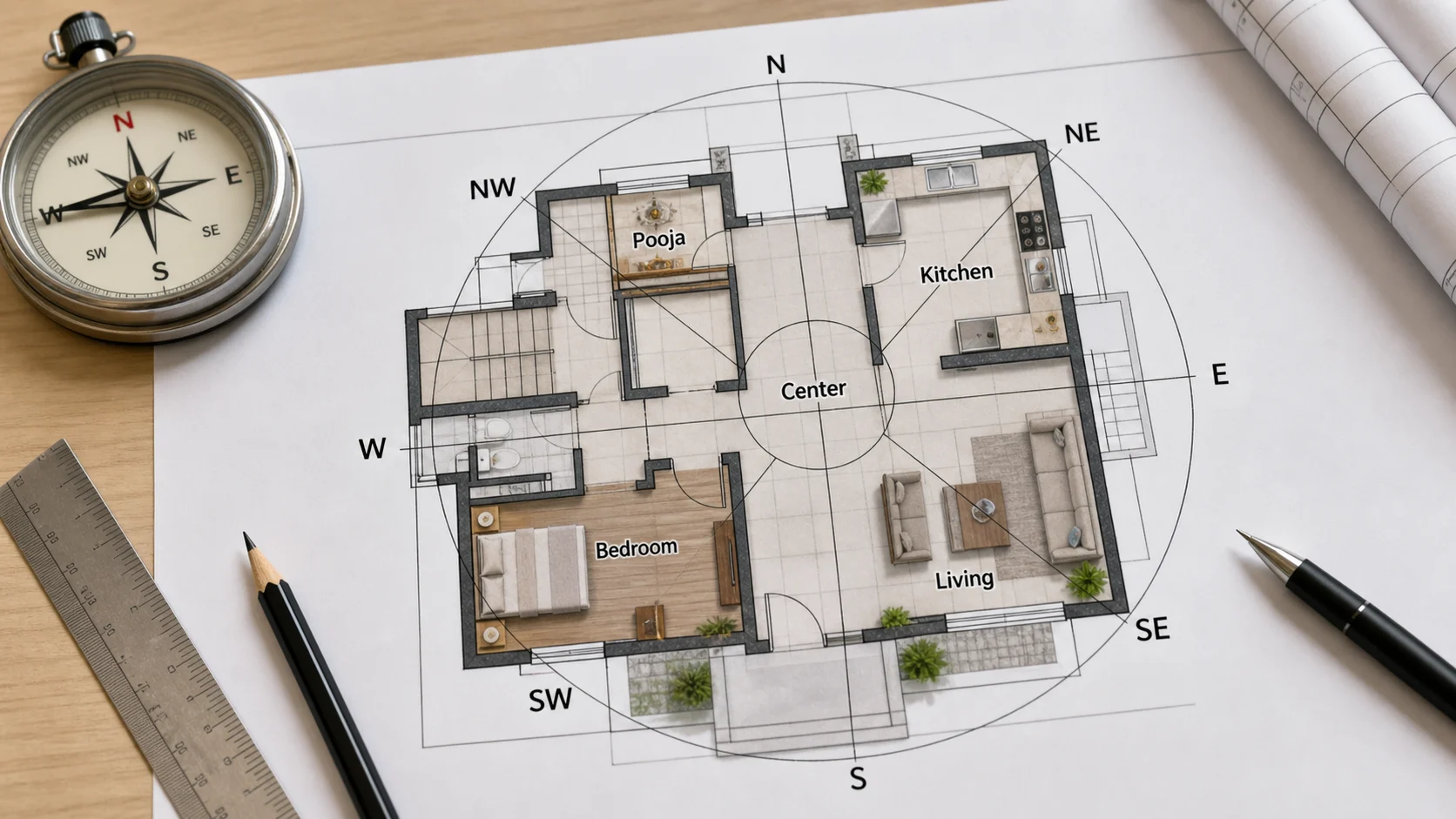
Select the room first, then choose the direction or centre zone from your floor plan. If you are unsure about the direction, measure it first using a compass and compare it with the plan. Do not guess from the way a room feels or from the side where sunlight enters, because sunlight and direction are related but not identical.
The result label is intentionally calm. Commonly Preferred means the combination is often supported by traditional guidance. Generally Suitable means it can work well in many layouts. Mixed / Depends on Layout means the room needs context. Usually Not Preferred Traditionally means traditional guidance advises caution. Practical Review Needed means the tool should not reduce the decision to a one-line rule.
Use the practical considerations as the real action list. For kitchens and bathrooms, plumbing, ventilation and safety matter heavily. For bedrooms and study areas, privacy, sleep, focus and light matter. For stairs and parking, structure, movement and building rules are essential. The best answer is the one that respects both traditional preference and the actual home.
What the Tool Does
The Room Placement Checker gives a calm educational interpretation for common rooms such as kitchen, master bedroom, pooja room, study, bathroom, balcony, utility and parking. It uses a reviewed static dataset at /assets/data/room-placement-rules.json. It does not send your selections anywhere and does not generate answers with AI.
A room may be traditionally preferred in one zone but still fail if it has poor light, weak ventilation, unsafe wiring, bad drainage or awkward circulation. A less preferred zone may be manageable when the home is already built and practical remedies are applied.
For more depth, read Room-wise Vastu, Complete Home Vastu Planning Guide and Balanced Layout.
Why Some Results Say Depends
Traditional Vastu guidance is not equally clear for every room-direction combination. Some placements are widely discussed, such as kitchen in the south-east or master bedroom in the south-west. Other combinations depend heavily on the exact home, door swing, window position, plumbing shaft, furniture plan and family routine. In those cases, the checker avoids dramatic claims and asks for practical review.
This makes the tool more useful for modern homes. Apartments, duplexes, villas and rental flats all have different constraints. A calm, honest result is better than a strong answer that ignores construction reality.
How to Act on a Result
If the result is favourable, still check whether the room is pleasant to use. A preferred kitchen still needs ventilation, safe stove placement and clean storage. A preferred bedroom still needs privacy, low noise and practical wardrobe access. If the result is cautious, start with no-demolition improvements: declutter, brighten, ventilate, repair leaks, organize storage and improve movement. Permanent changes should wait until the practical cost and professional risk are clear.
FAQs
Is the tool free?
Yes. The tool is free to use in your browser.
Does it store my information?
It does not upload your answers. Checklist pages save selections only in this browser where applicable.
Is this a professional consultation?
No. It is an educational planning aid and not a substitute for qualified professional advice.
Can I use it for an apartment?
Yes. It is designed for apartments, houses and rental homes with practical limitations in mind.
Can renters use it?
Yes. Renters should focus on reversible improvements and owner-approved repairs.
Should structural safety take priority?
Yes. Structural, electrical, plumbing, fire and building-code safety should always come first.
Is Vastu scientifically proven?
Vastu includes traditional planning ideas. Use it thoughtfully with practical evidence, comfort and professional guidance.
Does it cover every possible rule?
No. It summarizes common guidance from existing VastuEssentials content and returns practical review guidance where needed.