
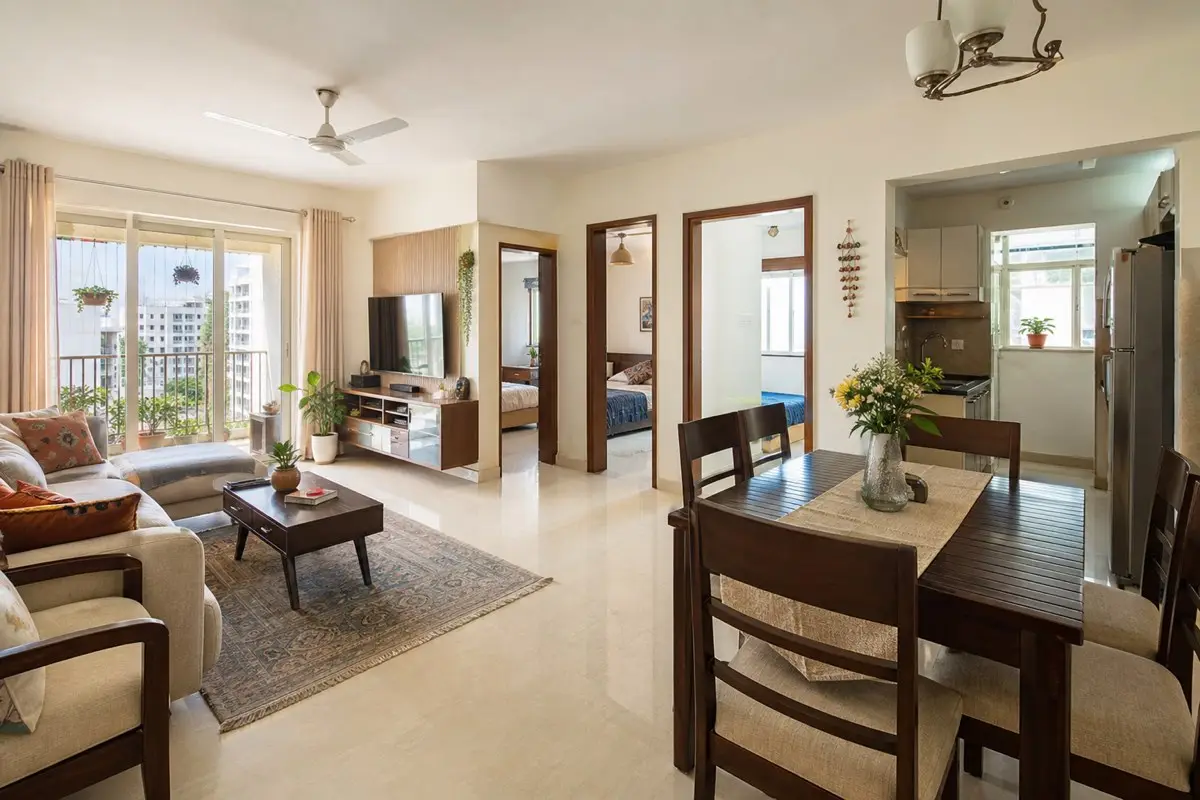
Start with the actual flat, not the tower
A builder may advertise an entire project as east-facing or Vastu-compliant, but every apartment has its own entrance and room arrangement. Stand inside the unit door and look outward to identify facing. Confirm it with repeated compass readings and the approved floor plan. Lift shafts, steel doors, electrical rooms, and appliances can disturb a phone compass.
Check whether the brochure plan is mirrored. Two units may look identical on paper but have opposite orientations. Mark north, the centre of the usable flat, the entrance, kitchen, bedrooms, toilets, balconies, and shafts. Do not include common corridors or neighbouring units in your internal room grid.
Orientation
Verify the door and plan north arrow.
Function
Test furniture, storage, privacy, and movement.
Condition
Inspect light, airflow, noise, leakage, and services.
Main entrance and foyer
Selected north and east entrance segments are commonly preferred, but the exact door location matters more than a broad label. The door should open fully, lock securely, and lead into a clear passage. Check fire rating, door swing, corridor width, lift proximity, noise, and whether neighbours' doors collide.
Keep the foyer bright and free from shoe piles or delivery cartons. A slim internal shoe unit, mirror positioned for use rather than fear, and a small console may work if they do not narrow circulation. Never drill or alter a fire-rated apartment door without society and safety approval.
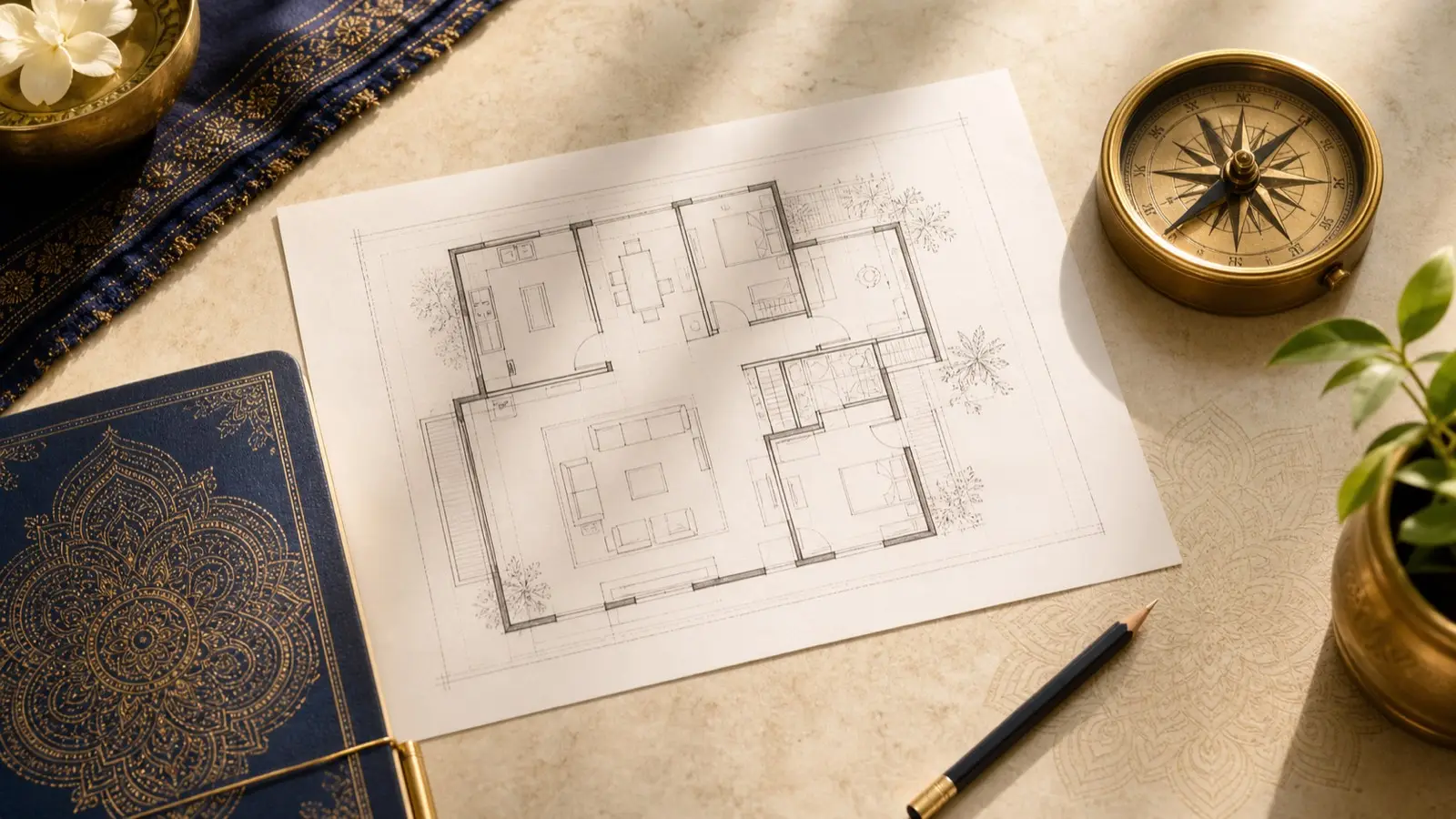
Ideal 2BHK room-placement overview
| Space | Common preference | Practical check |
|---|---|---|
| Living/dining | North, east, or north-east | Daylight, seating, circulation |
| Kitchen | South-east; north-west alternative | Exhaust, gas, work triangle |
| Main bedroom | South-west or west | Privacy, wardrobe, bathroom |
| Second bedroom | West, north-west, or north | Child, guest, or office needs |
| Pooja corner | North-east or east/north wall | Clean, dry, safe flame |
| Toilets | Away from centre and prayer | Ventilation, slope, waterproofing |
Living and dining areas
The living room often occupies the largest shared zone, so judge it by daylight, furniture walls, balcony access, and privacy. A north or east location may feel pleasant, but a well-shaded west living room can also work. Make sure the sofa does not block the entrance path and the television is not placed where glare makes it unusable.
The dining table should have enough chair clearance and a convenient route to the kitchen. Avoid squeezing it into the main passage. In an open plan, use a rug, pendant, or furniture arrangement to define areas without constructing heavy partitions. Keep the central circulation free from permanent storage.
Compact kitchen planning
South-east is the common first choice, while north-west is a practical alternative. A 2BHK kitchen must fit the hob, sink, refrigerator, preparation counter, dry storage, waste, and ventilation efficiently. Facing east while cooking is preferred where possible, but a safe counter and exhaust route are essential.
Check whether the utility balcony supports a washing machine, gas cylinder where legal, and drying without blocking ventilation. Repair leaks and separate sink and hob enough for safe use. Do not relocate apartment gas or plumbing casually; coordinate with the society and qualified technicians.
Work triangle
Keep hob, sink, and refrigerator convenient but not crowded.
Exhaust
Confirm the chimney route reaches a permitted outlet.
Utility
Plan laundry, cylinders, cleaning supplies, and drainage.
Main bedroom
The south-west or west bedroom generally suits the primary occupants. Test a queen or king bed on the actual plan, including side tables, wardrobe doors, and walking space. Place the headboard against a solid wall; south or east head direction is commonly preferred when windows and doors permit.
Do not accept a room merely because its direction looks ideal. Check afternoon heat, traffic noise, AC outdoor-unit position, seepage, and attached bathroom ventilation. A smaller room may feel comfortable with built-in storage, while an apparently large room can become unusable after wardrobes are added.
Second bedroom: child, guest, parent, or office?
Decide the real use before applying rules. A child's room needs a safe window, study desk, storage, and supervision. A guest room benefits from privacy and simple luggage space. An older parent needs easy bathroom access, non-slip flooring, and minimal distance from shared areas. A home office needs controlled noise and video-call background.
North-west, west, or north can serve these uses depending on the unit. Avoid designing one room for four functions with no storage. A sofa bed, fold-down desk, or sliding wardrobe can help, but allow ventilation and escape access.
Toilets and bathrooms
Traditional guidance generally avoids toilets in the exact north-east or centre. In a completed flat, plumbing stacks cannot usually move. Focus on waterproofing, exhaust, floor slope, traps, dry-wet separation, and a door that does not create an awkward view from dining or prayer areas.
Inspect ceilings and shared walls for dampness. Run taps, flush toilets, and smell floor drains. Ask about recurring leakage from the unit above. A bathroom's maintenance history is often more important to daily wellbeing than a small directional variation.
Balcony, pooja, and storage
A north or east balcony can bring softer light, while west and south balconies need shade and heat control. Any balcony must have safe railings, working drainage, and weather-resistant finishes. Do not overload it with heavy planters or convert it illegally into a room.
A compact pooja cabinet may fit in a clean north-east or suitable east/north location. Keep it away from shoes, damp walls, and unsafe open flame. Storage should be distributed: daily items near use, heavy cupboards on solid walls, and luggage where it does not occupy the centre or balcony.
2BHK buying checklist
Direction
Verify the door and non-mirrored plan.
Furniture
Test real bed, sofa, dining, and wardrobe dimensions.
Light
Visit during daylight and inspect blocked windows.
Ventilation
Check kitchen, toilets, shafts, and cross-breeze.
Noise
Listen near lifts, roads, generators, and neighbours.
Legal
Review approvals, area, parking, dues, and society rules.
Improving a fixed 2BHK without demolition
Use room assignment, furniture, light, curtains, and storage before considering construction. Move the main bedroom to the quieter suitable room, reposition a desk, simplify the entrance, or add effective kitchen exhaust. Repair leakage, loose wiring, damaged locks, and blocked drains promptly.
Choose light colours where rooms are small or dark. Use mirrors for function and daylight without placing them where reflections disturb sleep. Avoid buying many symbolic remedies that add clutter. In apartments, obtain written permission before drilling slabs, enclosing balconies, moving wet areas, or changing exterior appearance.
Common 2BHK mistakes
Buyers often focus only on facing and ignore carpet area, furniture clearance, shaft ventilation, and privacy. Another mistake is judging an empty sample flat; scaled-down furniture can make rooms appear larger. Measure the actual unit and compare it with registered documents.
Do not reject a practical flat for a minor deviation while accepting a poorly built “perfect” layout. Vastu is one part of due diligence. Affordability, commute, legal status, structure, water, fire safety, maintenance, and family needs decide whether the home remains sustainable.
Adapting a 2BHK for different families
A young couple may use the second bedroom as an office and guest room, while a family with children needs study storage and play space. Multigenerational households may prioritise an accessible bedroom near the living area. Decide these needs before judging the plan because the same direction can support different functions.
Plan for change. A fixed study can become a child's wardrobe, and a guest sofa can become daily clutter. Modular storage, a comfortable sofa bed, movable side tables, and a desk with cable management keep the second room flexible without sacrificing ventilation or circulation.
Carpet area and furniture reality
Compare carpet area rather than relying on super built-up area. Measure wall-to-wall dimensions, columns, shafts, door swings, and window positions. Draw furniture to scale. A bedroom that technically fits a bed may have no space to open the wardrobe, while a dining table may block the route to the balcony.
Check vertical storage too. Ceiling-height cupboards can help but must allow access to electrical panels, AC lines, and plumbing. Avoid filling the centre with cabinets. Use under-bed storage for low-frequency items and keep cleaning supplies safely away from food and children.
Before possession and moving in
During handover, test every socket, tap, drain, lock, window, fan, exhaust, intercom, and appliance point. Look for hollow tiles, reverse bathroom slopes, seepage, cracked sealant, unsafe balcony rails, and blocked shafts. Record defects in writing with photographs and deadlines.
Collect the approved unit plan, warranties, meter details, parking allocation, society rules, and emergency contacts. Clean construction dust before moving furniture. Set up one bathroom, basic kitchen, sleeping area, lights, fans, medicines, and drinking water first. A calm move creates a better beginning than rushing to complete decoration.
Frequently asked questions
Which facing is best for a 2BHK?
No facing guarantees success. Entrance position and complete layout matter.
Where should the main bedroom be?
South-west or west is commonly preferred when privacy and comfort work.
Can the second bedroom become an office?
Yes. Prioritise daylight, desk direction, storage, acoustics, and flexibility.
What if the kitchen is not south-east?
North-west is a common alternative; improve safety, exhaust, workflow, and cleanliness.
Should plumbing be moved for Vastu?
Usually not without society, architectural, and technical approval. Improve the existing wet area first.