
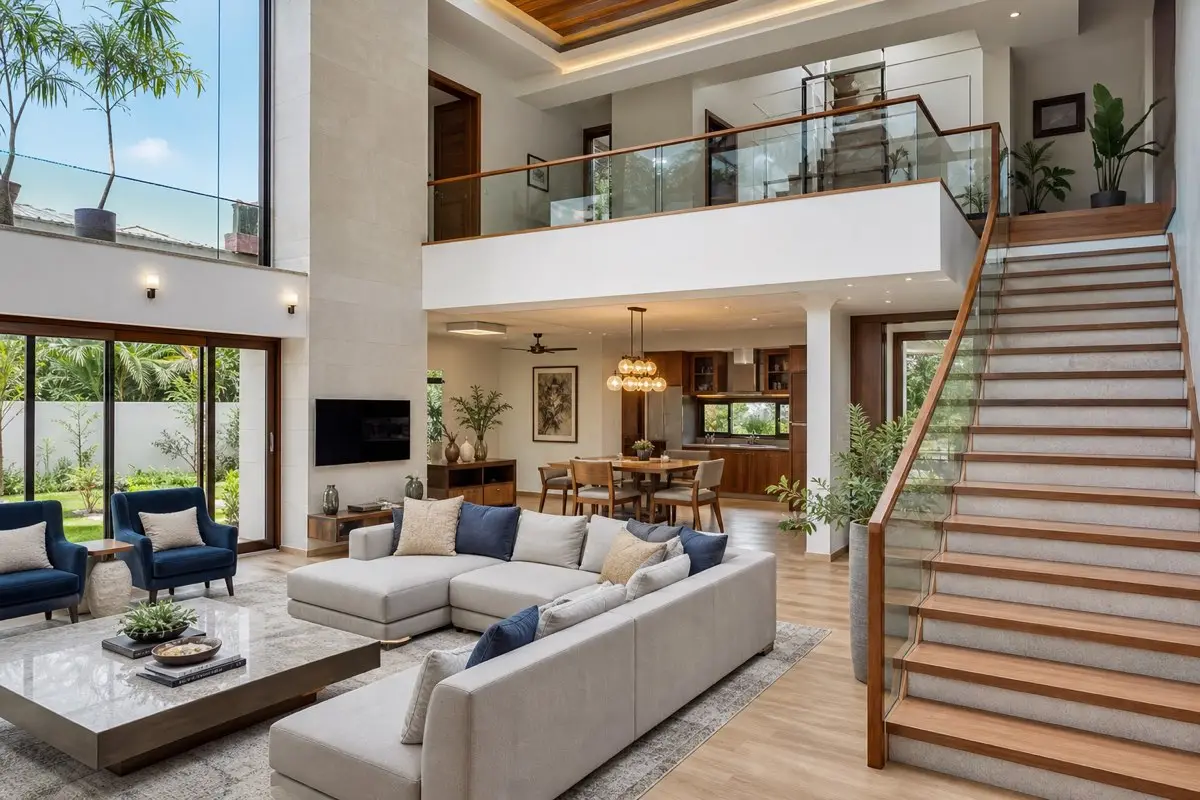
Treat the duplex as one connected home
Begin with the plot and ground-floor entrance, then review each floor and the vertical links between them. Mark north consistently on every drawing. Align the floor plans so kitchens, toilets, shafts, columns, and stairs can be understood together. A room may look suitable on one floor while creating an awkward load or plumbing conflict below.
Decide who uses each level. Families with elderly members may need a bedroom and full bathroom on the entrance floor. Children may sleep upstairs near parents. Guests need privacy without crossing personal spaces. These decisions should shape the plan before decorative preferences.
Horizontal
Rooms, entrances, windows, and circulation on each floor.
Vertical
Stairs, columns, shafts, voids, tanks, and services.
Human
Privacy, accessibility, supervision, and daily routines.
Main entrance and ground-floor zoning
Verify entrance direction from inside the main door. Selected north and east segments are commonly preferred, but the exact position and entire plan matter. Keep the approach level, shaded, secure, and easy to navigate. The foyer should not force visitors directly toward private stairs or bedrooms.
Ground-floor living and dining often work toward north or east, with kitchen in south-east and north-west as an alternative. Reserve a calm north-east area for prayer, study, or light shared use. Place heavy storage and suitable private functions toward south or west where practical.
Staircase placement and safety
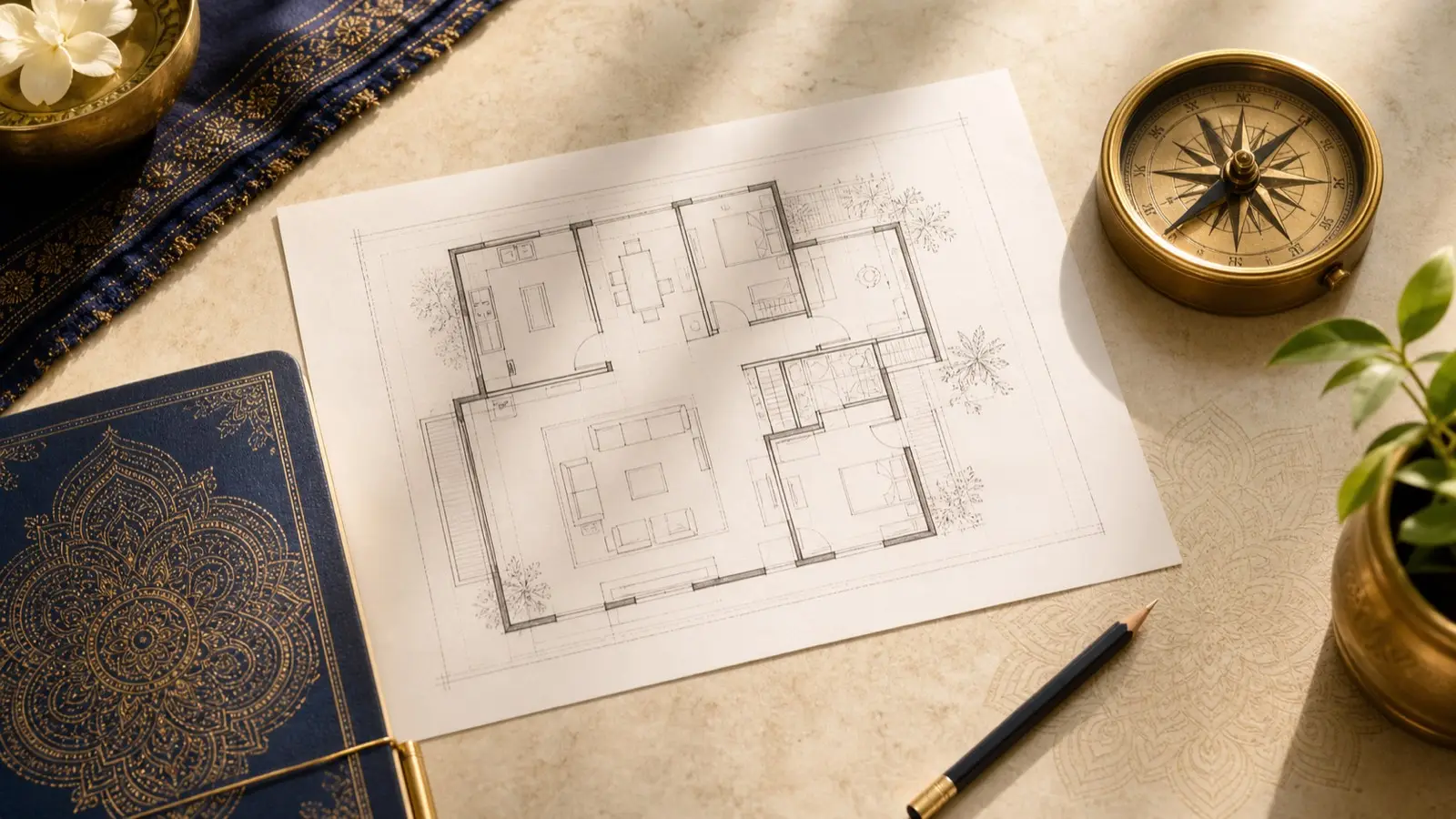
Traditional guidance often favours stairs in south, west, or south-west and commonly describes clockwise ascent as preferable. These ideas must be integrated with structural spans, headroom, landings, fire escape, and comfortable riser-tread proportions. Never relocate or cut a structural staircase informally.
Provide handrails, non-slip treads, visual contrast, child gates where needed, and lighting controlled from both levels. Avoid loose rugs and decorative objects on steps. A stair beneath a skylight needs heat and rain control. Storage below stairs must not obstruct wiring, ventilation, or inspection.
| Stair check | Better practice | Avoid |
|---|---|---|
| Location | Coordinate south/west preference with structure | Blocking the centre or entrance |
| Dimensions | Consistent risers, adequate treads and headroom | Uneven or steep steps |
| Lighting | Natural plus night lighting | Dark landings and glare |
| Safety | Continuous handrail and secure balustrade | Wide gaps and slippery edges |
Double-height living spaces
A double-height room can bring daylight and visual connection, but it affects cooling, acoustics, privacy, and usable floor area. North or east light may be easier to manage, while large west or south glass needs external shade. High windows require safe cleaning access.
Control echo with curtains, upholstered furniture, rugs, or acoustic panels. Ceiling fans and air-conditioning need specialist design because warm air rises. Do not suspend heavy lighting without structural support. The open void should have safe upper-level railings and should not interrupt essential escape routes.
Kitchen, dining, and utility
South-east remains the traditional kitchen preference; north-west is an alternative. Keep the kitchen and dining connected without placing the stair through food circulation. Plan hob, sink, refrigerator, storage, chimney, gas, and utility as one workflow. Vent exhaust away from upper bedroom windows.
If bedrooms sit above or beside the kitchen, consider heat, sound, and service routes. Avoid placing a bed directly against a noisy chimney or plumbing stack. Utility areas need drainage, ventilation, and access for repairs.
Bedrooms across both floors
The main bedroom commonly suits south-west on an upper or ground floor, depending on privacy and accessibility. A ground-floor bedroom helps older adults and guests. Place beds against solid walls with head toward south or east where practical. Check heat, noise, windows, and bathroom access.
Children's rooms may occupy west, north, or east zones with safe balconies and supervision. North-west can suit guests. Avoid isolating young children across a large void or stair. Provide smoke alarms, night lighting, and a family emergency plan for both floors.
Ground bedroom
Useful for parents, guests, injury recovery, and accessibility.
Main suite
Prioritise privacy, shade, wardrobe, and bathroom maintenance.
Children
Balance study, sleep, balcony safety, and supervision.
Bathrooms and vertical plumbing
Stacking wet areas can simplify plumbing, but do not place toilets over prayer areas, kitchen cooking zones, or sensitive electrical rooms when alternatives exist. Traditional guidance avoids toilets in north-east and the centre. Every bathroom needs waterproofing, exhaust, slope, traps, and service access.
Photograph concealed pipes before walls close. Provide shut-off valves by floor. A leak upstairs can damage ceilings and wardrobes below, so test waterproofing carefully and maintain sealants.
Upper lounge, terrace, and balcony
An upper family lounge can connect bedrooms without turning the landing into clutter. Keep furniture away from stair edges and preserve escape width. A study or meditation corner may suit a bright north or east area if glare is controlled.
Terraces and balconies need correct slopes, overflow drains, parapet safety, waterproofing, and legal load limits. Place heavy planters or tanks only with structural approval. Shade western terraces and keep all outlets clear before monsoon.
Tanks, solar, electrical, and lifts
Coordinate overhead tank, solar panels, inverter, AC outdoor units, and electrical distribution with structure and maintenance access. Traditional approaches may favour heavier overhead storage toward west or south-west, but an engineer must approve loads. Keep underground water and septic systems compliant with local rules.
If a home lift is planned, safety standards, rescue access, power backup, and maintenance govern its position. Do not squeeze a lift into an unsuitable centre merely to avoid changing room labels. Future ageing needs are best considered at concept stage.
Duplex design checklist
Overlay floors
Align structure, stairs, voids, wet areas, and shafts.
Accessibility
Provide a usable ground-floor bedroom and bathroom.
Fire safety
Plan alarms, escape, rails, lighting, and power backup.
Climate
Control double-height heat, glare, and airflow.
Privacy
Separate visitors from private upper rooms.
Maintenance
Keep valves, drains, equipment, and roof accessible.
Construction-stage reviews
Freeze the family brief and concept plan before structural design. Review stair marking, door openings, service sleeves, bathroom slopes, and furniture before masonry closes. Changes become expensive once slabs and plumbing are complete.
Maintain one updated drawing set. Record concealed services and product warranties. Vastu changes must pass through the architect and engineer; never instruct a mason to shift structure from a verbal suggestion.
Managing privacy between levels
A staircase can expose upper bedrooms directly to visitors. Use landing orientation, a short lobby, or furniture to create separation without blocking airflow. Avoid placing a bedroom door at the immediate top of a stair where noise and movement disturb sleep. Bathrooms should not open toward the stair void or dining area.
Sound travels vertically through double-height spaces. Place televisions, music systems, and children's play away from quiet bedrooms where possible. Soft furnishings and acoustic finishes help, but room arrangement is the first solution. Give each level enough storage so belongings do not collect on landings.
Designing for children, ageing, and emergencies
A duplex must remain usable when someone is injured, pregnant, elderly, or carrying a sleeping child. Provide a ground-floor bedroom or flexible room near a full bathroom. Use a secure stair gate, continuous handrail, non-slip nosing, and night lighting. Keep emergency numbers and a fire extinguisher accessible.
If a future lift is possible, reserve a structurally suitable location and power provision during design. Do not create a narrow platform or makeshift lift later. Accessibility planning is not a negative prediction; it protects the home's long-term value.
Climate and energy across two floors
Upper floors and terraces usually receive more heat. Use roof insulation, reflective or shaded surfaces, cross-ventilation, and correctly sized cooling. A skylight needs external heat control and safe maintenance access. Bedrooms should not depend on an open stair for ventilation because odour and noise also travel through it.
Plan solar panels, hot-water systems, AC outdoor units, and rainwater pipes together. Keep equipment away from parapet edges and accessible for service. Drain condensation safely rather than allowing it to stain walls or drip near the entrance.
Before handover, walk both levels with the architect and contractor. Test every light switch from the route where it will be used, inspect railings, measure headroom, run all drains, and check doors near landings. Confirm waterproofing on terraces and upper bathrooms because a small leak can damage several rooms below. Store approved drawings, structural details, service routes, warranties, and emergency instructions together. A well-documented duplex remains easier and safer to maintain. Repeat this inspection after the first monsoon and correct defects before warranties expire.
Frequently asked questions
Which direction is best for a duplex staircase?
South, west, or south-west is commonly preferred when structure and safety permit.
Can the main bedroom be upstairs?
Yes. Choose a suitable south-west or west room while considering accessibility.
Is a double-height centre acceptable?
It can work when structure, climate, acoustics, railings, and circulation are resolved.
Should toilets be stacked?
Stacking simplifies services, but avoid sensitive rooms below and ensure waterproofing.
Can a duplex have a home lift?
Yes, with compliant design, rescue access, power backup, and maintenance.