
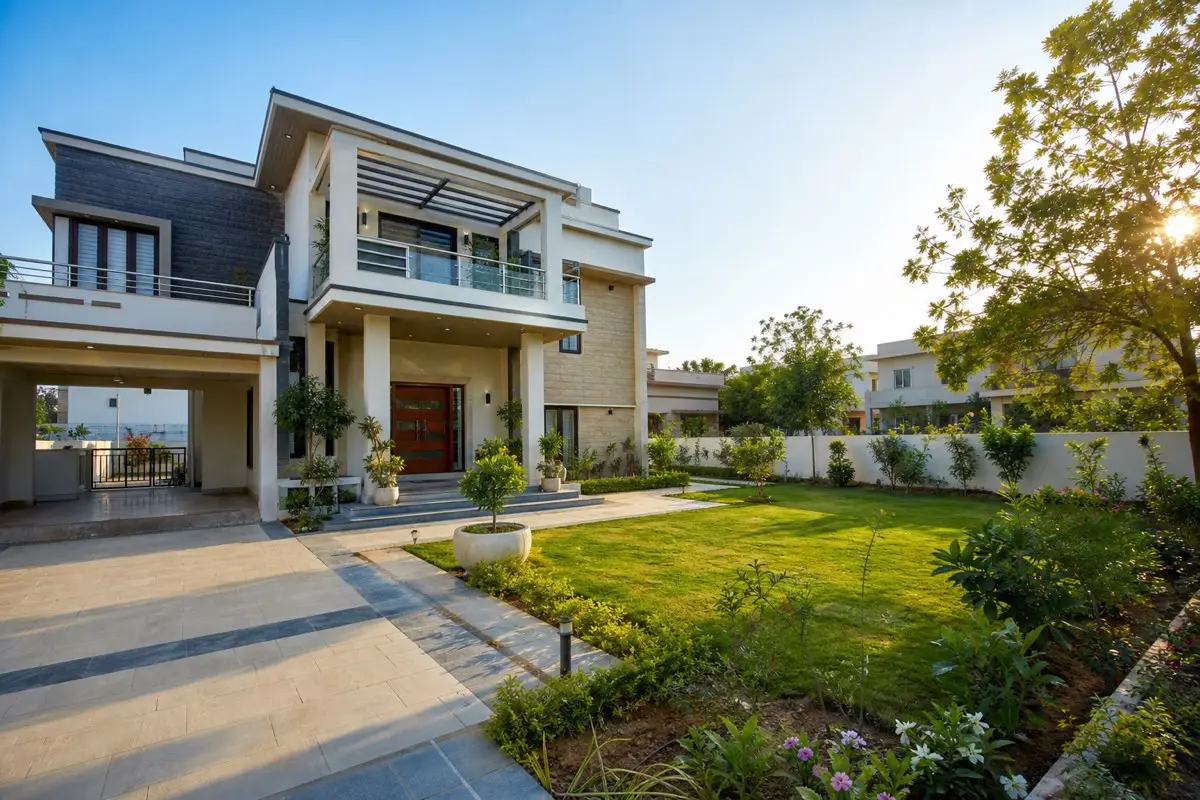
What is a north-east facing house?
Stand inside the main door and look outward. If you face broadly toward the north-east, the house has a north-east facing entrance. Confirm the bearing with several compass readings away from metal gates, vehicles, electrical panels, and large appliances. Compare it with the sanctioned plan because broker descriptions may refer to the road, balcony, or plot rather than the door.
North-east lies between north and east and is commonly called Ishan. Traditional Vastu connects it with morning light, clarity, water, prayer, and openness. Yet a door near north-east is only one component. A healthy house also needs proper ventilation, safe structure, dry walls, good plumbing, usable rooms, and a plan suited to the family.
Verify
Check the entrance bearing from inside the main door.
Measure
Locate the door precisely along the north or east wall.
Review
Assess every room, not just the favourable label.
Main entrance planning
Keep the approach clear, level, well lit, and protected from rain. The door should open smoothly without colliding with furniture or narrowing an escape route. A slightly larger, well-proportioned main door can create a welcoming arrival, but security, fire safety, and accessibility are more important than decoration.
Do not crowd the north-east entrance with a large shoe cabinet, dustbin, dead plants, leaking drain, or parked scooter. In apartments, respect the common corridor and society rules. Use a neat nameplate and steady warm light. If privacy is weak, arrange an internal console or light screen without blocking circulation.
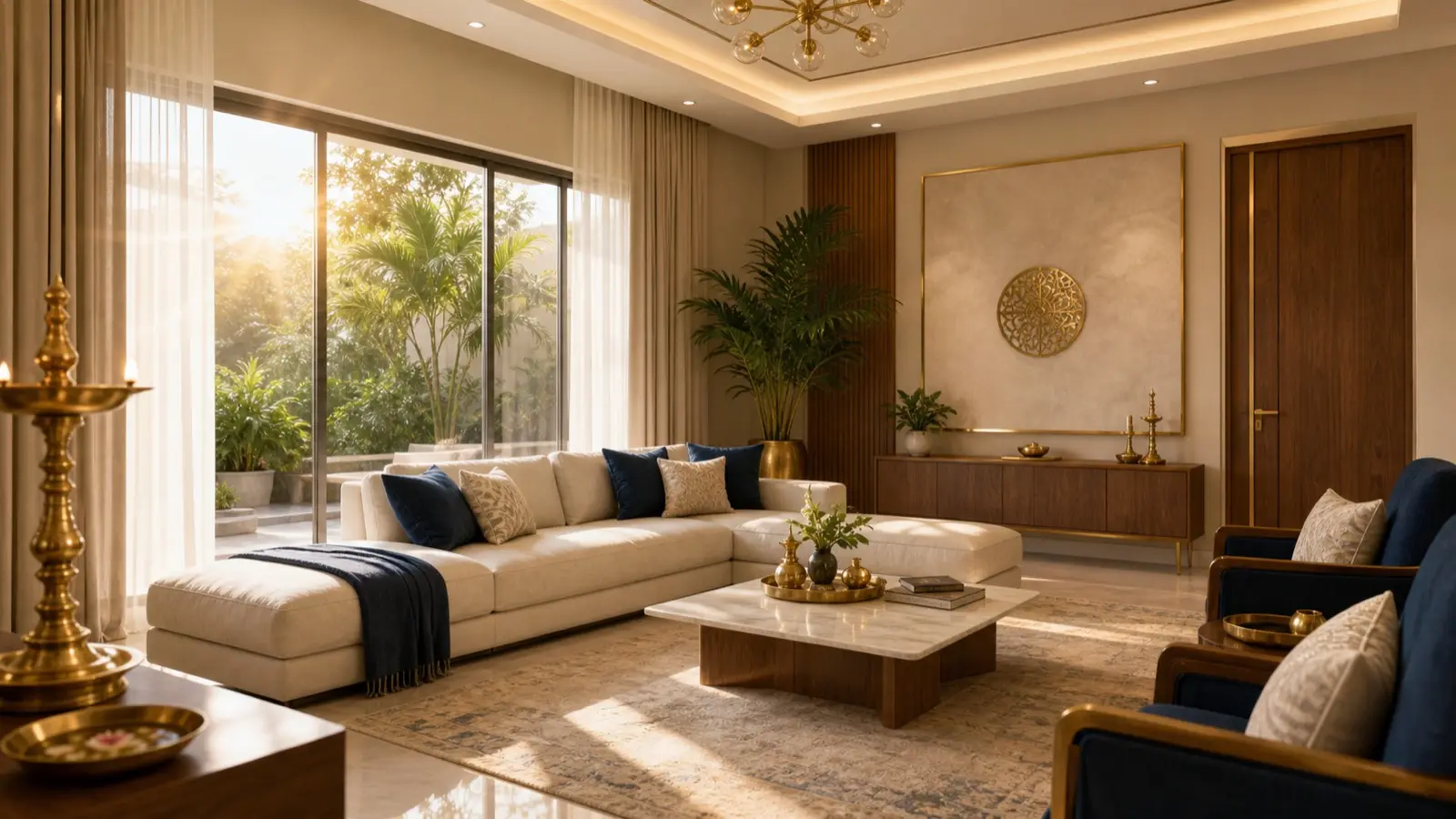
Room-by-room placement overview
| Room | Common preference | Practical check |
|---|---|---|
| Living room | North, east, or north-east | Comfortable seating and daylight |
| Kitchen | South-east; north-west alternative | Exhaust, gas safety, work triangle |
| Master bedroom | South-west or west | Privacy, heat control, solid headboard wall |
| Pooja | Clean north-east or east/north zone | Quiet, dry, and easy to maintain |
| Toilets | Away from centre and prayer | Ventilation, waterproofing, drainage |
| Staircase | South, west, or south-west | Safe rise, headroom, handrail, light |
Living room and north-east openness
A living room toward north or east can benefit from softer daylight and a natural connection to the entrance. Keep the heaviest storage away from delicate windows and preserve a clear path from door to seating. Place the sofa according to conversation, glare, and circulation rather than forcing everyone into one compass direction.
If the north-east becomes a balcony or garden, keep drainage working and avoid using it as dead storage. Lightweight seating and healthy plants can work well. An open zone does not mean an empty, unusable room; it means the area should not feel dark, damp, congested, or overloaded.
Kitchen placement
South-east is the traditional first choice for the kitchen because it is associated with fire. North-west is often treated as a workable alternative. Arrange the stove, sink, refrigerator, preparation counter, and storage as a safe workflow. Facing east while cooking is a familiar preference when the plan allows it.
Avoid placing an active kitchen in the north-east if designing from the beginning. In an existing house, do not panic or demolish automatically. Improve exhaust, cleanliness, lighting, fire-water separation, and safe appliance placement. Consult the detailed Kitchen Vastu guide before making costly changes.
Fire
Keep the hob stable with clear space and effective exhaust.
Water
Repair leaks and leave practical separation between sink and stove.
Storage
Use accessible cabinets without blocking light or ventilation.
Bedrooms and sleeping
The main bedroom is commonly placed in the south-west for privacy and stability. West or south can also work depending on climate and plan. Place the headboard against a solid wall; sleeping with the head toward south or east is a widespread recommendation. Avoid an arrangement where the door strikes the bed or an AC drain can leak above it.
Children's rooms may suit west, north-west, or north zones when daylight, study space, and supervision work. Guest rooms often fit north-west because that area is associated with movement. Elderly residents need easy bathroom access, non-slip flooring, suitable bed height, and minimal stairs even if another zone looks theoretically stronger.
Pooja room and water features
The north-east is traditionally preferred for prayer or meditation. In a compact home, use a clean wall shelf or ventilated cabinet rather than an oversized shrine that blocks movement. Keep it away from damp plumbing walls, shoe storage, and unsafe flame locations. Follow family custom for idol orientation and daily use.
Some traditions also prefer underground water sources toward north or north-east. Engineering, groundwater regulation, setback rules, and sanitation must govern actual borewell or sump placement. Prevent stagnation and leakage. Decorative fountains are optional and need regular cleaning; they are not compulsory for a north-east house.
Toilets, stairs, and heavy storage
Avoid designing toilets in the exact north-east or centre when alternatives exist. More importantly, provide waterproofing, exhaust, floor slope, accessible traps, and separation from food preparation. A correctly directed bathroom with chronic seepage is still a serious problem.
Staircases and heavy storage are often placed toward south, west, or south-west. Never move a structural stair without an architect and engineer. Keep the north-east visually lighter by locating bulky cupboards on suitable solid walls. “Light” does not mean structurally weak; every column and beam must follow engineering requirements.
Buying checklist for a north-east facing home
Direction
Verify the actual door bearing and plan orientation.
Sunlight
Visit in the morning and afternoon to assess glare and heat.
Drainage
Inspect plot levels, balcony outlets, and signs of seepage.
Kitchen
Prefer a usable south-east or north-west arrangement.
Bedrooms
Check privacy, furniture walls, and bathroom access.
Legal
Confirm approvals, title, structure, parking, and services.
Common misconceptions
The first myth is that every north-east facing house is automatically lucky. Poor construction, unsafe access, financial strain, or an unusable plan cannot be cancelled by facing. The second is that north-east must be completely empty. A bright living area, prayer corner, balcony, or study can still use the zone responsibly.
The third is that a small directional defect demands demolition. Most occupied homes benefit first from maintenance, room reassignment, furniture adjustment, ventilation, and clutter control. Avoid fear-based purchases. Seek qualified architectural advice for structure and a consistent Vastu method for traditional interpretation.
North-east planning in duplex and multi-storey homes
Review each floor as part of one vertical system. A bright north-east on the ground floor can still be affected by a heavy enclosed room directly above it. Where possible, continue lighter uses such as a family sitting area, study, balcony, or prayer space on upper levels. This does not mean the entire corner must remain vacant; it means avoiding unnecessary congestion and maintaining useful daylight.
Coordinate stairs, lift, plumbing shafts, and overhead tanks across floors. Traditional guidance often prefers heavier vertical circulation toward south or west, but structural engineering and fire escape rules come first. A duplex stair needs safe rise and tread, full headroom, handrails, non-slip finishes, and adequate light.
Colours, materials, and landscape
Use pale, reflective finishes in north-east rooms when natural light is limited. Warm white, soft cream, muted green, or restrained pale blue can create calm without making the interior cold. Natural wood works as an accent, but avoid filling the corner with tall dark cabinets. Select moisture-resistant materials where the entrance faces monsoon rain.
Keep a north-east garden low and open enough to preserve visibility and sunlight. Small flowering plants, lawn, or a clean sitting corner may suit the area. Avoid a large tree where roots threaten the foundation or branches block entry. Landscape drainage should carry water away from the building instead of collecting against walls.
What to do when the layout is fixed
Begin with the problem you can observe. A dark north-east needs better lighting or a less obstructive layout. A damp wall needs waterproofing repair. A crowded entrance needs storage discipline. A hot bedroom needs shade and ventilation. These corrections improve the home regardless of symbolic interpretation.
If the kitchen or toilet occupies north-east, confirm direction before acting. Improve exhaust, drainage, hygiene, and fire safety; change room use only when affordable and structurally permitted. Avoid drilling structural walls or moving plumbing without approval. Decorative objects should never be marketed as substitutes for repairs.
Daily care
Morning light
Open curtains and ventilate when outdoor air permits.
Dry surfaces
Repair leaks and protect floors from wet planters.
Clear movement
Return shoes, bags, and deliveries to storage.
Frequently asked questions
Is a north-east facing house always good?
It is widely preferred, but the entrance position and complete layout still require review.
Where should the kitchen be?
South-east is commonly preferred, with north-west as an alternative.
Can the master bedroom be in north-east?
South-west is generally preferred; use north-east for lighter shared or contemplative activity where possible.
Is a toilet in north-east harmful?
Traditional guidance discourages it. In an existing home, prioritise dryness, ventilation, cleanliness, and professional advice.
Which colours suit this house?
Use light, calm colours based on room light; avoid making the north-east excessively dark.