
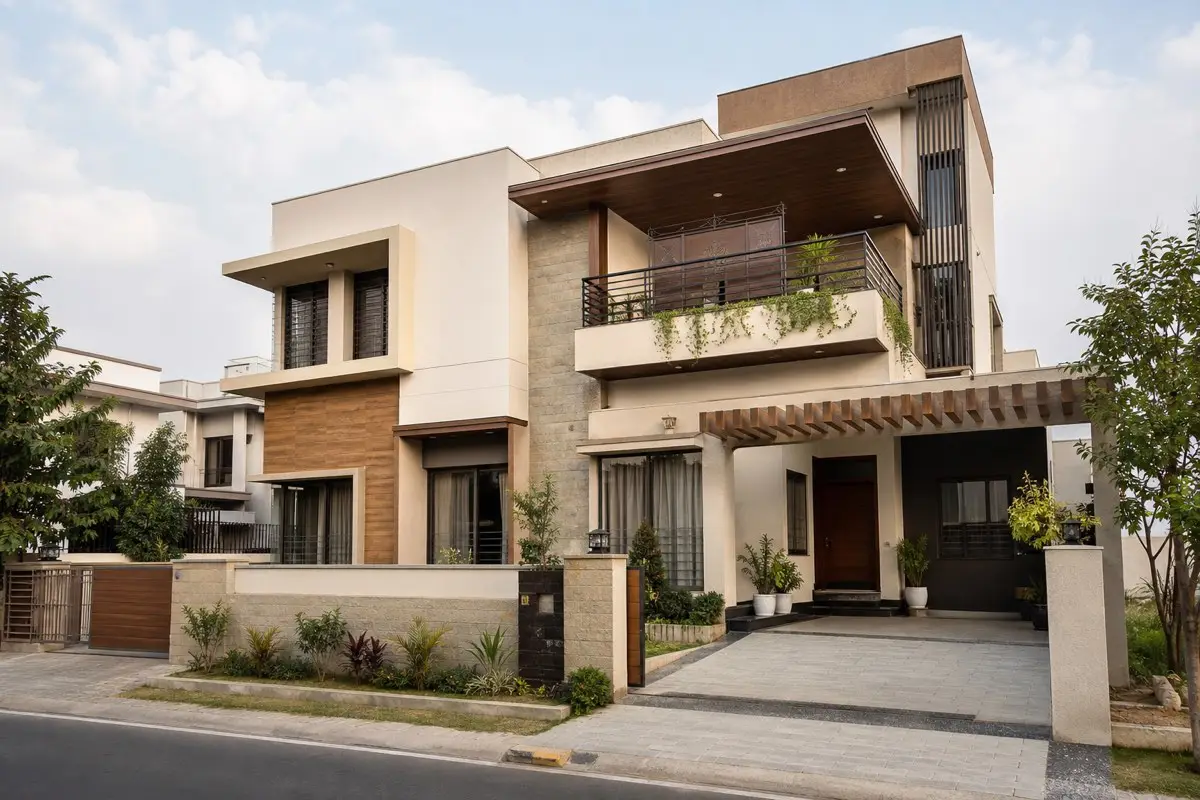
What is a north-west facing house?
Stand inside the main entrance and look outward. If the compass points between north and west, the entrance faces north-west. Take several readings away from metal gates, electrical panels, vehicles, lifts, and appliances. Compare the result with the approved drawing because a broker may describe the road, balcony, or plot instead of the actual door.
North-west is traditionally called Vayavya and is associated with air, movement, guests, travel, trade, and changing activity. These ideas make it suitable for some temporary or active functions. They do not mean residents must experience instability. A coherent layout, safe structure, daylight, ventilation, privacy, and sensible routines remain more important than a label.
Verify
Check the true door bearing and north arrow.
Measure
Locate the entrance centre along the wall.
Review
Assess every room and service connection.
Entrance and arrival
A north-west entrance should open smoothly into a bright, legible foyer. Keep the landing level, dry, secure, and protected from wind-driven rain. Do not block it with shoe piles, delivery cartons, dustbins, or large planters. A readable nameplate, dependable light, and working bell create a better first impression than excessive symbolic decoration.
Strong breeze can cause doors to slam. Use suitable hardware, but never obstruct a fire-rated exit. If the door exposes the living room, create privacy with furniture or a light screen while preserving circulation. In an apartment, keep all items inside the unit unless society rules permit corridor storage.
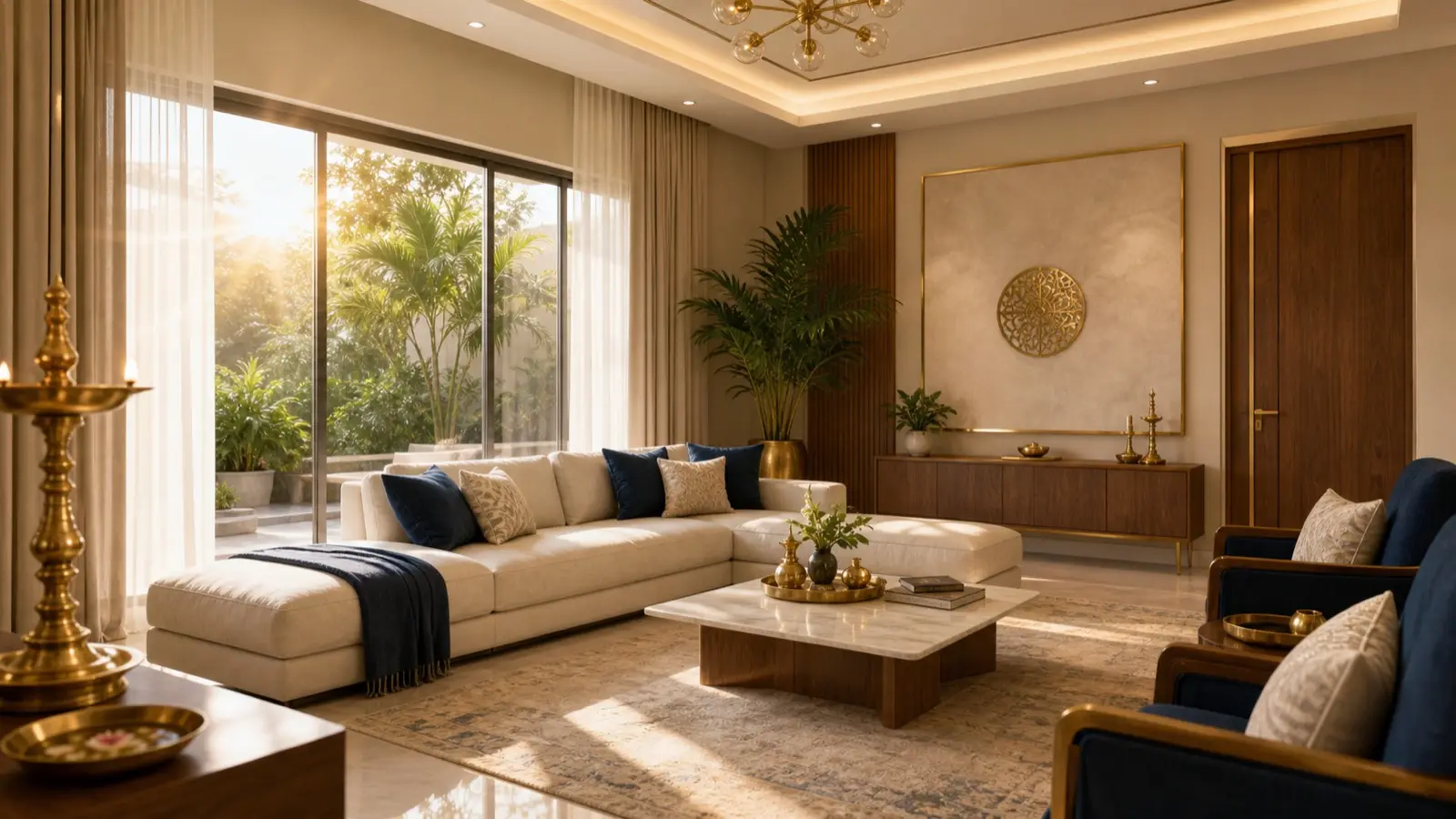
Room placement overview
| Area | Common preference | Practical check |
|---|---|---|
| Living room | North, east, or north-east | Light, seating, circulation |
| Kitchen | South-east; north-west alternative | Exhaust, gas safety, counters |
| Main bedroom | South-west or west | Privacy and thermal comfort |
| Guest room | North-west or west | Independent access and storage |
| Pooja | North-east or calm east/north wall | Clean, dry, safe lamp location |
| Staircase | South, west, or south-west | Structure, headroom, handrails |
Can the kitchen be in north-west?
Many traditions accept north-west as the second choice when a south-east kitchen is unavailable. If the kitchen occupies this zone, place the hob on a stable counter and arrange the cook to face east where practical. Provide powerful exhaust because wind patterns can carry smoke and odour toward bedrooms or neighbours.
Keep the sink and stove at a safe working distance, repair leaks, and leave clearance around the refrigerator. A kitchen succeeds through hygiene, workflow, ventilation, and fire safety—not direction alone. Avoid relocating gas, plumbing, or structural openings without licensed professionals.
Bedrooms, guests, and children
The south-west generally suits the main bedroom because it is more private and stable. Place the headboard against a solid wall; south or east head direction is commonly preferred. Control western heat with shade, curtains, insulation, and ventilation. Avoid locating the bed where the door strikes it or below a leaking AC pipe.
The north-west often suits a guest room because visitors naturally stay for a limited period. It may also work for older children or a home office when noise and daylight are controlled. Do not force an elderly resident into a distant room simply to follow a chart; accessibility, bathroom proximity, non-slip flooring, and emergency support come first.
Main bedroom
Prioritise privacy, a solid headboard wall, and restful light.
Guest room
Provide ventilation, luggage space, and simple privacy.
Children
Balance sleep, study, supervision, and safe windows.
Managing wind, dust, and weather
North-west openings may catch useful breeze, but uncontrolled airflow can bring dust, rain, street noise, or kitchen smell. Use operable windows, insect screens, weather seals, and curtains so residents can adjust conditions. Cross-ventilation should move air through clean zones without pulling bathroom odour into bedrooms.
Visit the property during different seasons if possible. A pleasant summer breeze may become driving monsoon rain. Inspect balcony slopes, window seals, parapets, and drains. Trees can filter dust and glare, but locate them where roots and branches do not damage foundations, walls, or overhead services.
Bathrooms, staircase, parking, and storage
Bathrooms need excellent exhaust, waterproofing, floor slope, and maintainable plumbing wherever they occur. Avoid placing them in the exact north-east or centre when designing a new plan. Keep bathroom doors from opening awkwardly toward dining or prayer areas and repair smell or seepage immediately.
Stairs and heavy storage are commonly placed toward south or west. Parking may work in north-west where circulation and gate movement are safe. Keep wardrobes on solid walls without blocking windows. Never move columns, beams, stairs, or fire exits to satisfy a diagram without engineering approval.
Colours and materials
Use colours based on light and room purpose. Warm white, cream, pale grey, muted blue, and natural wood can calm a breezy north-west interior. Avoid covering every room in one prescribed colour. Test large samples in daylight and after sunset because artificial lighting changes their appearance.
Choose durable entrance finishes, non-slip outdoor flooring, corrosion-resistant hardware, and washable kitchen surfaces. Materials should solve real climate and maintenance problems. Decorative metal objects are optional; they cannot correct leaking windows, unsafe wiring, or poor ventilation.
Practical remedies without demolition
Start with accurate diagnosis. Improve door control if wind causes slamming, add weather seals, reduce clutter, repair drains, and use layered lighting. If a bedroom feels unsettled, simplify furniture and move the headboard to a solid wall. If the kitchen is smoky, upgrade exhaust before buying remedies.
Room reassignment can sometimes help: a restless north-west main bedroom may become a guest room or study while a quieter south-west room becomes the main bedroom. Make changes only when they support family needs. Avoid fear-driven alterations to rented homes or apartments.
Buying checklist
Facing
Verify the unit door, not the road or balcony.
Wind
Check noise, dust, rain, and cross-ventilation.
Kitchen
Review location, exhaust, gas, sink, and storage.
Bedrooms
Confirm privacy, heat, windows, and furniture walls.
Services
Inspect plumbing, wiring, drainage, and waterproofing.
Documents
Check title, approvals, structure, parking, and costs.
Myths to avoid
A north-west facing house is not automatically unstable, and it does not force residents to travel or leave. Such claims turn symbolic associations into predictions. Home outcomes depend on people, finances, health, neighbourhood, building quality, and countless other factors.
Likewise, a favourable door cannot compensate for an unaffordable loan, unsafe wiring, chronic leakage, or poor daylight. Use Vastu as a planning framework within responsible property due diligence. Choose one consistent method instead of mixing contradictory online charts.
Duplex and multi-storey planning
Review north-west across every floor rather than evaluating the ground floor alone. A guest room above a utility area may work, while a bedroom above a noisy kitchen exhaust could become uncomfortable. Align plumbing shafts and service routes so maintenance does not require breaking finished bedrooms. Upper balconies need secure railings, correct slopes, and weather protection.
Stairs, lifts, overhead tanks, and solar equipment must follow structural and fire-safety design. Traditional preferences can guide broad zoning, but they cannot override escape width, headroom, seismic detailing, or waterproofing. Keep an updated service drawing so future repairs do not damage hidden pipes and cables.
Making a mobile zone feel calm
Because north-west is associated with movement, residents sometimes assume the room must feel restless. In practice, noise, wind, clutter, and changing room functions create that feeling. Use acoustic curtains, door buffers, organised storage, warm layered lighting, and a clear routine. Give frequently used items fixed places so the foyer and guest room do not become dumping grounds.
A north-west home office benefits from an ergonomic desk, glare-free screen, stable internet, and a door that controls interruptions. A guest room should not permanently store household overflow. Calm comes from design and habits, not from trying to suppress a compass direction.
When to request professional advice
Consult an architect when walls, windows, stairs, or room use may change. Ask a structural engineer before touching beams, slabs, columns, balconies, or tanks. Use qualified technicians for gas, wiring, waterproofing, and exhaust. A Vastu consultant can help interpret the chosen traditional system, but should work from an accurate plan.
Bring photographs, measurements, compass readings, and a list of actual problems to the consultation. Ask for priorities: urgent safety work, practical improvements, optional traditional changes, and items that need no action. Written priorities prevent fear from turning minor observations into an expensive renovation.
Revisit the plan after living through one full season. Real observations about breeze, rain, heat, noise, and family movement often reveal better solutions than assumptions made during a single visit.
Frequently asked questions
Is a north-west facing house good?
It can be comfortable when the exact entrance and complete room layout are balanced.
Can the kitchen be north-west?
Yes. It is commonly treated as an alternative to south-east.
Which room suits north-west?
A guest room, utility area, kitchen, or study may work depending on the plan.
Where should the main bedroom be?
South-west or west is generally preferred for privacy and stability.
Does this direction require remedies?
No automatic remedy is needed. Correct specific problems after verifying the plan.