
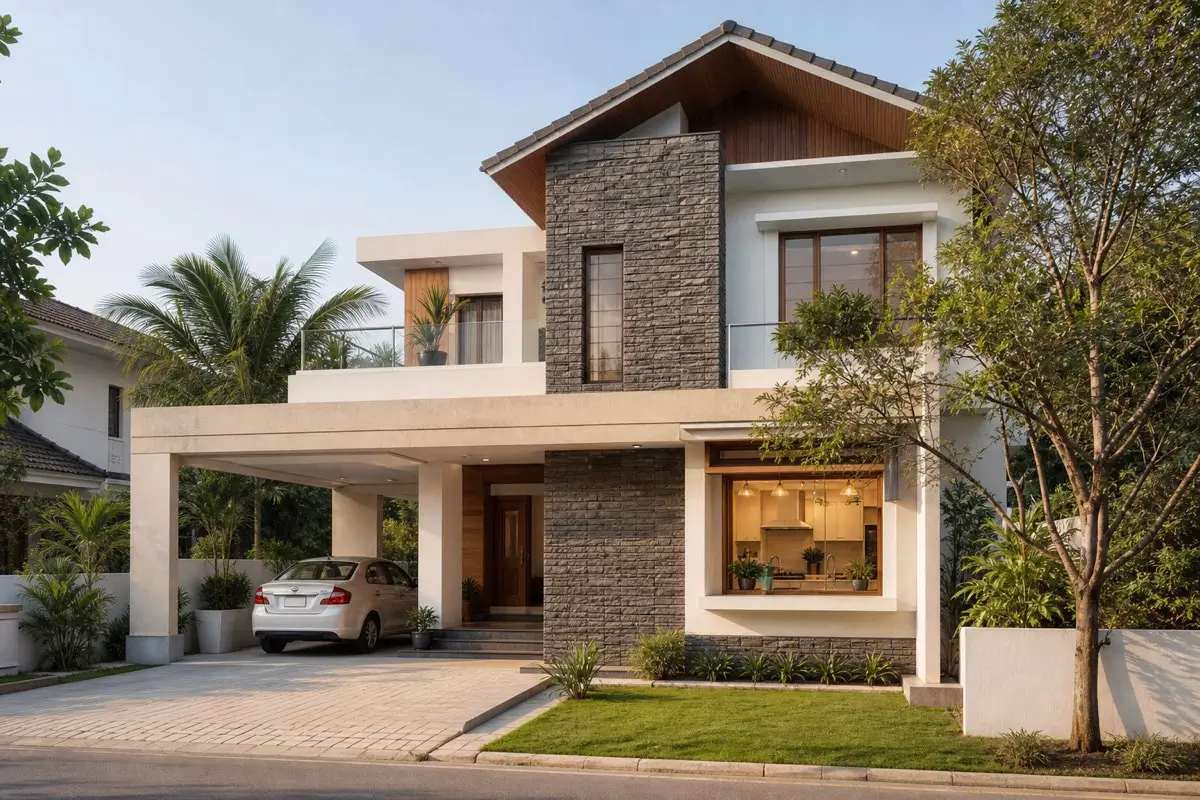
What is a south-east facing house?
Stand inside the main entrance and look outward. If your compass points broadly between east and south, the entrance faces south-east. Take readings away from steel gates, electrical boards, parked cars, and appliances. Check the sanctioned plan because the road or balcony direction may not match the door.
South-east is traditionally called the Agni zone and is associated with fire, cooking, electricity, activity, and transformation. This does not make every south-east entrance negative. The exact door segment, shade, internal plan, ventilation, and household use matter. A direction is a design condition to understand, not a verdict on a family's future.
Confirm
Measure the entrance bearing more than once.
Locate
Mark the door centre on the correct exterior wall.
Balance
Coordinate fire, heat, water, privacy, and movement.
South-east entrance assessment
Different Vastu schools classify entrance segments in more detail than the four main directions. Therefore, avoid calling a door good or bad from “south-east” alone. Measure the wall, identify the centre of the opening, and use one consistent pada method. For a complex or high-value property, obtain a scaled drawing and professional review.
Make the approach safe and shaded. Strong morning and midday sun can heat the door, foyer, and adjoining room. Use a chajja, veranda, suitable glazing, trees that do not obstruct access, and durable finishes. Keep the entrance clean, illuminated, and free from electrical hazards or shoe clutter.
Potential benefits of this orientation
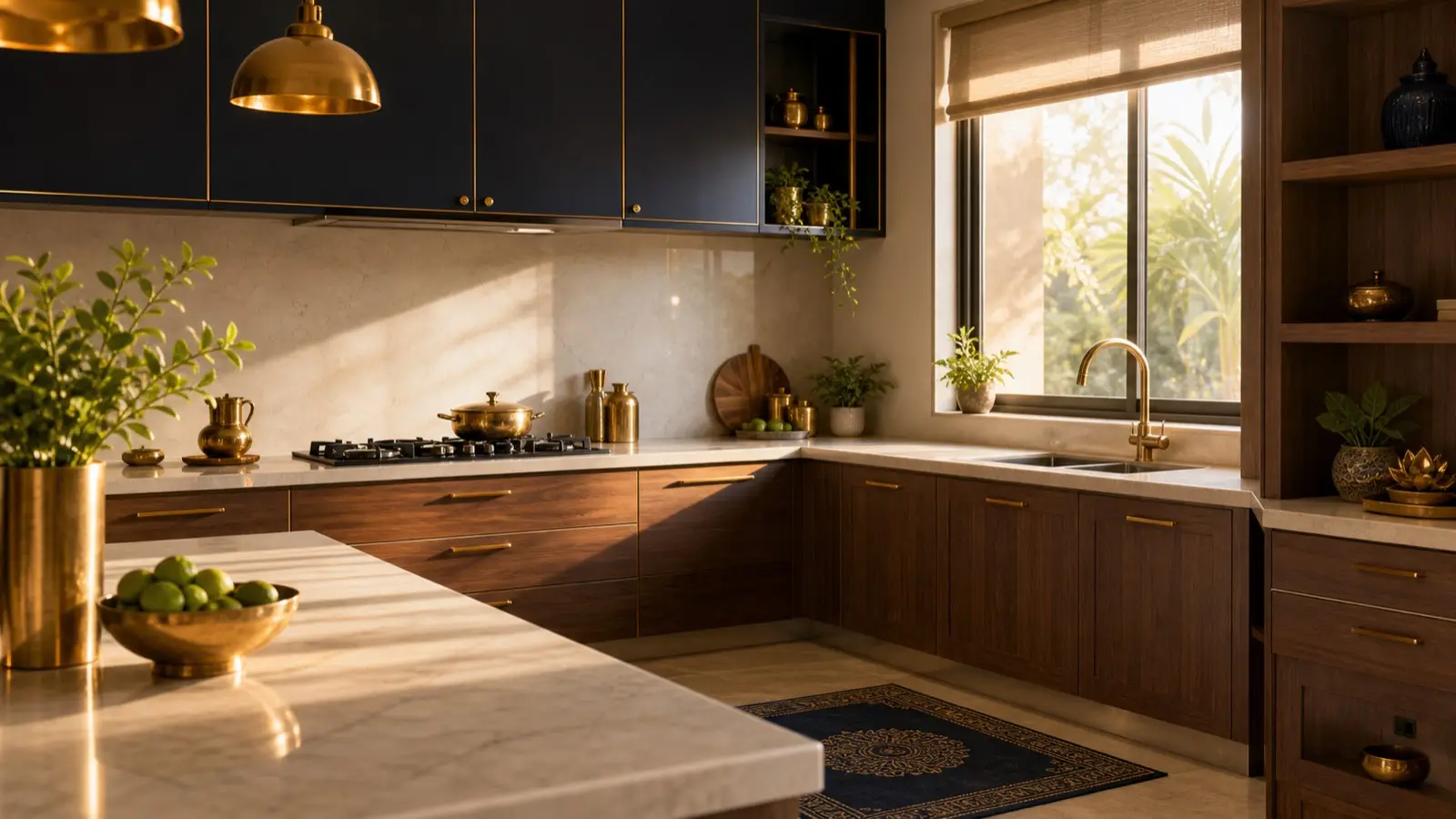
A south-east side can receive useful morning light and may suit active service functions when designed for the local climate. The traditional fire association can align naturally with a kitchen, solar equipment, electrical systems, or a utility area. A well-planned shaded façade can feel bright without becoming harsh.
The orientation may also allow quieter bedrooms toward west or south-west and more open family spaces toward north or east. These benefits depend on plot access and neighbouring buildings. The label itself does not create a successful plan; it simply offers opportunities that the architect can use.
Room placement guide
| Area | Common preference | Important check |
|---|---|---|
| Kitchen | South-east | Exhaust, gas safety, heat control |
| Living room | North, east, or north-east | Daylight and clear circulation |
| Master bedroom | South-west or west | Privacy and thermal comfort |
| Pooja | North-east or calm east/north wall | Clean, dry, and safe |
| Guest room | North-west or west | Privacy and bathroom access |
| Staircase | South, west, or south-west | Structure, headroom, and handrails |
Why the kitchen needs careful planning
South-east is the traditional first choice for a kitchen, but avoid assuming any kitchen placed there is perfect. Position the hob on a stable counter with safe clearance. Facing east while cooking is commonly recommended where possible. Keep the sink and drinking-water area conveniently separated from flame, and provide a strong chimney or exhaust route.
Control heat with shading, cross-ventilation, insulated roofing, and efficient appliances. Provide safe gas-cylinder ventilation or a compliant piped-gas connection. Keep the refrigerator away from direct sun and the hob. Read the Kitchen Vastu dos and don'ts before finalising services.
Electrical distribution, gas lines, chimneys, and structural openings must follow qualified professional advice and local regulations.
Bedroom placement and heat
Avoid using the south-east as the main bedroom when better options exist because it can be warm and active. South-west or west often provides greater privacy and stability. Use external shade, breathable curtains, ceiling fans, and appropriate insulation on exposed walls. Do not place the bed under a leaking AC line or where the door hits it.
If a bedroom already occupies south-east, improve thermal comfort and reduce stimulating clutter. Choose calm neutrals or muted greens rather than aggressive colour everywhere. Move heavy electrical equipment away from the bed, maintain safe sockets, and create a steady sleep routine. Relocation may be useful, but demolition is rarely the first answer.
Water, bathrooms, and fire-water balance
Traditional Vastu separates dominant fire and water functions. In practical terms, this means preventing leakage near cooking and electrical equipment. Do not locate a poorly waterproofed bathroom directly against the main kitchen work wall if the plan can avoid it. Provide accessible plumbing so repairs do not require breaking expensive cabinets.
For existing homes, repair dripping taps, damp walls, clogged balcony outlets, and reverse floor slopes. Keep the kitchen sink and stove at a safe working distance. Water tanks and borewells must follow engineering, sanitation, and local regulations; never compromise structure merely to meet a directional chart.
Living room, pooja, and family spaces
North, east, or north-east can suit a living room or shared family space. Preserve softer light and clear movement in these zones. Arrange seating for conversation and avoid blocking windows with oversized units. If the entrance opens directly into seating, use a modest console or screen for privacy.
A prayer space is commonly preferred toward north-east. In a compact plan, use a clean ventilated shelf or cabinet. Do not place an open flame near curtains, switches, or passageways. The centre of the house should remain legible and easy to move through rather than becoming a permanent storage pile.
North-East
Keep lighter, cleaner, and suitable for calm shared activity.
South-East
Manage cooking, electricity, ventilation, and solar heat.
South-West
Use for stable private functions and suitable heavy storage.
Common problems to check
Excess heat
Unshaded glass or walls can overheat the entrance and kitchen.
Wrong label
The broker may describe the plot rather than the actual door.
Fire risk
Overloaded sockets and poor gas ventilation need urgent correction.
Water conflict
Leaks near electrical or cooking zones damage safety and finishes.
Dark north-east
Heavy storage can block the home's calmer, brighter zone.
Fear-based changes
Unverified remedies can waste money or damage a safe building.
Practical remedies without demolition
Begin with shade, ventilation, maintenance, and room use. Add an exterior sunshade where permitted, repair seals, use heat-control curtains, improve exhaust, and reduce unnecessary electrical load. Keep the entrance bright and uncluttered. Move a work desk, bed, or heavy cupboard if a simple furniture change improves the plan.
Colours can support comfort: cream, warm white, soft beige, restrained terracotta, or muted green may suit different rooms depending on light. Do not paint the entire house a prescribed colour without testing samples. Symbolic remedies should never replace fire safety, waterproofing, or professional repairs.
Checklist before buying
Confirm the exact door direction, inspect heat at different times, test ventilation, and identify the kitchen and main bedroom zones. Look for overloaded wiring, improvised gas lines, damp walls, and dark internal rooms. Compare the built home with approved drawings and check title, structure, water, parking, and monthly costs.
A comfortable south-east facing house may be a better purchase than a poorly built north-facing property. Judge the whole home, the neighbourhood, affordability, and family needs. Use Vastu as one disciplined layer of due diligence, not the only decision.
Designing for Indian climate and seasons
The south-east façade behaves differently in Chennai, Jaipur, Bengaluru, Guwahati, or a coastal town. Study local sun angles, monsoon direction, dust, humidity, and prevailing breeze. A deep veranda may help in a hot-dry region, while a coastal home also needs corrosion-resistant hardware and excellent rain protection. Use climate data rather than copying one façade solution across India.
Exterior shade is generally more effective than trying to stop heat after it enters. Chajjas, fins, trees placed at a safe foundation distance, ventilated roofs, and suitable glazing can reduce cooling demand. Keep kitchen exhaust away from windows and neighbour boundaries. Solar panels need qualified structural and electrical design.
South-east entrances in apartments
In a flat, verify the unit door rather than the tower gate. The kitchen, balcony, and windows may face different directions. Lift shafts and electrical rooms can disturb phone compass readings, so compare them with the approved floor plan. Do not alter a fire-rated door, common corridor, or service shaft without permission.
If the foyer feels hot or exposed, use an internal curtain, approved film, or light screen without blocking movement. Keep shoes in a compact ventilated cabinet allowed by the society. A warm entrance is not automatically a Vastu defect; investigate direct sun, gaps, poor corridor ventilation, or oversized glass first.
Do's and don'ts
Do verify
Use repeated readings and an oriented legal plan.
Do ventilate
Give kitchens and electrical equipment airflow.
Do shade
Control heat before it reaches glass and walls.
Don't overload
Avoid unsafe adapters and improvised gas lines.
Don't demolish
Never change structure without qualified approval.
Don't panic
Evaluate the whole house before accepting a diagnosis.
Frequently asked questions
Is a south-east facing house bad?
No. Exact entrance placement, room layout, heat control, and construction quality matter.
Where should the kitchen be?
South-east is commonly preferred and can align naturally with this orientation.
Can the main bedroom be south-east?
South-west or west is generally preferred; improve heat and calmness if relocation is impossible.
Which colour is best?
Choose light, balanced colours suited to actual daylight and room purpose rather than one rigid shade.
Should I reject this house?
No. Verify the complete plan, safety, comfort, legal documents, and affordability before deciding.