
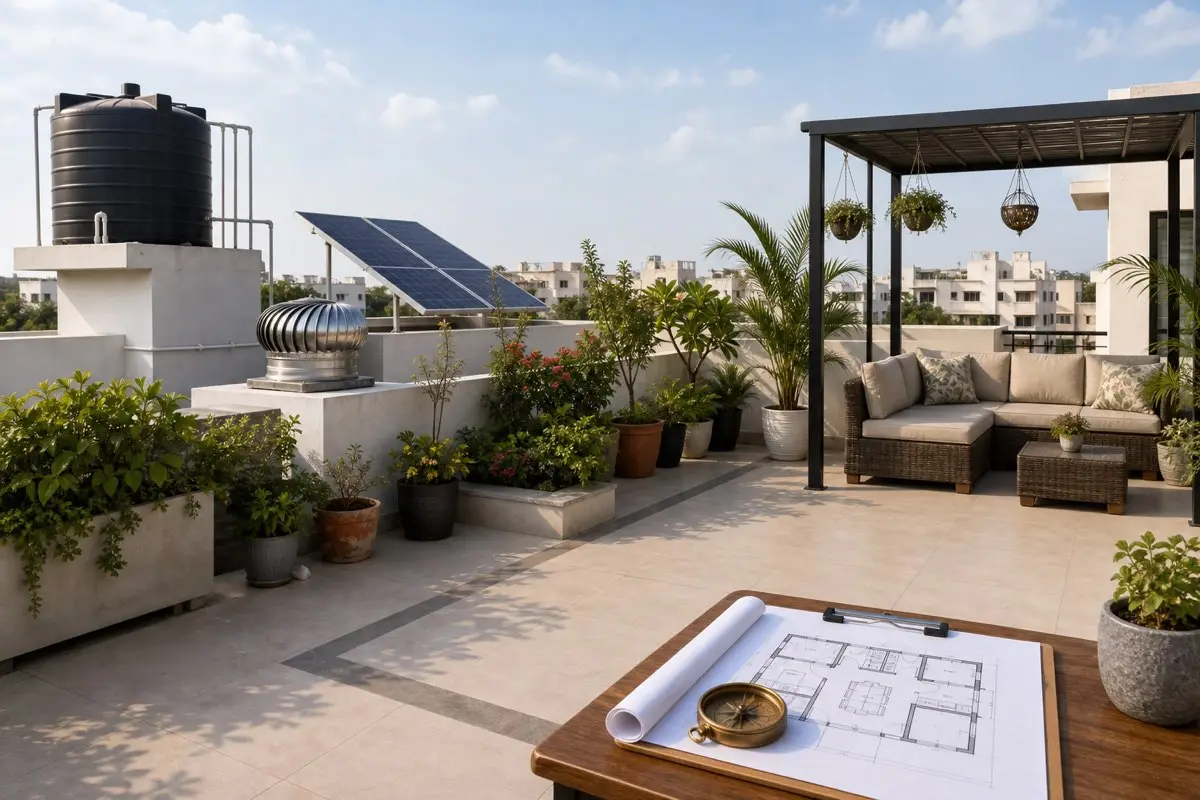
Why terrace Vastu matters
The terrace is the top layer of the home. It receives maximum sun, rain, wind, heat, and dust. In Vastu, the top of the house is connected with weight distribution, openness, protection, and sky exposure. In practical construction, it is about waterproofing, drainage, tank placement, solar access, parapet safety, and heat control.
Many homeowners ignore the terrace until leakage starts. Others overload it with water tanks, old furniture, broken pots, unused tiles, and random storage. A clean and well-planned terrace protects the home below and can become a peaceful outdoor space. It also improves resale impression because buyers notice whether the roof looks cared for, safe, and leakage-free.
Weight and openness on the terrace
Traditional guidance often keeps heavier elements toward south, west, or south-west and lighter/open areas toward north and east where possible. This is why overhead tanks are commonly discussed for west, south-west, or suitable structural zones, while north-east is usually kept lighter and cleaner.
However, structural design is final. A water tank must sit where beams, columns, and slabs can carry the load safely. Solar panels must sit where sun exposure works. Vastu preference should support engineering, not fight it.
Terrace planning grid
Use this grid before placing tanks, solar panels, seating, plants, or storage on the roof.
Direction
Match the outdoor or lower-level use with weight, openness, water, and safety.
Maintenance
Check drainage, dampness, structure, access, cleaning, and seasonal wear.
Experience
Create spaces that feel fresh, safe, usable, and connected to daily family life.
Overhead water tank placement
Overhead tanks are heavy and should be planned with a structural engineer. South-west, west, or south zones are often discussed as suitable for heavier placement, but the exact location depends on the building’s columns, plumbing, and access for maintenance.
Keep tanks clean, covered, and easy to inspect. Avoid leakage, overflow, and algae. A tank placed in the right symbolic direction but poorly maintained can still create health and structural problems.
Solar panels and equipment
Solar panels need unobstructed sunlight, safe mounting, wind resistance, and maintenance access. Their direction depends on solar performance more than Vastu symbolism. Keep cable routes clean and avoid clutter around inverters or electrical equipment.
Do not place panels where they block drainage or make roof inspection impossible. A good terrace plan reserves walking paths for cleaning tanks, checking waterproofing, and servicing solar systems.
Terrace plants and rooftop garden
Plants can cool the terrace and improve beauty, but they add weight and need drainage. Use lightweight planters, trays, and proper waterproofing. Avoid trees with aggressive roots directly on the slab. Keep dead plants, broken pots, and stagnant water away.
North and east may suit lighter greenery and morning-use seating. Larger planters may fit better where structure and sunlight allow. Always balance plant love with roof safety.
Terrace do’s and don’ts
This table gives a quick practical checklist for rooftops in Indian homes.
| Do | Don’t |
|---|---|
| Check structure, drainage, waterproofing, ventilation, and safety first. | Use symbolic remedies while ignoring leaks, load, or blocked drains. |
| Keep heavy items, water systems, and equipment accessible for service. | Hide tanks, pipes, or drains behind permanent clutter. |
| Use healthy plants, clean storage, and clear pathways. | Keep dead plants, broken pots, stagnant water, or old junk. |
| Connect outdoor planning with the whole home layout. | Plan the terrace, garden, or basement as an isolated afterthought. |
Slope, waterproofing, and monsoon checks
Terrace slope should carry rainwater to drains without ponding. Check outlets before every monsoon. Remove leaves, plastic, soil, and broken tiles from drain mouths. Standing water leads to leakage, mosquitoes, and slab damage.
Waterproofing should be inspected regularly, especially around tank bases, pipe penetrations, parapet joints, and solar mounts. Prevention is cheaper than ceiling repair.
Terrace seating and family use
A terrace can hold seating, yoga, drying clothes, small gatherings, or quiet evening time. Keep furniture light, weather-resistant, and safely away from parapet edges. Add shade where needed and avoid creating hidden clutter corners.
If children use the terrace, railing and access safety are non-negotiable. Vastu should never compromise physical safety.
Common terrace Vastu mistakes
The biggest mistake is using the terrace as a junkyard. The second mistake is ignoring water leakage. The third mistake is adding heavy planters, tanks, or structures without checking load capacity.
Another mistake is blocking the roof drain with plant soil, construction material, or old furniture. A blocked terrace drain can damage the whole house.
Frequently asked questions
Where should overhead tank be placed? South-west, west, or south are commonly discussed, but structure decides final placement. Can solar panels be on terrace? Yes, if installed safely with drainage access. Can terrace garden affect Vastu? It can be positive if lightweight, clean, and well drained. Should the terrace be used for storage? Only for limited weather-safe items; broken furniture, unused tiles, old paint cans, and random junk should not be left on the roof because they block cleaning and make leakage harder to notice.
Modern planning checklist
Before finalising any basement, terrace, or garden plan, check the same practical questions a good architect would ask. Where does rainwater go? What is the load on the slab? How will the space be cleaned? Can a plumber, electrician, gardener, or technician reach the important points? Is the area safe for children, elders, guests, and service staff?
Consider direction guidance alongside waterproofing, structural safety, ventilation, access, and maintenance. A terrace with a well-placed tank but blocked drain is not balanced. A garden in a good direction but full of stagnant water is not healthy. A basement with expensive interiors but hidden seepage is not practical.
Seasonal care for Indian homes
Indian homes face heat, dust, monsoon, insects, and changing family use. Before summer, check terrace heat, plant watering, basement ventilation, and outdoor shade. Before monsoon, clear roof drains, inspect waterproofing, trim overgrown plants, and remove items that can block water flow. After monsoon, look for damp patches, wall cracks, mosquito pockets, and damaged pots.
This seasonal rhythm is one of the simplest Vastu remedies because it prevents stagnation. A home that is inspected, cleaned, and maintained regularly feels lighter. It also saves money by catching small problems before they become structural repairs.
How family use changes the best plan
Every home uses outdoor and lower-level space differently. A young family may need safe play space, strong railings, and easy supervision. A joint family may need terrace drying, storage, and evening seating. A villa owner may want garden pathways, staff access, parking, and service equipment hidden neatly. A retired couple may prefer low-maintenance plants and safe walking surfaces rather than a high-care lawn.
Before spending money, write down the main purpose of the space. If the basement is mostly for parking, do not overload it with furniture. If the terrace is for family evenings, keep it clean, shaded, and safe. If the garden is for daily walking, prioritise pathway level, lighting, and mosquito control. Vastu becomes useful when it supports the real life of the family, not just a decorative dream.
Buying or renovation checklist
When buying a property, inspect the basement, terrace, and garden carefully because these areas reveal hidden maintenance quality. Look for seepage marks, repaired cracks, standing water, broken tiles, blocked drains, rusted railings, overloaded slabs, dead plants, and poor lighting. Ask direct questions about waterproofing, tank cleaning, drainage complaints, and past leakage repairs.
During renovation, ask for drawings before work begins. Mark tank positions, drain lines, electrical points, solar supports, planters, seating, stairs, and service access. Do not approve a design only because it looks attractive in a 3D image. A premium design must survive summer heat, monsoon rain, daily cleaning, and future repairs. This is where practical Vastu and good architecture meet beautifully.
Safety, legality, and professional advice
Basements, terraces, and gardens often involve structural, legal, and safety questions. A basement may need fire safety, ventilation, sump pumps, and waterproof retaining walls. A terrace may need load checks before adding tanks, pergolas, solar panels, or heavy planters. A garden may need safe tree distance from foundations, septic tanks, compound walls, and underground services.
Vastu guidance should never replace a qualified engineer, architect, waterproofing specialist, electrician, or plumber when technical work is involved. If a remedy requires construction, drilling, heavy loading, or water redirection, get professional help. The safest home is the one where belief, comfort, and building science all support each other.
Related guides
Land and layout
Read Plot & Land Vastu, Balanced Layout, and Plot Shape Analyzer.
Room planning
Connect with Room-wise Vastu, Water Tank Vastu, and Balcony Garden Vastu.
Corrections
For existing homes, see Vastu Remedies Without Demolition, Direction Vastu, and Direction Checking.
Final thoughts
Basements, terraces, and gardens shape how a home breathes, stores, drains, cools, and welcomes people. Treat them as serious planning zones, not leftover areas. When Vastu direction, structural safety, water movement, cleanliness, and daily use come together, these spaces can improve the whole home.