
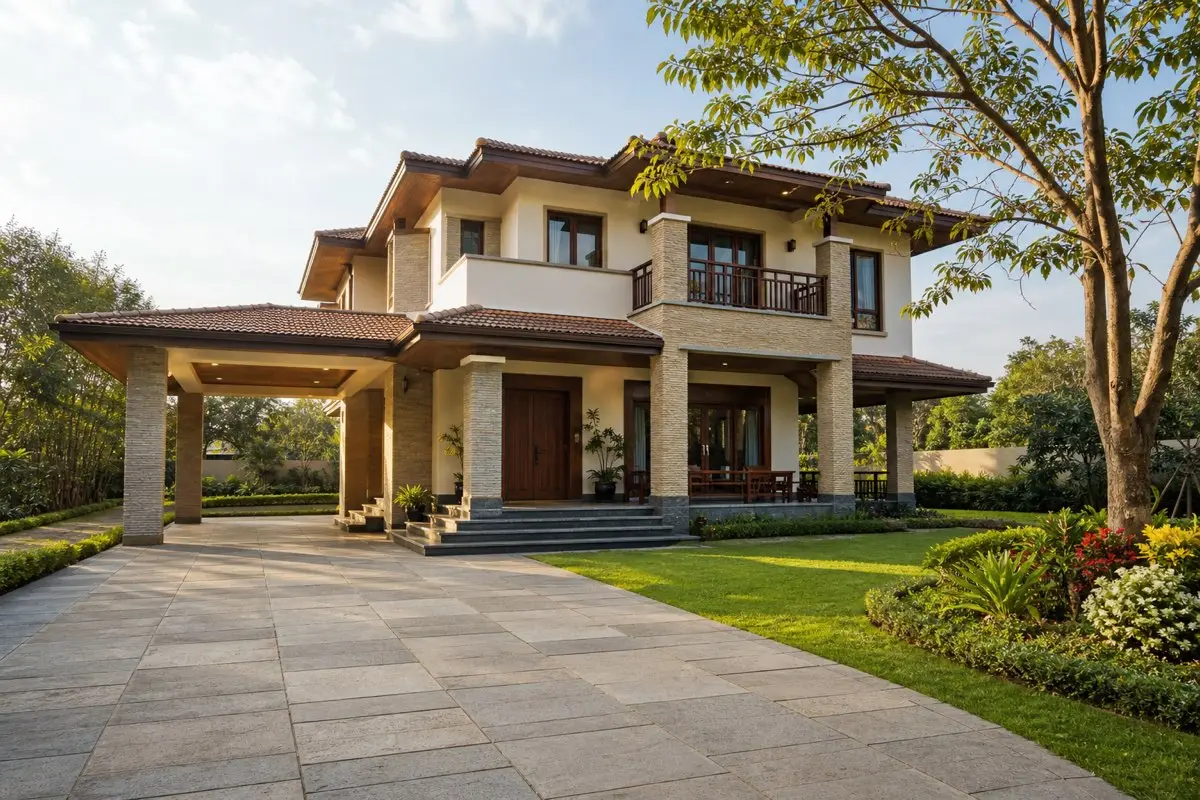
Begin with the site, not the rooms
Confirm legal boundaries, road access, setbacks, easements, soil, levels, drainage, utilities, and the north direction. A licensed survey and soil investigation protect the project before any Vastu zoning begins. Check whether rainwater flows toward or away from the plot and whether neighbouring construction blocks light or privacy.
Traditional planning often prefers a regular plot, relatively open north and east, and controlled mass toward south and west. Use these preferences alongside climate and local rules. A perfectly square diagram cannot override a drainage channel, protected tree, unsafe slope, or required fire access.
Land
Survey, soil, slope, drainage, and setbacks.
Building
Orientation, rooms, structure, climate, and future use.
Services
Water, sewage, power, solar, parking, and security.
Compound gate and approach
The compound gate and main door are separate decisions. Position the gate for safe road visibility, turning radius, pedestrian access, and drainage. Selected north and east zones are commonly preferred, but road location and traffic safety matter. Avoid a gate that forces vehicles to reverse blindly.
Create a clear pedestrian path independent of cars where space permits. Provide weather protection, lighting, intercom, parcel handling, and accessible levels. The landscape should frame the entrance without hiding visitors or creating dark security pockets.
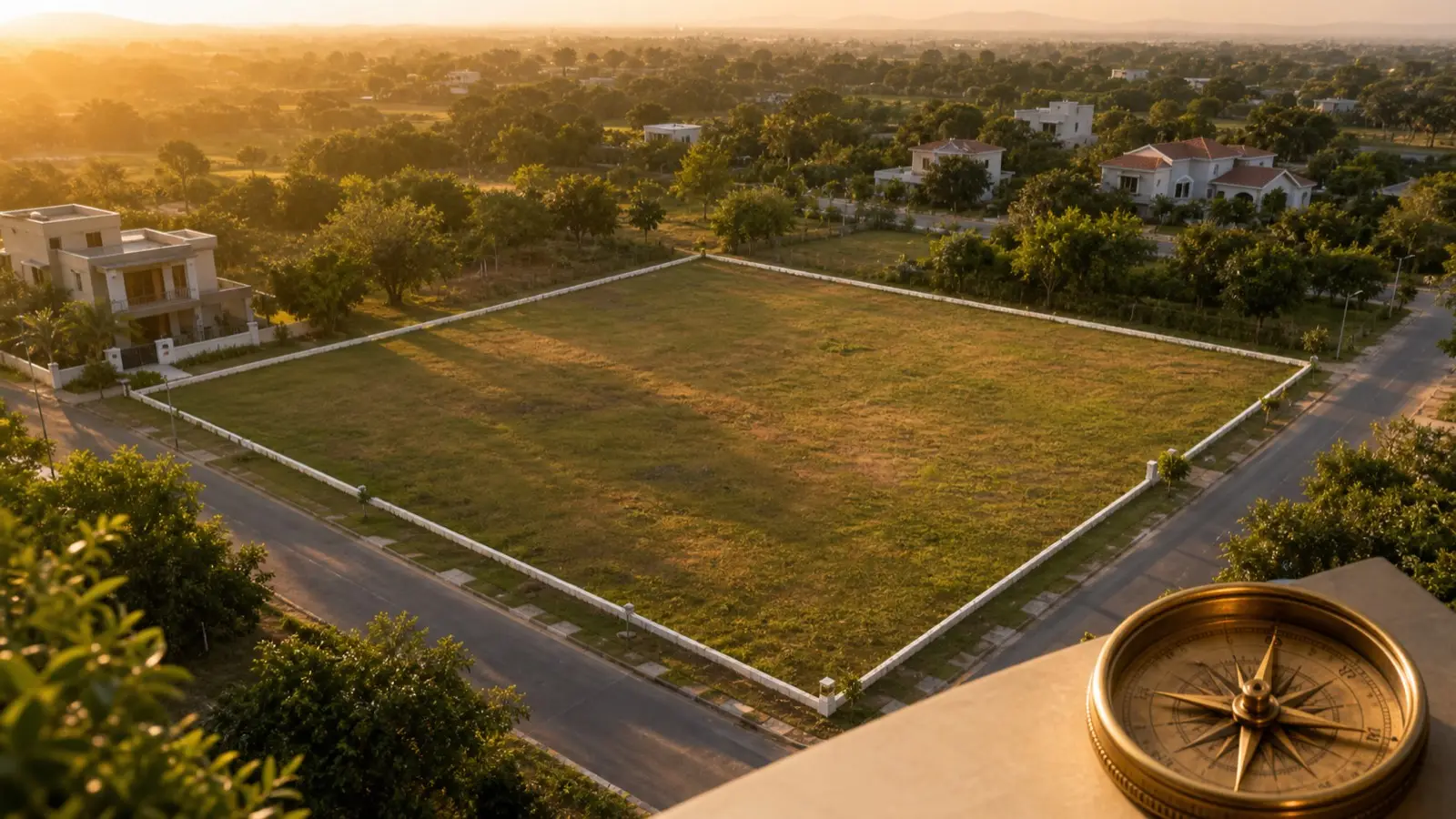
Main entrance and foyer
Verify the exact entrance segment on the building wall rather than relying on plot facing. The door should be secure, proportionate, protected from rain, and easy to approach. Preserve a clear view for residents without exposing private bedrooms. Use a foyer or furniture transition where the plan allows.
Do not crowd the entrance with parked vehicles, shoe racks, utility meters, dustbins, or dense planting. Place electrical and gas equipment where technicians can access it safely without dominating the arrival.
Villa room-placement overview
| Function | Common preference | Practical test |
|---|---|---|
| Living/foyer | North, east, or north-east | Light, privacy, guest flow |
| Kitchen | South-east; north-west alternative | Exhaust, utility, deliveries |
| Main bedroom | South-west or west | Privacy, shade, garden noise |
| Pooja/study | North-east or east/north | Quiet, dry, natural light |
| Guest suite | North-west or west | Independent access |
| Stair/service | South, west, or south-west | Structure and safety |
Living, dining, and family rooms
A formal living room near the entrance can receive guests without crossing private areas. A family lounge may sit deeper in the house near dining and garden. North and east light is often easier to use, while south and west glazing needs shade. Arrange furniture before fixing electrical points and windows.
Dining should connect to kitchen and outdoor seating without becoming a corridor. Large villas sometimes create unused formal rooms; build for actual habits rather than status. A comfortable, regularly used room supports the household better than an impressive empty hall.
Kitchen, pantry, and service entry
South-east is commonly preferred for the kitchen, with north-west as an alternative. A villa kitchen may include pantry, breakfast counter, utility, dirty kitchen, staff access, and deliveries. Map clean and service circulation so waste, groceries, and guests do not collide.
Provide safe gas, chimney, cross-ventilation, fire protection, drainage, and accessible shut-offs. Separate sink and hob comfortably. Keep outdoor exhaust away from bedroom windows and neighbours. Service yards should remain screened but not unventilated.
Bedrooms and privacy
The main suite commonly suits south-west or west. Control heat with external shade, roof insulation, and landscape. Place the headboard on a solid wall and give wardrobes dry, ventilated backing. Plan bathroom waterproofing and AC drainage before finishes.
Guest rooms can occupy north-west with independent bathroom and luggage storage. Children's rooms need safe balconies and study light. Provide a ground-floor bedroom for parents, guests, injury recovery, or future ageing. Privacy is a planning requirement, not merely a directional preference.
Main suite
Privacy, thermal comfort, wardrobes, and quiet.
Parents
Ground-floor access, safe bathroom, minimal steps.
Guests
Clear route without entering family bedrooms.
Pooja, study, and home office
A quiet north-east or suitable east/north area may support prayer and meditation. Keep it dry, ventilated, and safely separated from shoes and open flame hazards. A dedicated room is optional; a well-designed cabinet may suit a modern family better.
Home offices need controlled glare, acoustics, data, storage, and an ergonomic desk. North or east light may be pleasant, but screen position matters. Libraries and heavy shelves should sit on walls designed for their load without blocking ventilation.
Staircase and upper floors
South, west, or south-west is commonly considered for stairs, subject to structure and circulation. Provide safe tread, riser, landings, handrails, headroom, and lighting. A dramatic staircase must still work for children, older adults, and emergencies.
Coordinate upper bedrooms, terraces, double-height voids, toilets, shafts, and roof equipment with the ground floor. Avoid placing noisy service equipment above bedrooms. Consider a future lift or ground-floor living if ageing in place is important.
Garden and outdoor spaces
Keep landscape responsive to sun, rain, soil, and water availability. Lower planting and open space may suit north and east, while larger shade trees can protect south and west when located safely away from foundations and services. Avoid species with invasive roots near walls and drains.
Outdoor dining, play, pets, swimming pools, and kitchen gardens need privacy and maintenance. Water features are optional; stagnant water attracts mosquitoes and creates hazards. Every outdoor surface should drain safely.
Water, sewage, tanks, and rain
Traditional guidance often prefers underground water toward north or north-east and heavier overhead storage toward west or south-west. Engineering, groundwater law, sanitation, and structural design govern final placement. Keep septic systems and borewells safely separated according to regulations.
Harvest rainwater where permitted, provide overflow paths, and inspect drains before monsoon. Photograph underground services before covering them. A beautiful garden cannot compensate for unknown pipes or recurring basement seepage.
Parking, staff, pets, and utilities
Parking may fit north-west or another safe access zone depending on the road. Provide turning space, EV charging with correct electrical load, ventilation, and a pedestrian route. Keep vehicles from blocking the main door.
Staff rooms, pet areas, laundry, solar equipment, generators, and waste storage need dignity, ventilation, security, and maintenance access. Do not push every service into one unhealthy corner. A villa remains balanced when support spaces work well.
Villa planning checklist
Survey
Boundaries, north, levels, soil, and roads.
Climate
Sun, breeze, rain, shade, and landscape.
Family
Privacy, ageing, guests, work, pets, and staff.
Structure
Columns, stairs, spans, tanks, and future growth.
Services
Water, sewage, power, solar, gas, and drainage.
Budget
Construction, landscaping, cooling, and maintenance.
Buying an existing villa
Verify title, approvals, encumbrances, property tax, boundaries, structural changes, borewell status, sewage, and shared access. Inspect roof, terraces, basement, retaining walls, tanks, electrical load, and pest damage. Visit after rain and during hot afternoon hours.
Check the whole plan before reacting to facing. A minor Vastu variation may be manageable, while illegal construction, unsafe structure, or chronic water problems are major risks. Obtain independent legal, architectural, and engineering advice.
Security without making the villa oppressive
Layer security from street to private rooms: visible gate, lighting, intercom, locks, cameras where lawful, and clear sightlines. Dense hedges and high walls can create hidden corners, while an exposed glass entrance can reduce privacy. Balance openness with controlled access.
Provide safe parcel delivery, visitor parking, and a pedestrian path. Emergency responders should identify the house easily. Security equipment needs power backup and maintenance; it should not block ventilation or become the visual focus of the entrance.
Future expansion and resale
Reserve expansion only where the structure, setbacks, services, and circulation can support it. A future bedroom needs daylight, bathroom access, and a clear route; an extra floor needs foundation and column capacity from the beginning. Do not leave exposed reinforcement based on vague plans.
Maintain accurate drawings, approvals, warranties, and photographs of concealed services. Future buyers value legal clarity, dry construction, efficient systems, and flexible rooms. A villa that is easy to maintain and adapt usually performs better than one filled with specialised spaces nobody uses.
Create an annual maintenance calendar for roof drains, waterproofing, water tanks, pumps, solar systems, pest control, garden irrigation, electrical protection, security equipment, and exterior finishes. Villas have more exposed surfaces and independent services than flats, so neglected maintenance becomes expensive quickly. Keep service contracts, test reports, photographs, and emergency shut-off locations in one household file. Order and preventive care contribute more to long-term harmony than decorative remedies added after problems appear.
Frequently asked questions
Which facing is best for a villa?
No facing guarantees a good home. Entrance position and complete site planning matter.
Where should the main bedroom be?
South-west or west is commonly preferred when privacy and climate work.
Where should parking be?
North-west is often considered, but road safety and turning space govern placement.
Can a villa have a pool?
Yes, with structural, safety, drainage, maintenance, and zoning review.
Should an existing villa be demolished for Vastu?
No. Verify problems and use practical corrections before considering structural change.