
On this page
Quick answer: where should a dustbin be kept?
West, North-West or a well-ventilated utility area are commonly chosen for household waste in practical Vastu planning. Inside a kitchen, a covered bin may sit in a defined lower cabinet or corner away from the stove, clean utensils and uncovered food. The best location is easy to use, easy to wash and close to the household’s collection route without blocking movement.
A preferred compass direction cannot compensate for stale wet waste, an open lid or leaking plumbing. Empty food waste regularly, separate recyclables, wash the container and keep the floor dry. These actions have a clear effect on hygiene and comfort and should come before symbolic remedies.
Dustbin direction according to practical Vastu
West and North-West
West and North-West are frequently suggested for disposal-related functions. In a real apartment, this could mean a kitchen’s western cabinet, a North-West utility balcony or a service area on that side. Use the recommendation only when ventilation, access and fire safety also work.
South and South-West
A small covered bin may be manageable in a South-side kitchen cabinet, but avoid allowing waste storage to become heavy permanent clutter. The South-West is often reserved for stable storage or primary rooms, so routine wet waste is usually better in a service area when another practical option exists.
North, East and North-East
Many Vastu traditions prefer North, East and especially North-East to feel light, clean and open. Avoid making a large waste station the visual focus of these zones. However, if a fixed kitchen provides only one safe cabinet, good hygiene is better than moving the bin into a passage merely to follow direction.
The center and main entrance
Do not keep a dustbin in the center of a room, at a doorway or where it narrows circulation. Waste should not be the first object visible or smelled at the main entrance. A collection point near the service exit is preferable to a decorative entrance corner.
Best dustbin placement in the kitchen
The kitchen produces wet vegetable scraps, packaging and cleaning waste, so convenience matters. A bin too far away causes scraps to sit on the counter; one too close to the stove receives heat and grease. Choose a lower cabinet near the preparation zone but separate from stored grains, plates and cookware.
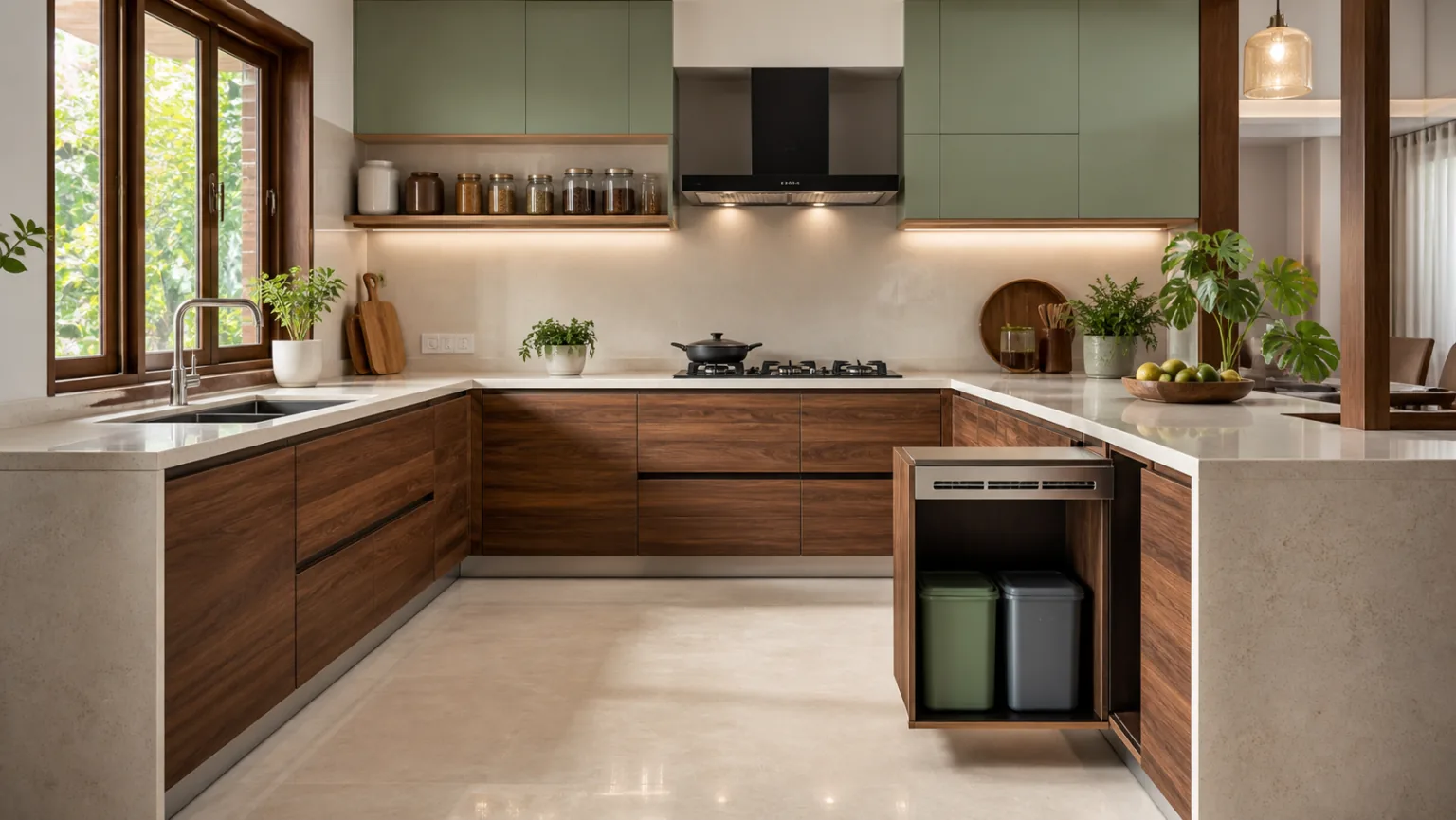
An under-sink cabinet is common in modular kitchens. It can work if pipes do not leak, the cabinet has ventilation and the bin slides out fully. Place a washable tray under it and inspect the plumbing. Read the broader Kitchen Vastu guide before coordinating waste storage with the stove, sink and movement triangle.
Distance from stove and food
Do not place an open bin directly beside the gas stove or below an uncovered fruit shelf. Heat intensifies smell, while splashes and pests create contamination risks. A fitted lid or enclosed pull-out system helps, but the bin must still be emptied and cleaned.
Built-in versus freestanding bin
A built-in pull-out bin looks neat and keeps the aisle clear, but the cabinet needs cleaning and airflow. A freestanding pedal bin is easier to wash and move, yet it can become an obstacle in a small kitchen. Choose the smallest capacity that matches daily collection rather than storing several days of wet waste.
Dustbins on balconies and in utility areas
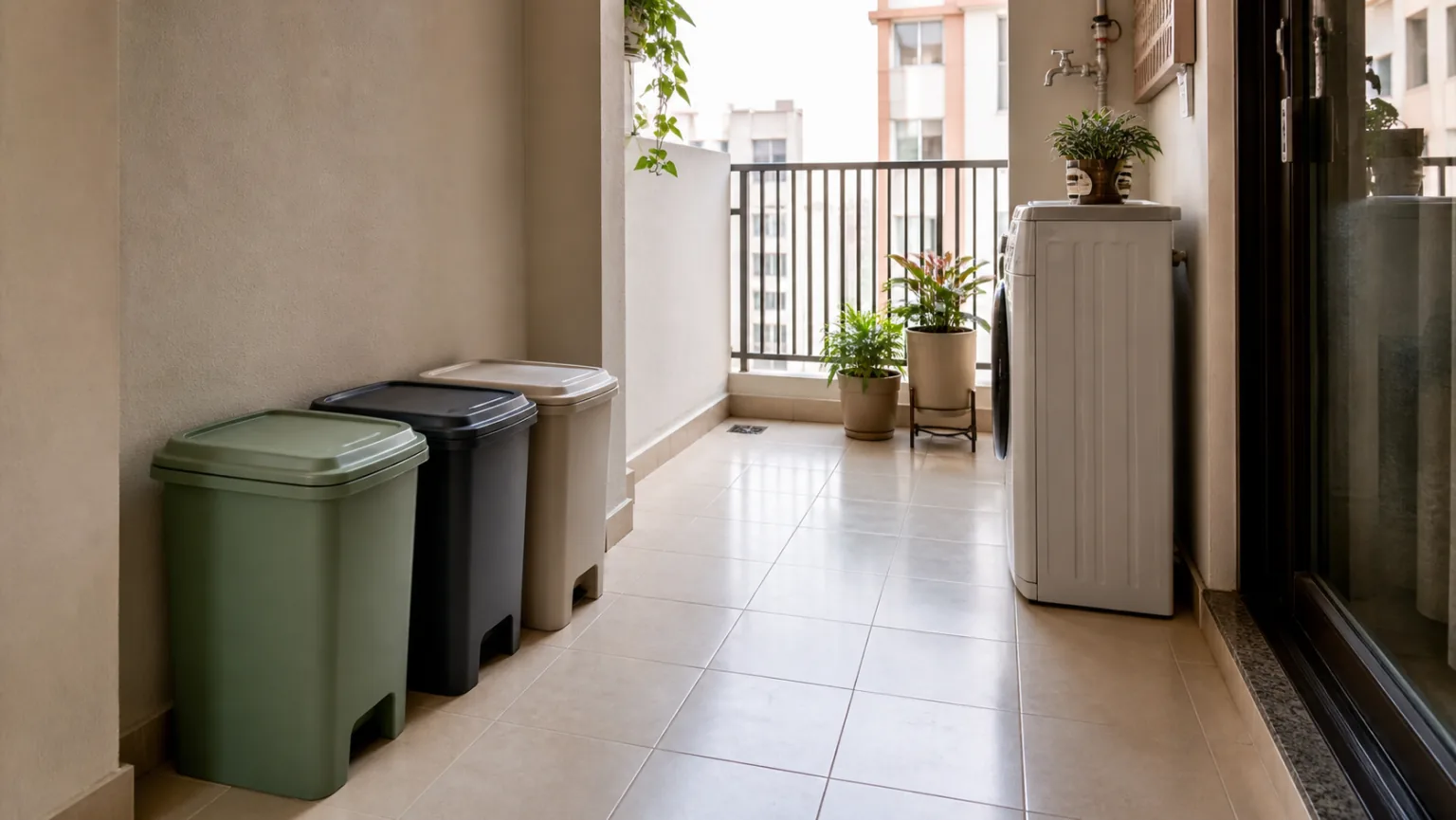
A utility balcony can be suitable for sorted waste awaiting collection. Use lidded containers protected from direct rain and harsh sun. Keep bins away from the clothes-drying area and washing-machine connections. They should not block the floor drain, balcony door or emergency access.
An open decorative balcony is different from a service balcony. If the area is used for seating, plants and fresh air, a visible waste station may reduce comfort. A concealed ventilated cabinet may help, but never seal wet waste inside an airtight furniture cavity for long periods. See Balcony Vastu for drainage and circulation planning.
Wet, dry and sanitary waste segregation
Direction is only one part of responsible waste handling. Follow local municipal rules, because categories and collection schedules can differ. In many Indian cities, households separate biodegradable wet waste from dry recyclable material and domestic hazardous or sanitary waste.
| Waste type | Typical examples | Home storage | Important practice |
|---|---|---|---|
| Wet waste | Vegetable peels, food scraps | Small covered washable bin | Remove daily and prevent liquid buildup |
| Dry waste | Clean paper, metal, plastic packaging | Dry container or bag | Rinse when required and keep dry |
| Sanitary waste | Personal hygiene waste | Separate covered container | Wrap and mark according to local rules |
| Domestic hazardous waste | Batteries, bulbs, chemicals | Secure labelled box away from children | Use authorised collection channels |
| E-waste | Cables, small electronics | Dry temporary box | Send to an approved recycler |
Do not mix broken glass, batteries or chemicals with food scraps. Keep hazardous items away from children and pets. Composting may suit some homes, but it requires correct aeration, material balance and maintenance; an unmanaged container can attract insects and create odour.
Dustbin colour, size and material
Use colours and labels that match your local segregation system. Clear identification is more valuable than choosing a decorative colour based solely on direction. If family members or domestic staff cannot distinguish the containers quickly, sorting will fail.
Plastic bins are light and washable; stainless-steel bins resist odour absorption and can look premium; cabinet inserts save floor space. Whatever the material, choose a smooth interior, fitted lid and foot pedal or pull-out mechanism. Avoid cracked bins, difficult corners and oversized containers that encourage long storage.
Practical examples for Indian homes
Compact 1BHK kitchen
Two small lidded bins fit inside one pull-out cabinet. Wet waste leaves daily; rinsed dry waste moves to a balcony bag.
Apartment utility balcony
Three covered bins line one shaded wall without blocking the drain, washing machine or balcony door.
Independent house
A small kitchen bin handles daily scraps, while a covered outdoor service point holds sorted material for collection.
Rental kitchen
A freestanding pedal bin sits on a washable tray. No cabinet drilling is needed, and the path stays clear.
Family with a baby
Sanitary waste uses a separate fitted-lid container away from food, with frequent removal and child-safe access.
Home composter
Only suitable organic material enters a managed ventilated system; rejects remain in the daily wet-waste bin.
Smell, pests and monsoon maintenance
Bad smell usually signals delayed removal, trapped liquid, food residue or a dirty cabinet. Drain wet scraps, line the bin if local practice permits and wash both lid and base. Dry the container before replacing it. Fragrance, camphor or essential oil should not disguise unclean waste storage.
During hot or humid weather, remove wet waste more frequently. Keep the balcony dry and repair plumbing leaks. Clean crumbs around the cabinet and close gaps that attract pests. If odour persists after cleaning, inspect the floor drain, sink trap and nearby dampness rather than blaming direction alone.
12 common dustbin placement mistakes
- Keeping an open bin beside the stove.
- Allowing wet waste to remain for several days.
- Using one container for every waste category.
- Blocking a kitchen or balcony walking path.
- Storing waste near clean plates or uncovered food.
- Hiding a bin inside a damp, leaking cabinet.
- Placing bins in direct rain or intense sun.
- Blocking a balcony drain or washing-machine access.
- Using an oversized container that is rarely washed.
- Keeping waste beside the main entrance.
- Leaving batteries and glass accessible to children.
- Adding fragrance without fixing the hygiene problem.
No-renovation fixes for difficult placements
Start by reducing the bin size and increasing removal frequency. Add a tight lid, washable tray and clear labels. Move the container a short distance from the stove or food cabinet rather than rebuilding the kitchen. A removable pull-out frame can improve an existing lower cabinet.
On a balcony, use a shaded corner and maintain the drain route. In a rental, choose pedal bins that fit under a counter without drilling. If clutter surrounds the waste station, follow the steps in the decluttering guide. For broader low-disruption changes, use Vastu remedies without demolition.
Daily and weekly waste checklist
- Wet waste is removed daily or according to local collection.
- Dry recycling is clean and dry.
- Sanitary and hazardous waste is separated safely.
- Every bin has a working lid.
- The cabinet and floor are free from leaks.
- The stove, food and utensils remain separated from waste.
- The entrance, passage and drain stay unobstructed.
- Containers are washed and fully dried regularly.
- Local municipal segregation rules are followed.
- Children and pets cannot reach hazardous waste.
Frequently asked questions
Which direction is best for a dustbin as per Vastu?
West, North-West or a well-ventilated utility area are commonly considered practical choices. The bin should remain covered, washable and away from food preparation.
Where should a dustbin be kept in the kitchen?
Keep it in an accessible lower cabinet or defined corner away from the stove, clean utensils and open food. Empty wet waste daily and clean the cabinet regularly.
Can a dustbin be kept under the kitchen sink?
Yes, if the cabinet is dry, ventilated and leak-free. A pull-out covered bin is convenient, but inspect plumbing and clean spills promptly.
Can a dustbin be kept on a balcony?
A utility balcony can work when bins are shaded, covered and protected from rain, pests and direct heat. Do not block the drain or walking path.
Should a dustbin be kept near the main entrance?
Avoid making waste the first visible or scented feature at the entrance. Use a service or utility zone where collection remains convenient.
Is a dustbin allowed in the North-East?
Many Vastu traditions prefer keeping the North-East light and clean, so routine waste storage is generally placed elsewhere when practical.
Which colour dustbin should be used at home?
Use locally recognised segregation colours or clear labels. Function matters more than decorative colour: every family member should identify wet, dry and sanitary waste correctly.
How often should a kitchen bin be emptied?
Wet food waste should generally be removed daily, and sooner in hot weather. Dry recyclables can follow the local collection schedule if they remain clean and dry.
How can I stop dustbin smell in an apartment?
Use a fitted lid, line the bin, drain wet scraps, empty it frequently, wash and dry the container, and repair nearby leaks. Fragrance should not replace cleaning.
Can renters improve dustbin placement without renovation?
Yes. Use compact pedal bins, a removable pull-out frame, labels and a washable tray, then choose the most ventilated practical corner allowed by the layout.
Conclusion
Good dustbin Vastu is not about hiding waste and forgetting it. It is about choosing a sensible service location, separating categories and maintaining the area every day. West or North-West may be preferred where practical, while kitchen and balcony layouts must also protect food, ventilation, drainage and movement.
Keep the system small, covered and easy to clean. Continue with Kitchen Storage Vastu, Kitchen Sink and Stove Vastu, or browse the complete VastuEssentials blog.