
Direction
North, East, and North-East are commonly preferred where practical.
Care
Clean water and healthy fish matter more than decorative display.
Safety
Weight, wiring, access, and child safety come before placement rules.
What aquarium Vastu really means
In traditional Vastu, water is associated with movement, freshness, opportunity, and emotional calm. An aquarium adds moving water, light, colour, and living fish, so many families treat it as a positive water element. The useful way to approach it is simple: keep the aquarium where it supports the home, and care for it properly. A clean, healthy tank can make a living room feel peaceful. A neglected tank with cloudy water, algae, noise, or unsafe wires creates the opposite effect.
This is why aquarium Vastu should never be reduced to one direction rule. It combines traditional guidance with common sense. The tank must be structurally supported, easy to clean, away from heat, safe around children, and comfortable for the fish. If a Vastu suggestion makes maintenance difficult or puts the tank in a risky place, choose the safer option.
Best direction for aquarium at home
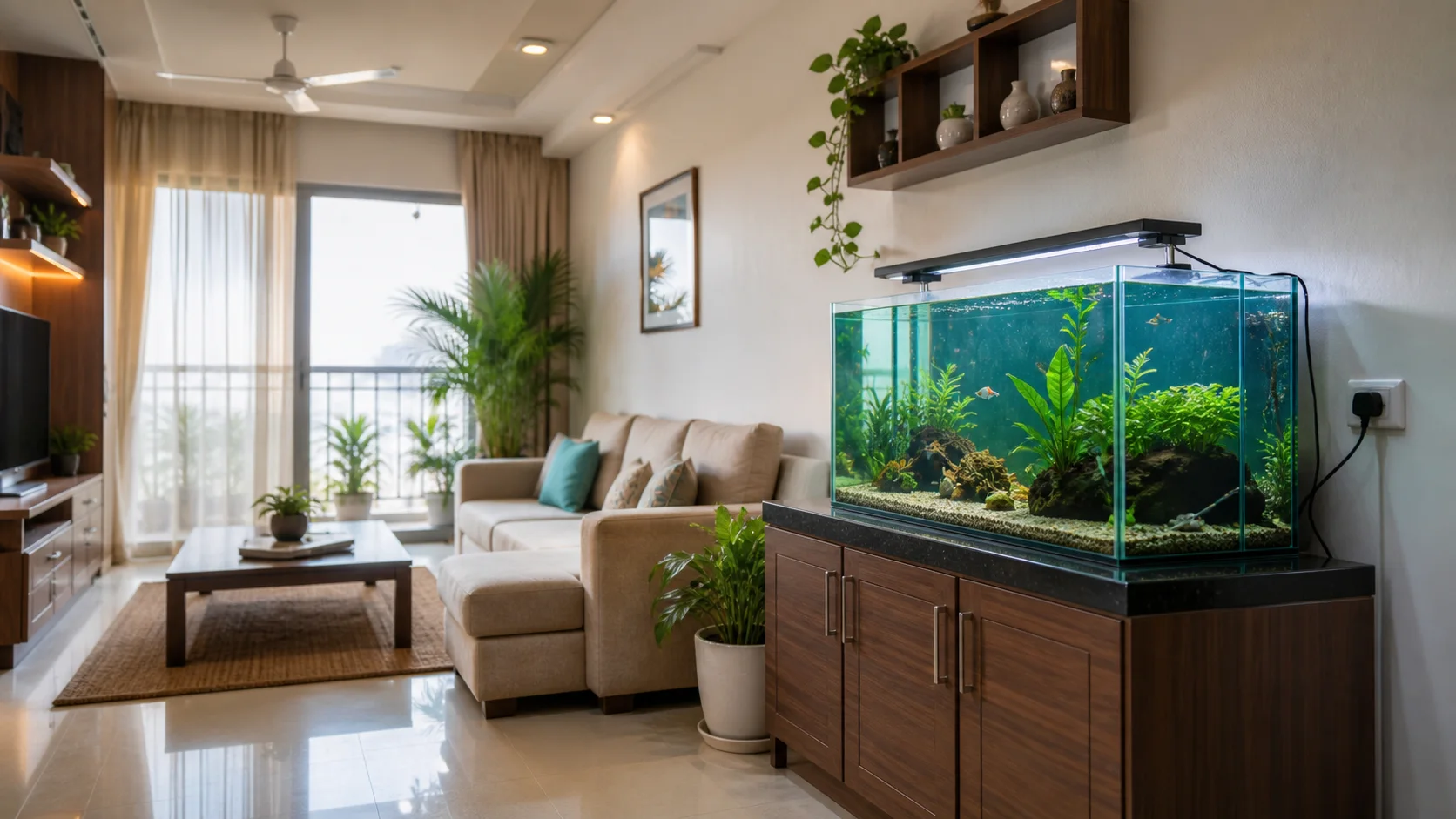
Many Vastu practitioners prefer placing water-related features in the North, East, or North-East zones. These directions are traditionally connected with flow, clarity, and freshness. If your living room or foyer has a suitable wall in one of these zones, an aquarium can work well there. Keep it on a level cabinet, leave space behind for pipes and wires, and make sure it does not block doors, windows, or walking paths.
If those directions are not available, do not panic. Apartments often have fixed layouts, columns, TV units, and service shafts. A clean and safe aquarium in a practical living-room corner is better than a badly maintained tank forced into a preferred direction. For direction basics, use How to Check Directions Correctly before deciding.
Best room for a fish tank
The living room is usually the best room for an aquarium because it is visible, social, and easier to maintain. A side wall, console, or dedicated aquarium cabinet can work if the surface is strong and stable. Avoid placing the aquarium in a narrow passage where people can bump into it. Avoid putting it so close to the sofa that pump sound, light, or reflected glare becomes irritating.
A foyer can also work if it is wide, dry, and uncluttered. The aquarium should not crowd the main door or make guests step around a fragile object. The entrance should stay clean and easy to use, as explained in Main Door Vastu. A balcony is usually less ideal because heat, dust, direct sun, and outdoor temperature swings can stress fish.
Bedrooms are usually not recommended. Even a quiet tank has light, humidity, pump vibration, and maintenance needs. If sleep is disturbed, the tank is not supporting the room. Kitchens are also poor choices because heat, oil, smoke, and frequent movement can affect water quality. Bathrooms, laundry areas, and under-stair storage should generally be avoided for hygiene and access reasons.
Fish care comes before every remedy idea
An aquarium is not a statue or a lucky object. It is a habitat. Before buying one, understand filtration, tank cycling, water changes, feeding, oxygen, species compatibility, and the adult size of fish. Many beginners buy a small bowl or overcrowded tank because it looks convenient. This is neither compassionate nor practical. A Vastu-friendly aquarium should also be an animal-friendly aquarium.
Choose a tank size you can maintain. Use proper filtration. Do not overfeed. Do not mix aggressive and peaceful fish without research. Keep the tank away from direct harsh sunlight because it can increase algae and heat. If a fish dies, remove it respectfully, check water quality, and correct the cause. Traditional guidance should encourage responsibility, not superstition.
Aquarium Vastu checklist and placement table
Use this table before buying or moving a tank. It helps separate symbolic placement from practical readiness.
| Check | Preferred approach | Avoid |
|---|---|---|
| Direction | North, East, or North-East if safe and usable | Forcing the tank into a risky corner |
| Support | Level aquarium stand or strong cabinet | Weak tables, wobbling shelves, uneven floors |
| Water quality | Clear water, filter, routine water changes | Dirty water, smell, algae, overfeeding |
| Electrical safety | Dry plugs, drip loop, tidy cables | Extension board under splash zone |
| Room comfort | Visible but not in the walkway | Blocking entry, TV viewing, or seating |
Realistic examples for Indian homes
Example one: a 2BHK flat has a North-East living-room corner, but the corner is narrow and close to the balcony door. Instead of placing a large tank there, the family chooses a medium tank on the north side wall where it is stable, visible, and easy to clean. This is the better decision because safety and care remain strong.
Example two: a family keeps a beautiful tank near the entrance, but guests have to squeeze past it. Shoes, bags, and delivery packets collect around the stand. The placement may look positive in theory, but it weakens the entry experience. Moving the tank to a side-wall console and cleaning the entrance creates a better result.
Example three: a renter wants an aquarium but cannot drill, add heavy furniture, or change wiring. A small planted tank on a sturdy movable cabinet may be suitable if the landlord allows it and the floor can carry the weight. Renters should also read Rented House Vastu Tips for reversible choices.
Common aquarium Vastu mistakes
The first mistake is buying a fish tank as a fear-based remedy. If you do not want to maintain fish, do not keep fish. Use a clean water bowl, artwork, blue decor, or a low-maintenance plant instead. The second mistake is placing the tank under direct sun. It may look bright for a few hours, but it can heat the water and encourage algae.
The third mistake is ignoring weight. Water is heavy. A medium aquarium with glass, substrate, rocks, filter, and cabinet can weigh far more than it looks. Do not place it on a decorative side table. The fourth mistake is hiding the tank in a dark corner where maintenance becomes difficult. A tank that is hard to access will eventually be neglected.
The fifth mistake is treating fish deaths as only a sign or omen. First check water parameters, oxygen, temperature, feeding, disease, and compatibility. Responsible care is the correct first response.
Aquarium and wealth Vastu
People often connect aquariums with prosperity because water is linked with flow in traditional Vastu. This idea is best understood gently. A clean aquarium can remind the family of movement, freshness, and steady care. It can make the living room feel more alive. But it does not replace earning skills, budgeting, maintenance, or financial planning. For a broader practical view, read Vastu for Money Flow.
If the aquarium becomes dirty, noisy, overcrowded, or stressful, it no longer supports the symbolic purpose. Prosperity spaces should feel ordered and healthy. Keep the tank clean, the stand dust-free, the wires tidy, and the surrounding floor dry.
Apartment and small-home tips
For apartments, choose a size that fits your routine. A smaller well-maintained aquarium is better than a large neglected one. Keep it away from the main walking path, away from doors that slam, and away from air-conditioner blasts. Use a covered tank if children are present. Keep fish food in a closed container and avoid storing buckets or cleaning tools in the living room permanently.
If your flat has limited space, do not sacrifice movement. Vastu for small homes is about balance. A tank should not reduce comfort, storage, or safety. Pair this guide with Small Apartment Vastu and Apartment Vastu when planning a compact layout.
Simple weekly maintenance routine
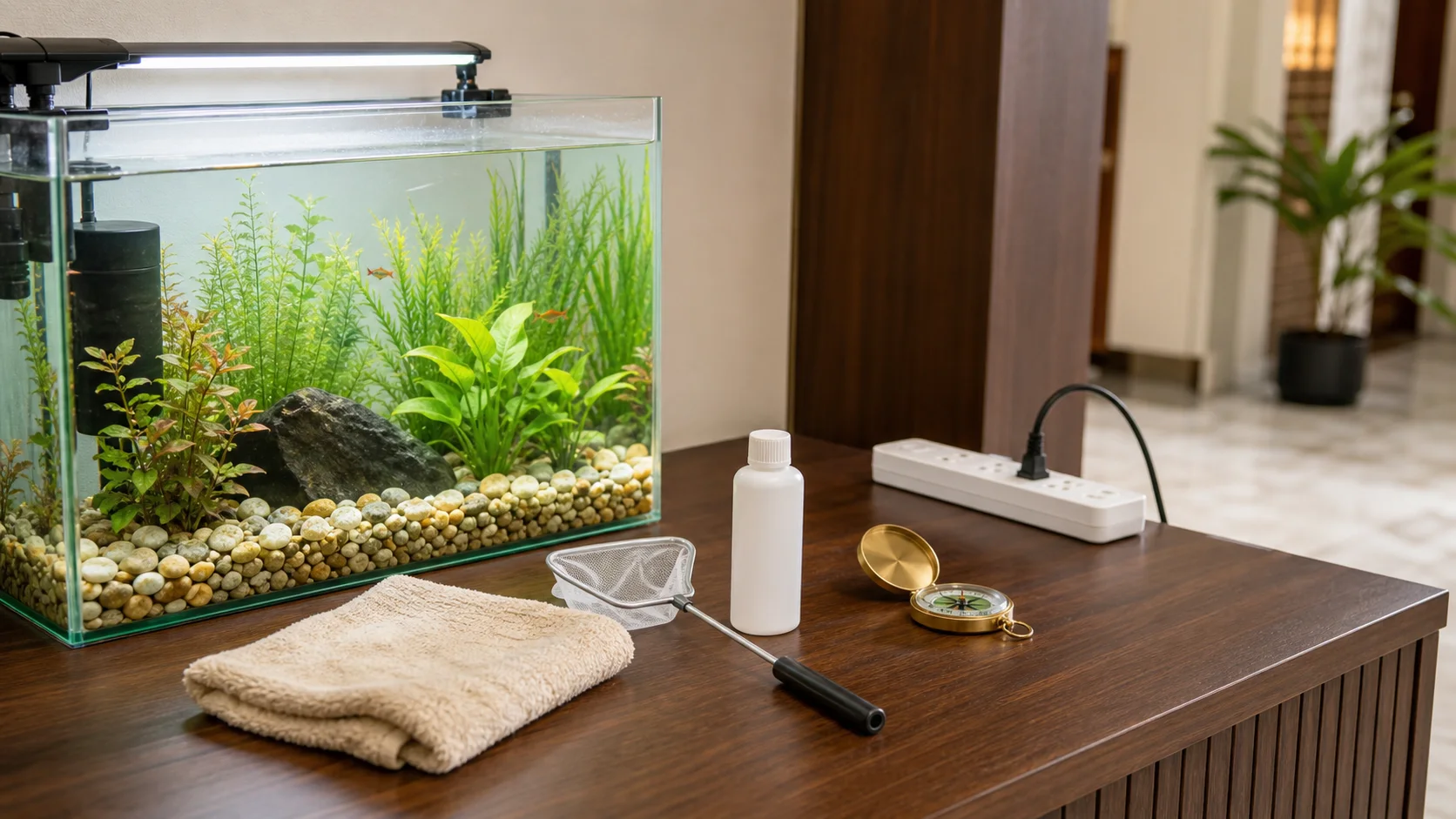
Set a weekly aquarium care routine. Check water clarity, wipe outer glass, remove visible waste, observe fish behaviour, and confirm the filter is working. Do partial water changes based on your aquarium setup. Keep a small towel and net nearby, but do not leave the area looking like a utility shelf. Cleanliness is part of the visual and energetic quality of the tank.
Once a month, review the placement itself. Is the cabinet still level? Are wires dry and tidy? Is the tank blocking movement? Is anyone irritated by pump sound? Has algae increased because of sunlight? These questions turn Vastu into practical home care.
Conclusion
Aquarium Vastu works best when traditional direction guidance and real-world responsibility support each other. North, East, and North-East are commonly preferred for water elements, but the best fish tank location is also stable, safe, clean, accessible, and kind to the fish. Do not keep an aquarium out of fear or pressure. Keep it only if you can care for it well.
When the tank is healthy, the water is clean, the wiring is safe, and the room still functions comfortably, an aquarium can become a beautiful and calming part of the home.
FAQ
Which direction is best for an aquarium at home?
North, East, and North-East are commonly preferred in many Vastu traditions for water-related features, provided the spot is safe, clean, and practical.
Can I keep an aquarium in the living room?
Yes. The living room is often the most practical place if the aquarium has a stable stand, clear walking space, safe wiring, and regular care.
Should an aquarium be kept in the bedroom?
It is usually better to avoid bedrooms because pump sound, light, humidity, and late-night maintenance can disturb sleep.
Is a fish tank good for wealth Vastu?
Traditional Vastu links clean moving water with flow and prosperity, but an aquarium should be treated as a living responsibility, not a guaranteed wealth remedy.
How many fish should I keep for Vastu?
Different traditions suggest different numbers, but the practical answer is to keep only as many fish as the tank size, filtration, and your care routine can support.
Can a small apartment keep an aquarium?
Yes, but choose a small or medium tank, avoid blocking passages, and make sure the floor, cabinet, and power supply are suitable.
Is a dirty aquarium bad in Vastu?
Yes. Dirty, smelly, or neglected water creates the opposite of the calm and fresh feeling people expect from a water element.
Can I place an aquarium near the main door?
Only if it does not block entry, create spills, expose wires, or become a fragile obstacle. Entry safety and clear movement come first.
Can an aquarium be placed in the kitchen?
Usually avoid it. Heat, oil, smoke, and frequent movement make most kitchens poor places for fish tanks.
What if my preferred direction is not available?
Use the safest and easiest-to-maintain location. Traditional direction guidance should not override fish care, electrical safety, or structural stability.
Can I keep an aquarium under a staircase?
Avoid cramped, dark, or hard-to-clean areas. Under-stair placement often creates maintenance and access problems.
Do artificial fish or water screens have the same effect?
They may work as decor, but they do not replace the responsibility or sensory quality of a real aquarium. Use them only if they fit your home calmly.