
On this page
Quick answer: what makes a pantry Vastu-friendly?
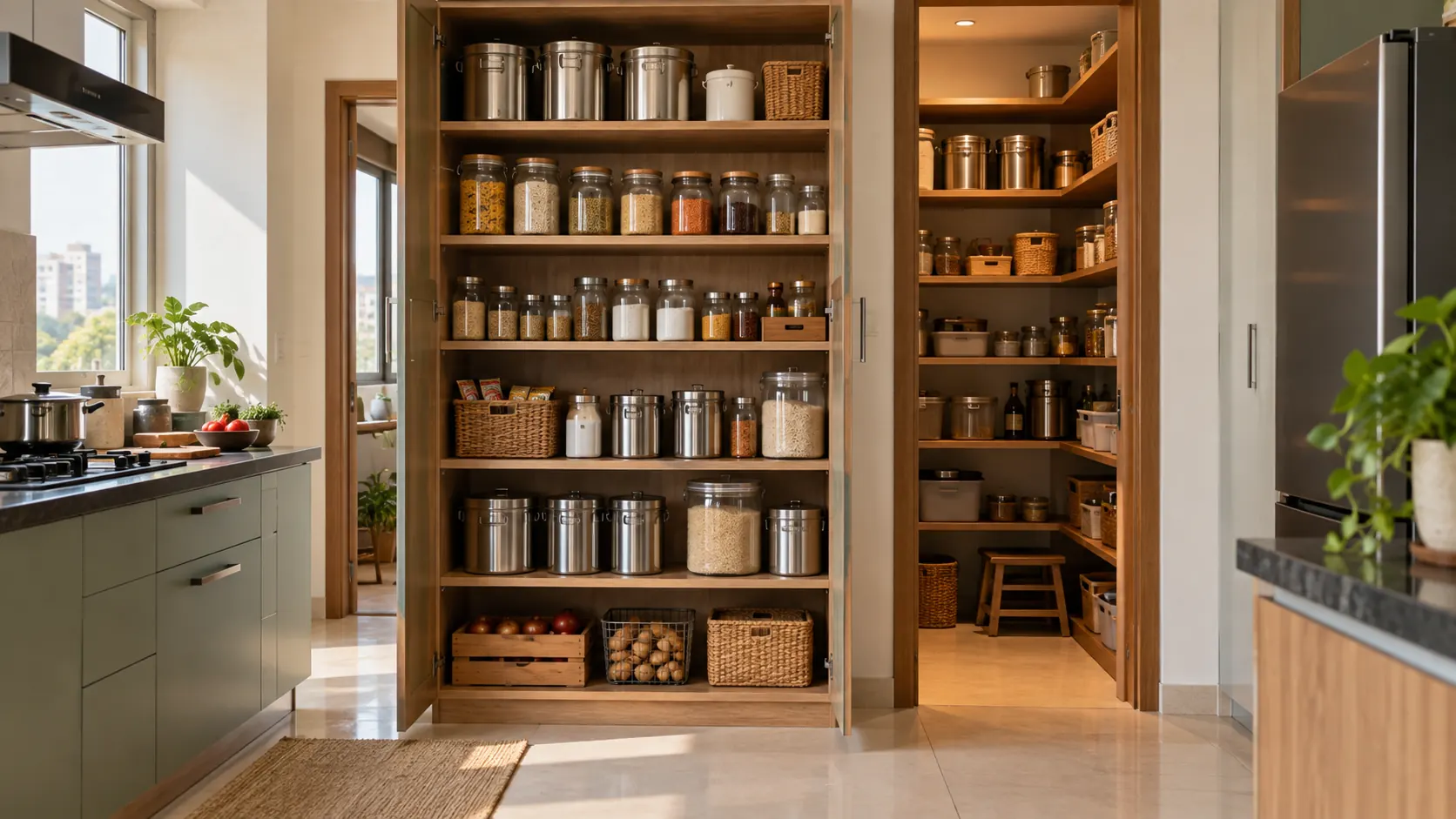
A Vastu-friendly pantry is stable, clean, dry, organised and convenient to use. Many traditions favour storage along the south, west or south-west portions of the kitchen or home because these zones are associated with weight and stability. North-west is a useful alternative for groceries that move quickly, while the north and east are generally kept lighter when the layout permits.
Direction is only one part of the decision. Food safety, ventilation, shelf strength, pest control, lighting and distance from water or heat are equally important. A perfectly directed cabinet that becomes damp behind the sink is not a good pantry. Likewise, a large grain bin stored on a weak overhead shelf is unsafe regardless of its compass position.
Modern Indian pantries also need to reflect how the family cooks. Homes that buy rice, atta, dal and oil in bulk need strong lower storage. Smaller apartments may use a tall pull-out cabinet. Families that cook daily need spices and breakfast items within reach, while occasional-use appliances can sit higher. The best arrangement reduces waste and supports a calm routine.
Best pantry direction according to Vastu
First preference: south or west storage wall
South and west walls are practical locations for full-height pantry units, grain cabinets and heavier shelves. In many Vastu interpretations, these directions can carry more visual and physical weight. In daily use, placing tall storage against a solid wall also helps keep circulation clear and allows the lighter sides of the kitchen to remain open.
This does not mean every item must be pushed into one corner. A kitchen needs safe movement between the refrigerator, sink and stove. Do not narrow this working triangle simply to satisfy a directional preference. Keep cabinet shutters and pull-out units from colliding with appliance doors or blocking the entrance.
Second preference: south-west for long-term staples
The south-west may suit reserve supplies, bulk grains, serving vessels or items used less often. It is especially useful when the wall is dry, strong and away from plumbing. Keep heavy containers at floor or waist level and avoid turning this zone into forgotten storage. Review expiry dates and clean behind bins regularly.
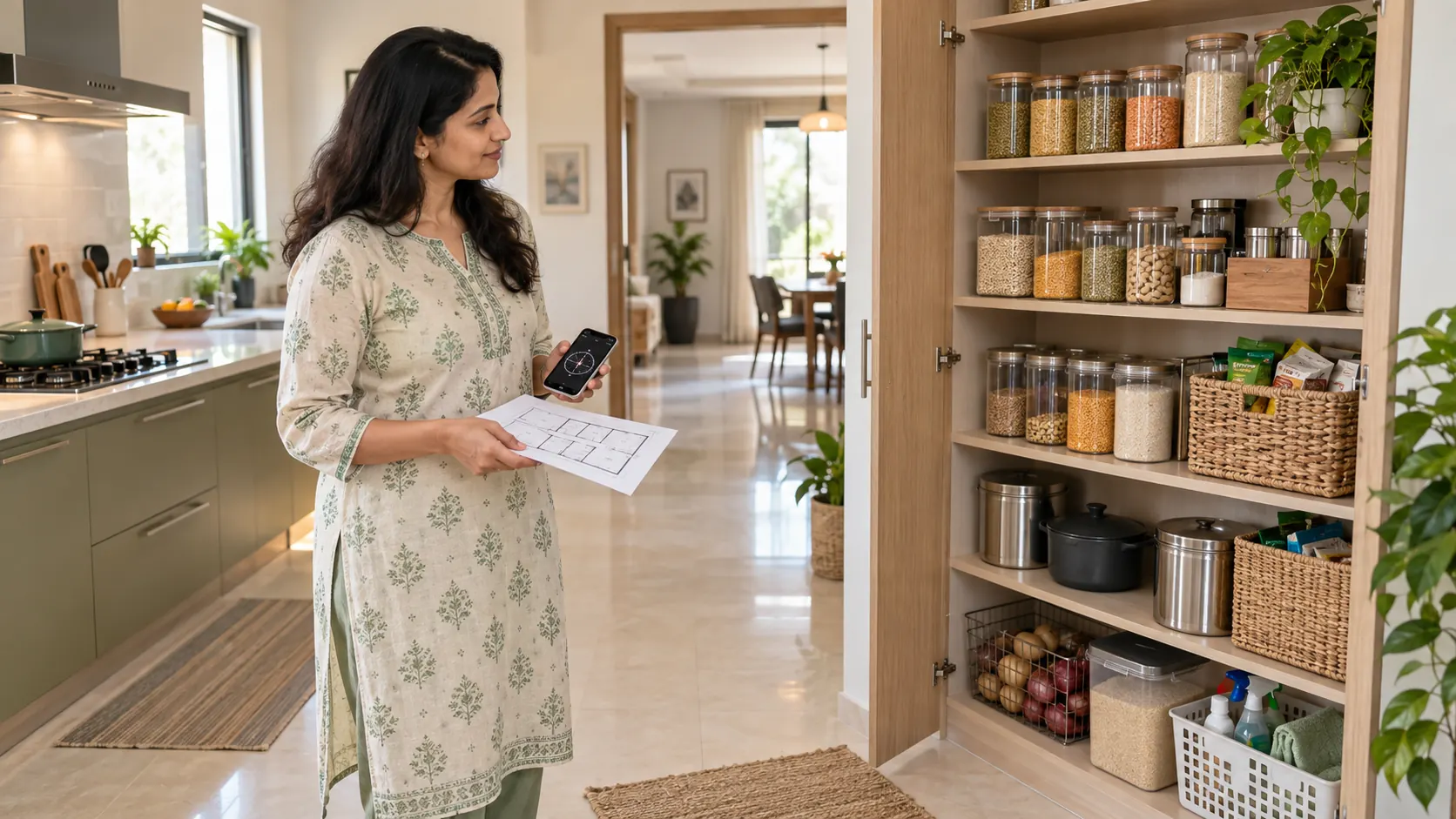
In a compact flat, the south-west of the entire home may be a bedroom rather than a kitchen area. Do not carry groceries across the house just to reach a theoretical zone. Read the kitchen as a room first, then consider the home's overall plan. The Vastu Direction Finder and direction-checking guide can help you mark the layout accurately.
Third preference: north-west for fast-moving groceries
North-west can work well for bread, snacks, breakfast supplies, onions, potatoes and packaged goods that are purchased and consumed frequently. Traditional reasoning links this zone with movement, which fits stock that should not sit for months. Good ventilation is still essential, especially for produce that can release moisture or odour.
If your only pantry is in the north or east, keep it neat and visually light. Use shallow shelves, pale finishes and careful stock limits instead of a crowded floor-to-ceiling wall. Fixed apartment layouts often require compromise; cleanliness and function are more valuable than anxiety about a direction you cannot change.
Direction comparison for modern homes
| Pantry zone | Best use | Practical advantage | Watch for |
|---|---|---|---|
| South | Grains, oils, reserve supplies | Supports substantial cabinetry | Heat from nearby appliances |
| West | Full-height pantry and vessels | Stable wall storage | Afternoon heat on external walls |
| South-west | Bulk and long-term stock | Good for heavier lower shelves | Forgotten or expired items |
| North-west | Fast-moving groceries | Convenient for regular turnover | Clutter from frequent purchases |
| North or east | Light daily-use storage | Can work in fixed flats | Excessive height and visual weight |
| North-east | Minimal, shallow storage if unavoidable | Uses an existing fixed cabinet | Bulky bins and blocked daylight |
How to organise pantry shelves
Start with weight. Large rice, wheat, flour and oil containers belong on low, structurally sound shelves. This lowers the risk of a container falling and makes refilling easier. Everyday dals, spices, tea, coffee and breakfast items can sit between waist and eye level. Light baskets, paper goods and occasional serving pieces may occupy upper shelves.
Create simple zones rather than mixing everything together. Keep grains and pulses in one section, cooking essentials in another, snacks together and baking supplies in a separate basket. Store opened packets inside sealed containers where appropriate. Use a first-in, first-out routine so older stock moves forward and new purchases go behind it.
Leave a small amount of empty space around containers. Shelves packed edge to edge are difficult to clean and make duplicate buying more likely. Good visibility is a practical form of order: when you can see what is available, you waste less food and shop more accurately.
Lower shelves
Bulk rice, atta, oil and heavy vessels on strong surfaces close to the floor.
Middle shelves
Daily dals, spices, breakfast foods and frequently used ingredients at easy reach.
Upper shelves
Lightweight baskets, paper products and occasional-use items—not heavy glass jars.
Keep food away from water and excessive heat
Avoid placing dry-food storage directly below a leaking sink, beside an uninsulated oven wall or where steam constantly reaches the cabinet. Heat shortens the life of oils, nuts and spices, while moisture can spoil flour and attract insects. If the pantry shares a wall with plumbing, inspect it periodically and use removable shelf liners so early signs of dampness remain visible.
Do not block an exhaust path or window with a tall cabinet. For broader kitchen planning, compare this pantry advice with the Kitchen Vastu guide and Kitchen Vastu dos and don'ts.
Best pantry colours and materials
Choose colours that make the pantry bright enough to inspect. Warm white, cream, beige, pale wood, muted yellow and soft sage work well in many kitchens. These shades also make dust, moisture stains and insects easier to notice than very dark interiors. If the external door matches a dark kitchen finish, keep the shelf interiors lighter.
Materials should be washable, low-odour and suited to local humidity. Laminated plywood, sealed wood, powder-coated metal and food-safe containers are common choices. Avoid damaged particleboard near moisture because it can swell and become difficult to clean. Do not cover an active damp patch with decorative panels; repair and dry the source first.
Transparent containers improve visibility, while stainless steel offers durability and light protection for some staples. There is no need to replace good containers only for appearance. Uniformity can look calm, but safe lids, readable dates and easy cleaning matter more than a matching social-media aesthetic.
Pantry Vastu examples for real Indian homes
Two-bedroom apartment
The builder provides a tall pantry beside the refrigerator on the west kitchen wall. The family keeps grain tins low, daily snacks in middle baskets and rarely used appliances high. A door stopper prevents the refrigerator and pantry doors from colliding.
Compact rental kitchen
The only cabinet is in the north-east. Instead of worrying, the tenant keeps it shallow and clean, stores only weekly groceries and uses removable baskets. Bulk stock remains in a dry utility cupboard on the west side.
Independent house
A small walk-in pantry sits west of the kitchen. Shelves stop short of the ventilation grille, bulk containers remain low and a motion light makes expiry checks easy. The door opens outward without narrowing the work aisle.
Multigenerational family
The household buys staples monthly. Opened food and sealed reserve stock are separated. Medicines, cleaning liquids and pet food each have their own closed cabinet, reducing mix-ups and improving hygiene.
Common pantry Vastu mistakes
Buying more storage than the family needs
A larger pantry often encourages overbuying. Deep shelves hide packets at the back, and expired food accumulates. Match the cabinet depth to normal household use. Pull-out baskets or stepped organisers can make an existing deep shelf more visible without renovation.
Keeping heavy jars overhead
Direction cannot make unsafe storage acceptable. Heavy glass, oil cans and bulk grain containers should not sit above head height. Move them to lower shelves and confirm that the shelf can carry the load.
Mixing chemicals, medicines and food
Cleaning sprays, pesticides and strong household chemicals need separate, secure storage. Medicines also require conditions stated on their labels and protection from children. A pantry should not become a general-purpose cupboard simply because space is limited.
Ignoring moisture, pests or stale stock
Religious symbols, crystals or colour changes cannot repair leakage or infestation. Find the source, discard unsafe food, clean thoroughly and use qualified pest-control or plumbing help when needed. Practical maintenance is the strongest no-demolition remedy.
Blocking movement with open shutters
Test the pantry while the refrigerator, dishwasher or kitchen door is also open. A layout that works only when every other door is shut creates daily frustration. Sliding, pocket or well-positioned hinged shutters may solve a clearance problem, subject to safe installation.
Pantry Vastu do's and don'ts
Do
- Prefer a stable south or west wall when practical.
- Keep heavy supplies on lower shelves.
- Use clear categories and rotate older stock forward.
- Provide sufficient light and ventilation.
- Inspect for dampness, insects and expired food.
- Keep the doorway and kitchen passage clear.
Don't
- Store food against an active damp wall.
- Place oils and spices beside excessive heat.
- Mix cleaners or medicines with groceries.
- Overload weak shelves or overhead cabinets.
- Keep broken containers and forgotten packets.
- Make expensive changes based on fear.
A five-minute monthly pantry check
- Look for moisture, loose hinges, insects or damaged containers.
- Move older packets forward and check near-term expiry dates.
- Wipe one shelf at a time rather than emptying everything at once.
- Note staples that are genuinely low before shopping.
- Remove empty boxes and items the family no longer uses.
This short routine supports the qualities people often seek through Vastu—order, stability and mindful use—without adding fear or unnecessary purchases. For deeper storage planning, read the Store Room Vastu guide and Dining Room Vastu guide.
Apartment and rental pantry remedies without demolition
When the pantry direction cannot change, improve what can. Use removable shelf risers, baskets and door organisers. Keep the cabinet interior pale, add a battery or plug-in light where safe, and avoid filling every shelf. A washable mat under oil containers can contain small spills. Moisture absorbers may help in suitable enclosed spaces, but they are not a substitute for repairing leaks or improving ventilation.
If a bulky cabinet dominates the north-east, reduce visual weight by decluttering it and keeping the exterior simple. Do not remove structural or builder-installed cabinets without permission. Renters should check lease terms before drilling, rewiring or changing shutters. The site's Vastu remedies without demolition guide offers more reversible ideas.
For the whole home, connect pantry planning with Home Vastu, Apartment Vastu and the Vastu FAQ. A pantry works best as one part of a coherent kitchen and household routine.
Frequently asked questions
Which direction is best for a pantry according to Vastu?
South, west and south-west storage walls are commonly preferred because they can support stable, heavier storage. Also confirm that the chosen wall is dry, accessible and away from plumbing leaks or excessive stove heat.
Can a pantry be in the north-west?
Yes. North-west can suit frequently used groceries and supplies that move in and out regularly. Keep the zone ventilated and prevent it from becoming a cluttered dumping area.
Is a pantry in the north-east acceptable?
Many traditions prefer keeping the north-east lighter. If a fixed apartment cabinet is already there, use shallow, neat storage, limit bulk and preserve available light. Renovation is not automatically necessary.
Where should heavy grain containers be kept?
Keep rice, atta, oil and other heavy supplies on strong lower shelves. South or west walls are often preferred when available, but safety and shelf strength come first.
Which colours are suitable for a pantry?
Cream, warm white, beige, pale wood, muted yellow and soft sage are practical. They maintain brightness and help you notice dirt, moisture or pests early.
Can cleaning products be stored in the pantry?
Keep household chemicals separate from food. If another cupboard is unavailable, use a sealed lower compartment away from groceries, medicines and children's reach.
Should a pantry door remain open or closed?
It may remain closed when the space has adequate ventilation. Open it regularly for cleaning and inspection, and ensure the shutter does not obstruct the kitchen aisle.
How can renters improve pantry Vastu?
Use removable liners, shelf risers, baskets, clear containers and better lighting. Limit excess stock and keep the cabinet dry without making unauthorised structural changes.
Does pantry Vastu guarantee prosperity?
No. A clean pantry can reduce waste and improve food planning, but it cannot guarantee wealth. Treat Vastu as planning guidance rather than a promise.
Conclusion
Good pantry Vastu is straightforward: choose a stable location where possible, keep the area dry and bright, store heavy supplies low and organise food according to actual use. South, west and south-west are useful preferences, while north-west works well for faster-moving stock. Fixed apartments can still achieve a calm pantry through lighter storage, good visibility and regular maintenance.
Do not let a compass rule override hygiene, safety or family convenience. The most supportive pantry is one that helps you find ingredients quickly, prevents waste and remains easy to clean through ordinary working weeks. That practical balance is more valuable than any fear-based remedy.