
On this page
Quick answer: where should a dishwasher go?
For most homes, the best dishwasher location is close to the kitchen sink, where the inlet and drain lines can remain short and accessible. From a Vastu perspective, north-west or west can be considered useful placements for a water-using utility appliance when those zones fit the plan. North or east can be practical alternatives in a fixed apartment. The exact wall matters less than safe plumbing, a dry cabinet, correct electrical protection and an unobstructed aisle.
A dishwasher should not be forced into a distant compass zone if that requires long hoses, unsafe wiring or a door that blocks the kitchen entrance. It should also not be squeezed tightly against a hot oven or hob when a cabinet buffer is possible. Traditional planning becomes more useful when it supports real household comfort rather than competing with it.
Before choosing a position, mark true north using the direction-checking guide or the Vastu Direction Finder. Then evaluate the kitchen as a working room: identify the sink, stove, refrigerator, doorway, drainage point and normal walking route. A balanced decision considers all of them.
Dishwasher direction according to Vastu
First preference: north-west or west
North-west is often associated with movement and circulation, so it can suit an appliance that handles a repeating daily cycle. West may also support a stable utility run, especially when it shares a practical plumbing wall with the sink. These directions are preferences, not guarantees. A west cabinet with hidden leakage is worse than a well-installed dishwasher elsewhere.
When the sink already occupies the north-west or west counter, placing the dishwasher beside it can reduce pipe length and simplify loading. Leave enough solid support around the sink cabinet, protect cut edges from moisture and ensure a service technician can reach the valves without dismantling the kitchen.
Second preference: north or east
North and east can work in compact flats when the builder has placed the water point there. Keep the appliance visually integrated into the cabinetry and avoid blocking a window, balcony door or the main kitchen approach. Good daylight is helpful, but direct rain or harsh sun on the appliance is not.
If the east counter also contains the hob, preserve separation. A narrow tray unit or cabinet panel between the hot appliance and dishwasher can provide a useful buffer, subject to manufacturer clearances. Compare the whole layout with the site's Kitchen Vastu guide.
Third option: south-east in a fixed modular kitchen
South-east is traditionally connected with cooking and fire, so it is usually better reserved for the hob and related appliances. Yet many modular kitchens have the only dishwasher point on this side. In that situation, safe installation is more sensible than expensive demolition. Keep water hoses away from direct heat, provide a proper gap from the oven, and check that steam can escape without damaging adjacent shutters.
North-east is commonly kept lighter and open in Vastu traditions. If the dishwasher is already there, maintain cleanliness, dryness and visual order. Do not add bulky overhead storage merely to disguise the appliance, and do not relocate plumbing solely from fear. The no-demolition remedies guide explains how to improve fixed layouts responsibly.
Direction comparison
| Zone | When it works well | Practical benefit | Check carefully |
|---|---|---|---|
| North-west | Sink and utility run nearby | Supports a frequently used appliance | Door swing and ventilation |
| West | Dry, stable plumbing wall | Short service connections | Afternoon heat on external walls |
| North or east | Builder-provided water point | Useful alternative in apartments | Blocked light or entrance |
| South-east | Fixed modular layout with safe buffer | Avoids disruptive renovation | Distance from hob and oven heat |
| North-east | Existing point with no practical alternative | Can function safely when kept light | Leaks, clutter and bulky additions |
| Centre | Usually unsuitable for fixed plumbing | Island units only with expert planning | Trip hazards, drainage and circulation |
Sink, plumbing and electrical safety
Placing the dishwasher near the sink is usually efficient because plates can move from scraping to rinsing to loading without crossing the room. It also allows the inlet valve and drain connection to remain in a serviceable area. The appliance should have a dedicated, properly earthed electrical supply as specified by its manufacturer. Keep plugs and loose extension boards away from wet zones.
The drain hose must follow the appliance instructions so dirty water does not flow back into the machine. Hoses should not be crushed behind cabinets, stretched across an open space or bent sharply. Install a reachable shut-off valve and inspect connections after the first cycles. Even a slow leak can swell cabinetry, create odour and damage the floor before it becomes obvious.
Do not place dry food directly against a wall that contains active dishwasher plumbing. If the pantry is nearby, use a sealed divider and inspect both areas regularly. The related Pantry Vastu guide covers safe food storage, while the sink and stove Vastu guide explains the broader water-and-fire relationship.
Cabinet, ventilation and clearance planning
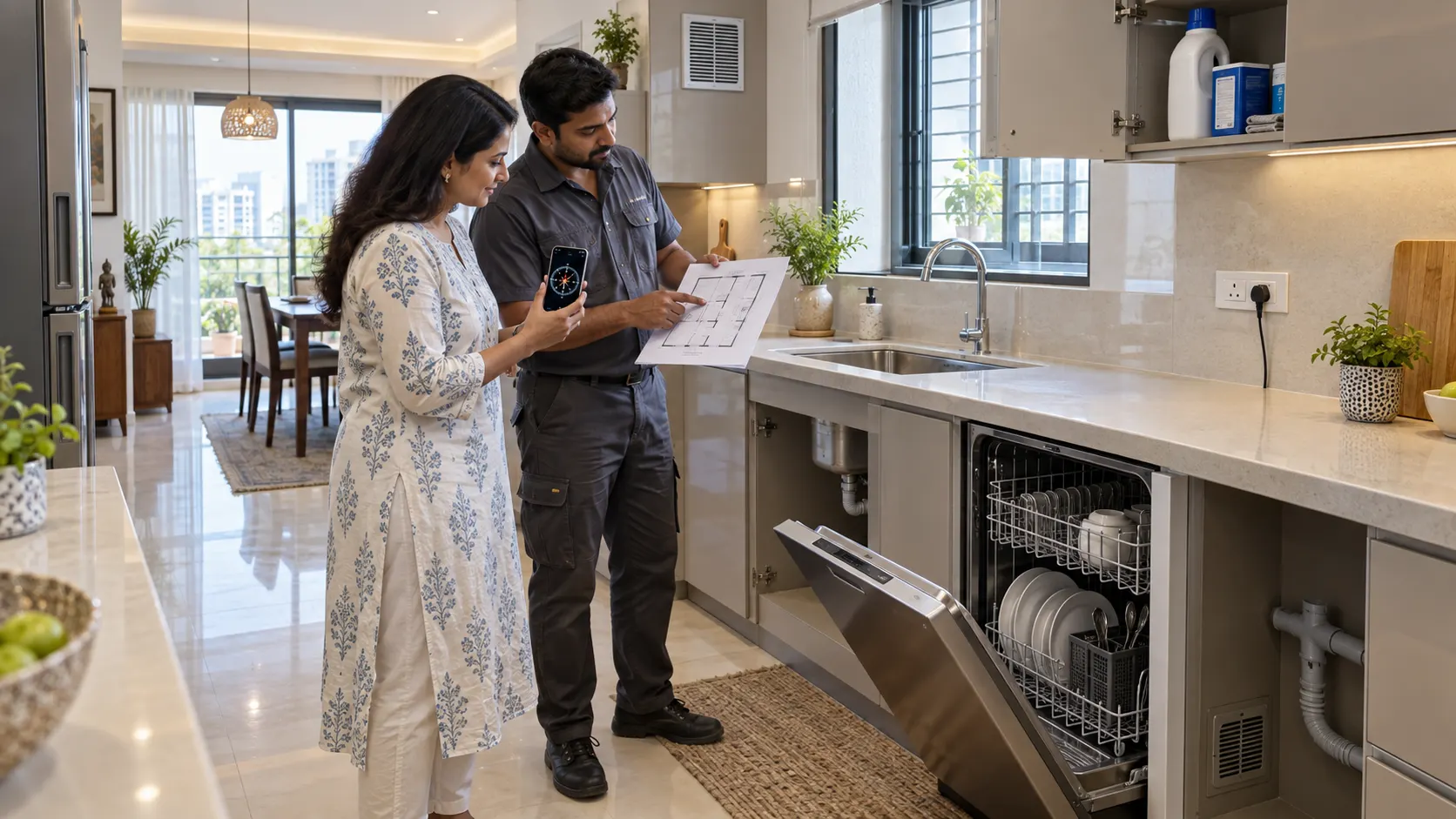
Measure the actual appliance rather than relying only on a standard width. Check the body, pipes, plug, handle and full door arc. The dishwasher must sit level so racks move correctly and the door seals evenly. Adjustable feet can help, but they should rest on a strong, finished surface rather than unstable packing pieces.
Open the dishwasher door and imagine someone standing in front of it while another person uses the sink or refrigerator. In a narrow galley kitchen, the door may temporarily occupy most of the aisle. That can be acceptable if it does not trap someone, block the only exit or collide with another shutter. Load during quieter moments and close the door promptly after use.
Integrated models need the ventilation and panel dimensions specified by the maker. Do not seal every gap for appearance. Steam and heat must disperse without damaging laminate. Keep the plinth vent clear, clean the filter regularly and leave access for maintenance. Good care is more important than adding decorative Vastu objects around an appliance.
Detergent and utensil storage
Dishwasher detergent, salt and rinse aid should remain in original or clearly identified containers inside a dry, closed cabinet. Keep them separate from spices, snacks and drinking-water supplies, and out of children's reach. Do not decant chemicals into food jars. Store everyday plates and cutlery close to the unloading route so clean dishes can be put away without crossing the cooking zone.
If the kitchen also contains a washing machine, plan each appliance independently rather than sharing unsupported adapters. The Washing Machine Vastu guide discusses utility connections, while Refrigerator Vastu and Microwave Vastu help coordinate the remaining appliances.
Dishwasher Vastu examples for real homes
Two-bedroom apartment
The builder provides a dishwasher point beside the north-west sink. The family installs an integrated model, keeps a slim cabinet between it and the hob, and checks that the open door does not touch the refrigerator. This combines direction preference with a short plumbing route.
Compact rental kitchen
A portable dishwasher sits on an east counter because no under-counter space exists. The tenant uses the approved tap connection, disconnects it after use, keeps the counter dry and obtains permission before any permanent plumbing change.
South-east modular layout
The only service bay is near the oven. A heat-resistant cabinet separator, manufacturer-approved clearances and well-routed hoses make the installation safe. The family avoids costly relocation and focuses on maintenance rather than fear.
Large family kitchen
The dishwasher sits west of a double sink. Plates are stored in drawers opposite the appliance, so unloading is quick. Detergent remains in a locked upper cabinet and the machine runs after the evening cooking area has been cleared.
Island dishwasher example
A dishwasher in an island can look convenient, but it needs professional planning beneath the floor or through a properly designed service route. Avoid exposed hoses, raised covers that create a trip hazard or makeshift extension cords. The island should not overload the visual centre of a small home. In an existing flat, relocating services to an island may create more risk and cost than benefit.
Common dishwasher placement mistakes
Choosing direction before checking services
Moving the appliance to a preferred corner can lengthen water and drain lines, weaken pressure or require unsafe wiring. Start with the plumbing map and appliance manual, then choose the best directional option among safe positions.
Ignoring the open door
A closed dishwasher occupies little space, but its open door can block a narrow passage. Test the full loading position, including the lower rack pulled out. Check nearby drawers, refrigerator doors and the kitchen entrance at the same time.
Placing it tightly beside direct heat
A hot oven or hob can affect hoses, controls and cabinet finishes. Follow specified clearances and use a proper cabinet buffer where possible. Do not assume a Vastu-friendly direction overrides appliance safety.
Hiding leaks with mats or panels
A decorative mat may conceal early moisture. Keep connections inspectable, investigate odour or swelling immediately and call a qualified technician when needed. Crystals, colours and symbols cannot repair plumbing.
Unsafe detergent storage
Bright pods can attract children and should never sit in an open basket near food. Keep products securely closed and follow their safety labels. Household routines are part of good planning.
Dishwasher Vastu do's and don'ts
Do
- Prefer north-west or west when practical.
- Keep the appliance near safe sink plumbing.
- Use a dedicated earthed electrical connection.
- Test the door, rack and walking clearances.
- Provide ventilation and maintenance access.
- Store detergent securely away from food.
Don't
- Run hoses loosely across a passage.
- Place the unit hard against direct oven heat.
- Block the only kitchen exit while loading.
- Use extension boards in a wet area.
- Ignore drips, odours or swollen cabinetry.
- Renovate a fixed flat because of fear.
Pre-installation checklist
- Confirm the kitchen's directions with a reliable compass reading.
- Read the appliance dimensions and installation requirements.
- Locate the inlet valve, drain, protected socket and service access.
- Open all nearby doors and drawers to find collisions.
- Check the heat gap from the hob, oven and hot pipes.
- Plan ventilation, floor protection and detergent storage.
- Use a qualified installer and test for leakage after operation.
For a complete kitchen review, read Kitchen Vastu dos and don'ts and connect the room to the wider Apartment Vastu guide. These resources help prevent one appliance decision from being treated in isolation.
Best practices after installation
Scrape food as recommended for your machine, clean the filter and door seal, and use the correct detergent quantity. Leave the door slightly ajar after a cycle only when the manufacturer permits and when it will not create a collision hazard. Wipe standing water and investigate repeated residue rather than masking odour with fragrance.
Every few months, inspect the hose, valve, cabinet base and nearby skirting. Confirm that the machine remains level and that vibration has not loosened fittings. In hard-water areas, follow the appliance guidance for salt and cleaning. This maintenance supports hygiene, efficiency and the calm order that Vastu planning aims to encourage.
If your kitchen layout cannot achieve every preference, prioritise safety and ease of use. The site's Vastu FAQ provides beginner-friendly answers, and Home Vastu helps place kitchen decisions within the full home.
Frequently asked questions
Which direction is best for a dishwasher according to Vastu?
North-west or west can be useful preferences when they suit plumbing and movement. North or east may also work in a fixed flat. Safe water, drainage, electricity and clearance remain the deciding factors.
Can a dishwasher be placed next to the kitchen sink?
Yes. This is often the most efficient location because it shortens water and drain connections and simplifies loading. Protect the cabinet from moisture and keep the open door clear of the aisle.
Should a dishwasher be kept away from the stove?
Provide sensible separation from the hob or oven. A cabinet buffer can help where space permits. Always follow appliance clearances and protect hoses, wiring and finishes from direct heat.
Is a dishwasher in the south-east acceptable?
It can be acceptable in a fixed modular kitchen when installed safely. Maintain a gap from cooking appliances, ventilate properly and keep water lines away from unsafe heat zones.
Can a dishwasher go in the north-east?
Many traditions prefer a lighter north-east. If the builder has already placed services there, keep the area dry and uncluttered rather than making a fear-based renovation.
What should be stored near a dishwasher?
Keep daily dishes near the unloading route. Store detergent, salt and rinse aid in a closed, dry cabinet away from food and children's reach.
How much clearance does a dishwasher need?
Use the manufacturer's measurements. The door and racks must open completely without blocking an essential exit, and a person needs enough space to load the machine safely.
How can renters improve dishwasher Vastu?
Use existing service points, keep hoses tidy, maintain a dry floor and preserve the aisle. Obtain permission before drilling, rewiring or altering cabinets.
Does dishwasher placement affect prosperity?
No placement guarantees prosperity. A safe and efficient setup can reduce effort, support hygiene and improve kitchen flow, which are practical household benefits.
Conclusion
Good dishwasher Vastu balances direction with engineering and daily behaviour. North-west and west are useful first preferences, while north or east can be practical alternatives. A fixed south-east or north-east point does not automatically require relocation. Keep the machine near suitable plumbing, away from direct heat, level, ventilated and easy to service.
The most supportive placement is one that keeps the floor dry, the aisle clear and the family routine simple. Check the plan carefully, follow the appliance manual and use qualified installation help. That calm, safe and maintainable approach is more valuable than an expensive change made from fear.