
On this page
Why doormat Vastu matters at the main entrance
The main entrance is the first transition point between the outside world and the home. In Vastu, this zone is treated with care because it affects the way people enter, pause, remove dust, arrange footwear and experience the first view of the house. The doormat may look like a simple utility item, but it directly supports cleanliness and order at the threshold.
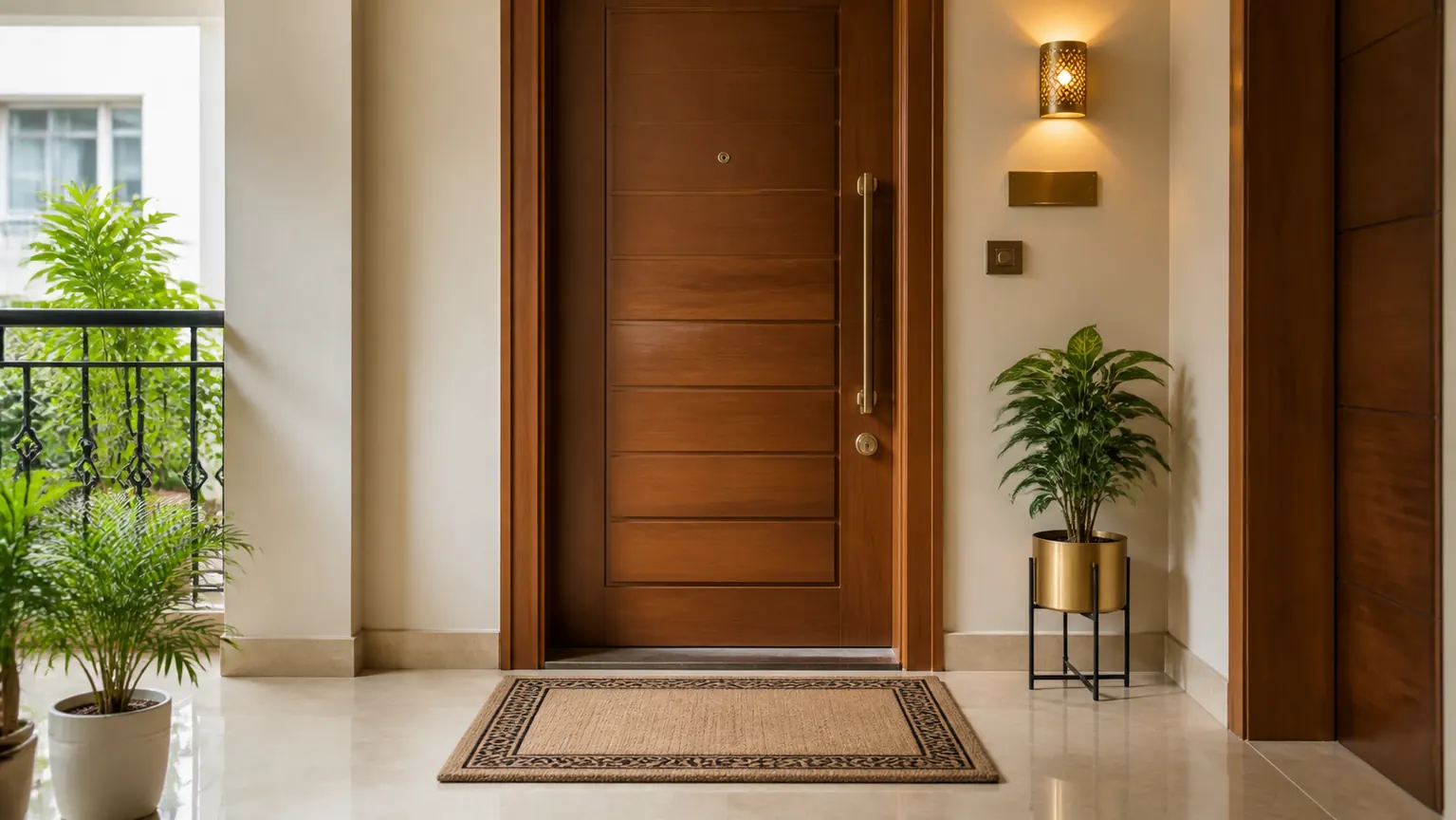
A good doormat keeps dust, mud and rainwater from moving into the living area. It also visually marks the entry point. When the doormat is clean, flat and proportional to the door, the entrance feels maintained. When it is torn, wet, curled or smelly, the entrance feels neglected even if the rest of the home is beautiful.
Practical Vastu is not about fear. A doormat will not magically solve every entrance issue. But it can support a good habit: wiping the feet, keeping the threshold clear and preventing outside clutter from spreading inside. This is why entrance accessories like doormats, lights, name plates, plants and shoe racks should work together.
Best doormat placement for flats and houses
The doormat should sit just outside the main door or directly at the threshold where a person naturally wipes their feet before entering. It should not be placed so far away that nobody uses it. It should not be so close to the door that it gets caught under the door swing. A door that drags over the mat daily will damage both the mat and the entry experience.
For apartments, check society rules. Some buildings do not allow large mats, shoe racks or plants in common corridors. In that case, choose a neat, low-profile mat that does not disturb neighbours or block the corridor. If the door opens outward, make sure the mat does not prevent smooth opening. If the door opens inward, the mat outside should still lie flat and safe.
For independent houses, use a stronger outdoor mat near the porch or main step, and a cleaner indoor rug inside the foyer if needed. The outdoor mat handles dirt; the indoor rug supports design. Do not bring a dirty footwear mat deep into the home. The purpose is to stop outside dust near the threshold, not spread it inside.
Best colours and materials for doormat Vastu
Natural and earthy colours usually work well: brown, beige, tan, muted red, maroon, deep green, charcoal, dark grey and natural coir tones. These colours hide dust better and suit most Indian entrances. Very light mats may look good in photos but can become dirty quickly in daily use, especially during monsoon or in dusty streets.
Material should match usage. Coir mats are common and practical, but they shed fibres and need regular shaking. Rubber-backed mats are stable and safer in rainy areas. Cotton mats look softer but may absorb water and smell if not washed. Synthetic mats can be easy to clean, but choose one that does not look cheap or slippery. The most Vastu-friendly mat is the one that stays clean, safe and proportional.
Avoid mats with aggressive text, negative phrases, faded printing or broken decorative elements. If you use a “Welcome” mat, keep it clean and readable. If the text fades, replace it. In many homes, a plain quality mat looks more premium than a loud printed one.
How to read the entrance floor plan
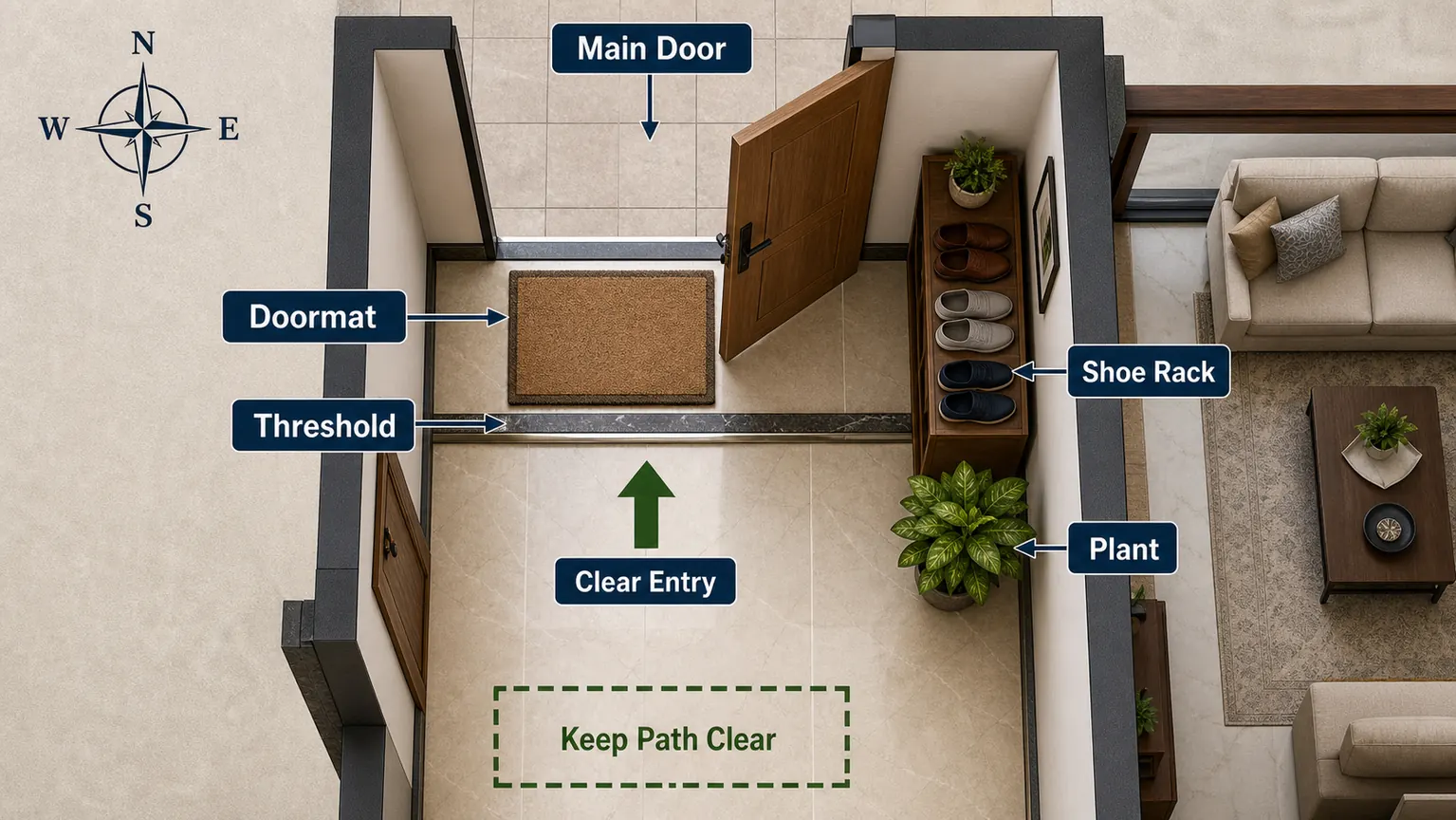
Before buying a new doormat, stand outside your door and watch how people enter. Where does the foot naturally land? Does the door swing over that spot? Is there a level difference at the threshold? Is the corridor narrow? Does the shoe rack already crowd the side? These practical observations decide the right mat size better than guesswork.
For a standard apartment door, the mat should be wide enough to cover the stepping area but not so large that it crosses into the neighbour’s path or lift lobby movement. Keep the longer edge parallel to the door. If your entrance is angled or narrow, choose a smaller rectangular mat rather than forcing a large decorative rug.
Also check the first view after opening the door. If the doormat is good but the shoe rack is overflowing, the entrance still feels heavy. Pair the doormat with a closed or neat shoe unit, clear threshold, working doorbell, good light and clean wall. For more detail, read Main Door Vastu and Shoe Rack Vastu.
Practical Indian home examples
Small flat corridor
Use a low-profile rectangular mat that does not block neighbours or lift-lobby movement.
Rainy city entrance
Choose a rubber-backed mat with good grip and quick cleaning. Avoid cotton mats that stay wet.
Independent house porch
Use an outdoor dirt-trapping mat at the porch and a cleaner foyer rug inside if needed.
North-facing door
Natural fibre, green, beige, brown or charcoal tones can work with good lighting.
East-facing door
Keep the mat bright, clean and light-feeling; avoid dull, wet or dusty mats.
Rental apartment
Use a movable mat, no drilling, no permanent fixtures and easy washable entrance accessories.
Common doormat Vastu mistakes
The first mistake is keeping a torn doormat for too long. A mat with curled edges, holes or loose backing is not only unattractive but unsafe. People can trip, and the entry begins to feel neglected. Replace a worn mat before it becomes embarrassing.
The second mistake is using a mat that stays wet. A wet mat at the entrance can create smell, mosquitoes, stains and slipping risk. During monsoon, dry the mat regularly or keep a backup. Cleanliness is a stronger Vastu remedy than most decorative items.
The third mistake is making the entry crowded. A doormat, shoe rack, plant, umbrella stand, delivery parcels and dustbin all near the door can block movement. The entrance should welcome, not trap. Keep only what is needed, and place everything else to the side.
Avoid mats with negative or rude phrases. Avoid mats that are too small to be useful. Avoid overly thick mats that jam under the door. Avoid placing the mat over uneven broken flooring without correcting the base first.
Doormat Vastu checklist
- Place the mat just outside or at the main threshold.
- Choose a size that covers the natural stepping area.
- Make sure the door opens freely without dragging the mat.
- Use non-slip backing, especially near polished tiles.
- Prefer earthy, clean-looking and easy-maintenance colours.
- Shake, vacuum or wash the mat regularly.
- Replace torn, curled, faded or smelly mats.
- Keep shoe racks to the side, not in the walking path.
- Keep the threshold clean and uncluttered.
- Use good lighting so the entrance feels safe and welcoming.
Doormat material comparison
| Material | Best for | Strength | Watch out for |
|---|---|---|---|
| Coir | Dusty entrances | Natural, good scraping | Sheds fibres and needs shaking |
| Rubber-backed | Monsoon and polished floors | Grip and water resistance | Can look heavy if too dark |
| Cotton | Indoor foyer rug | Soft and washable | Absorbs water and smell |
| Synthetic | Easy maintenance | Lightweight and durable | Choose quality finish to avoid cheap look |
| Jute blend | Premium natural look | Warm and stylish | Not ideal for very wet areas |
Direction-wise doormat notes
Direction-wise colour guidance should be used gently, not rigidly. If your entrance faces North, cooler natural tones, deep green, brown, beige or charcoal can look balanced with good lighting. If your entrance faces East, keep the doorway bright and fresh with lighter earthy tones, tan, muted red or natural fibre textures. For South-facing entrances, choose a mat that feels grounded and strong rather than flashy; maroon, brown, rust or deep neutral shades may work well with a clean threshold. For West-facing entrances, darker neutrals, brown, beige, muted gold accents or textured coir can handle dust and evening light well.
The most important rule is still maintenance. A colour that is considered suitable but looks dirty every day will not help the entrance. Choose a mat your family can maintain. In a high-dust street, a darker textured mat may be more practical. In a clean apartment corridor, a lighter premium mat may work. If your building has a common corridor, also respect society rules and neighbour comfort. Vastu should improve shared spaces, not create friction.
If you are unsure about your door direction, first verify the entrance correctly. Stand inside the home at the main door and face outward, then check the compass reading away from metal grills and electrical panels. You can also compare with the building plan. For step-by-step guidance, read How to Check Directions Correctly.
Helpful internal links
Continue with Main Door Vastu, Name Plate and Main Door Vastu, Entrance Lighting Vastu, Entrance Plants Vastu, Shoe Rack Vastu, Entrance & Main Door Vastu, Apartment Vastu, Small Apartment Vastu, Vastu FAQ and the full Vastu blog archive.
Frequently asked questions
Is a doormat important in Vastu?
A doormat is important as part of entrance care because it keeps dust, mud and outside clutter from entering the home. In practical Vastu, a clean and well-placed doormat supports a neat threshold and a welcoming main door.
Where should a doormat be placed at the main entrance?
Place the doormat just outside the main door or exactly at the threshold where footwear dust is naturally wiped. It should not block the door swing, create a trip hazard, or cover a raised threshold awkwardly.
Which colour doormat is best as per Vastu?
Earthy and welcoming colours such as brown, beige, maroon, deep green, muted red, charcoal or natural fibre tones usually work well. Choose a colour that suits the door direction, stays clean-looking and does not clash with the entrance.
Can I keep a black doormat at the entrance?
A black or charcoal doormat can work if it looks clean, suits the flooring and does not make the entrance feel dull. Pair it with good lighting and a tidy doorway.
Should the doormat be inside or outside the house?
For most flats, the main wiping mat is best outside or at the doorway. A smaller clean rug inside the foyer can be used for design, but avoid keeping dirty footwear mats deep inside the home.
What should be avoided on a doormat?
Avoid torn mats, wet mats, foul smell, faded welcome text, curled corners, dust buildup, slippery backing and mats that block the main door from opening fully.
How often should a doormat be cleaned?
Shake or vacuum it frequently, especially during monsoon and dusty seasons. Wash or replace it when it smells, traps moisture or no longer looks presentable.
Can a doormat solve entrance Vastu problems?
A doormat alone cannot solve major entrance problems, but it supports cleanliness, order and entry flow. Combine it with good lighting, clear shoe storage, a clean threshold and a door that opens freely.
Conclusion
Doormat Vastu is simple but meaningful. The mat should protect the threshold, support cleanliness and keep the entry path safe. Choose a mat that fits the door, stays flat, suits the climate and looks clean every day. Replace it when it becomes torn, faded or smelly.
A good entrance is not created by one item. It is created by a clear doorway, proper lighting, organized footwear, healthy plants where suitable, a neat name plate and a clean doormat. When these small details work together, the home feels more welcoming from the first step.