
On this page
Is a pooja room in bedroom acceptable?
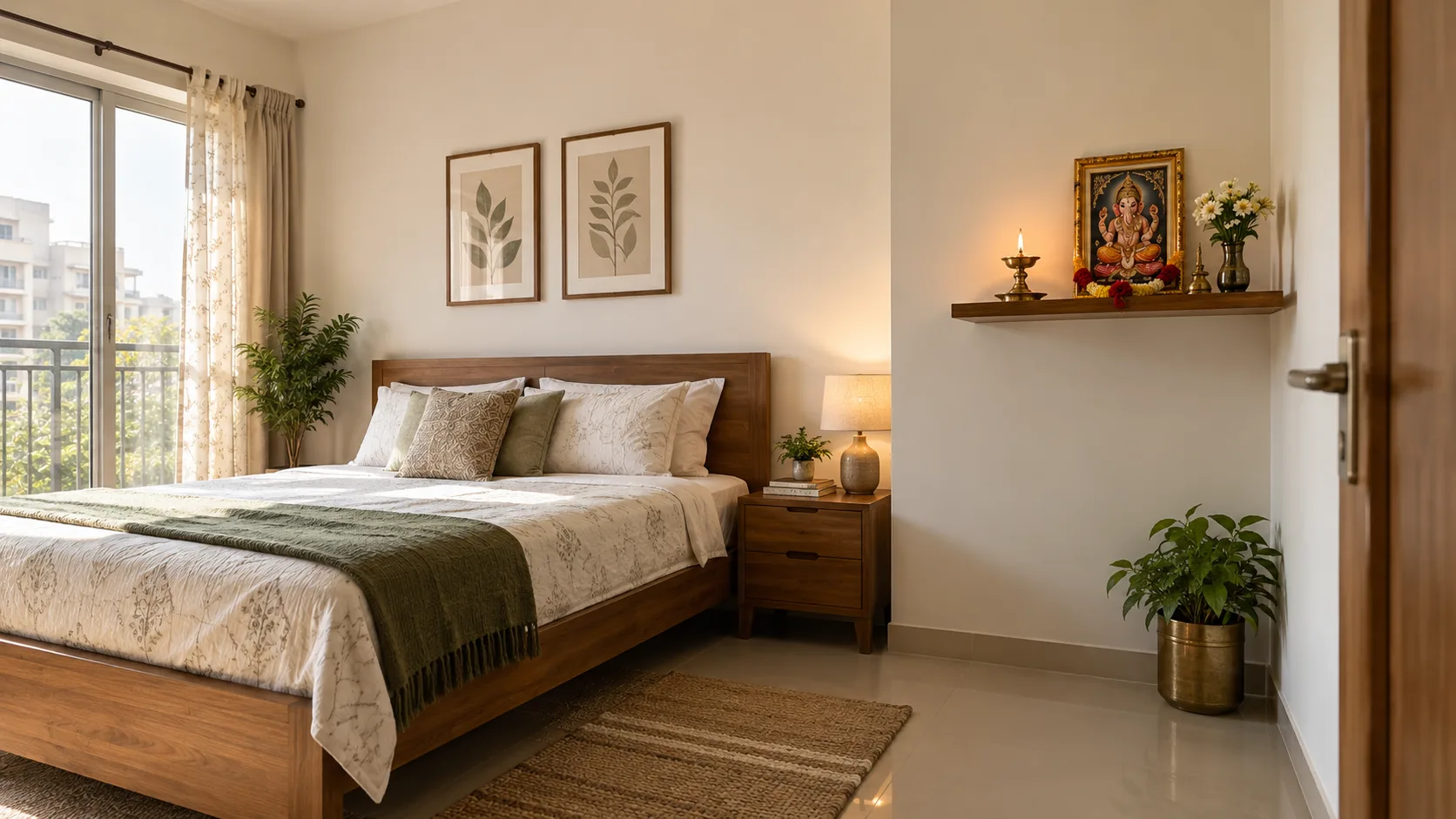
The short answer is: a separate pooja room or dedicated prayer niche is preferred when the home has enough space, but a pooja corner inside a bedroom can be acceptable in compact flats when it is planned with care. Many Indian apartments, studio homes and rented units do not offer a separate prayer room. In those cases, the goal is not to create anxiety. The goal is to maintain cleanliness, privacy, safety and a respectful daily routine.
Traditional Vastu commonly treats the prayer area as a sattvic, calm and uncluttered zone. A bedroom is mainly for rest, privacy and recovery. These two functions can coexist only when the pooja corner is clearly defined rather than casually mixed with clothes, bedding, shoes, luggage or random storage. A small shelf, cabinet or freestanding mandir can work better than a large decorative unit that dominates the sleeping space.
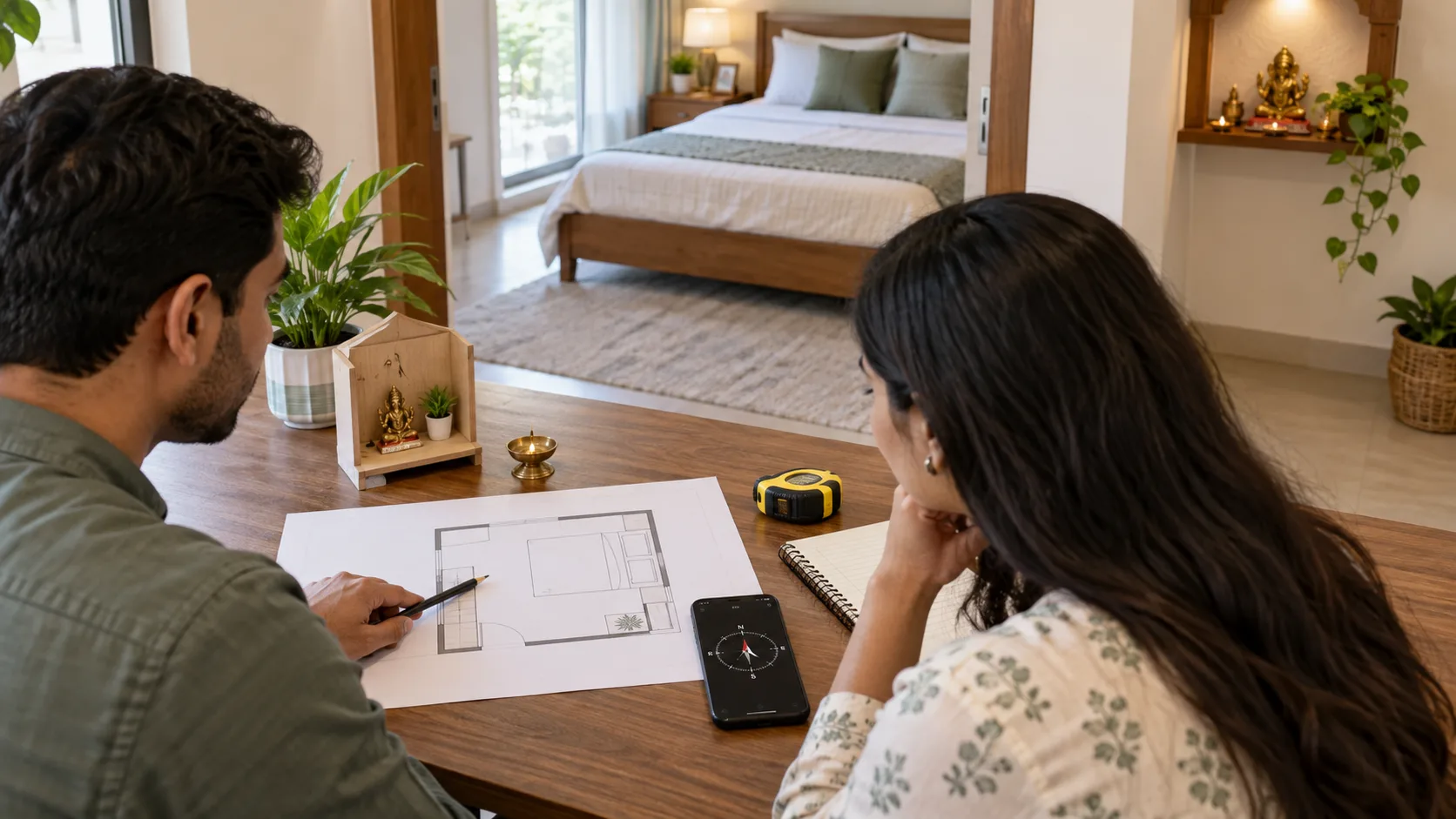
Before placing the mandir, check the room direction correctly. If you are unsure, use the direction-checking guide or the Vastu Direction Finder. Also review your whole home with the Apartment Vastu guide, because a bedroom solution should fit the overall plan rather than becoming an isolated decision.
Best direction for a pooja shelf in bedroom
North-east, east and north are commonly preferred for a prayer corner when the bedroom layout supports them. The north-east is traditionally associated with quiet worship and clarity, east receives helpful morning light, and north is often treated as a calm supporting direction. If one of these walls is available and not shared with a bathroom, wardrobe clutter or heavy electrical equipment, it can be a good first option.
In real flats, the preferred direction may be blocked by a window, built-in wardrobe, attached bathroom wall or the bed itself. Do not force a shelf into a narrow, unsafe or awkward place just to match a compass point. A respectful side wall with clean access is better than a technically preferred corner that is difficult to maintain. Vastu should support daily life, not create a shrine that constantly collects dust or causes movement problems.
The pooja shelf should not ideally face the sleeping person's feet. If the best wall creates a direct line with the bed, use a cabinet door, a simple curtain, a low partition or a slight side placement so the prayer area feels visually separate. This is especially useful in a bedroom used by two people with different waking schedules.
Bedroom pooja placement comparison
| Placement option | When it works | What to check | Better alternative |
|---|---|---|---|
| North-east wall | Clean, bright and not blocked by bed | No bathroom wall, clutter or unsafe shelf height | East or north side wall |
| East wall | Morning light and easy daily access | Direct sun, heat and privacy from bed | Small cabinet with doors |
| North wall | Calm wall away from foot-end of bed | Wardrobe doors and walking space | Freestanding mandir unit |
| Inside wardrobe | Only if it is a dedicated clean cabinet | No clothes, shoes or mixed storage | Separate wall shelf or console |
| Above headboard | Rarely ideal | Heavy feeling, hard cleaning and safety | Side wall away from bed |
| Bathroom shared wall | Use only if unavoidable | Dampness, plumbing, smell and privacy | Opposite dry wall |
When a bedroom pooja corner is practical
Small apartments and 1BHK homes
In a 1BHK apartment, the living room may already hold seating, dining, work-from-home furniture and storage. If the bedroom has a quiet unused side wall, a compact pooja shelf can be more respectful than squeezing a mandir into a busy passage. Keep the unit proportionate to the room. A heavy temple cabinet can make a small bedroom feel cramped, while a neat wall shelf with a drawer can preserve floor space.
Place daily-use items such as matchbox, cotton wicks, prayer book and small vessels in one covered box. Avoid spreading flowers, oil, incense and cleaning cloths across the bedside table. The more compact the home, the more important it becomes to keep the sacred area intentional.
Rental homes where drilling is limited
Renters can use a small freestanding mandir, console table or removable shelf system. Check stability first. A beautiful portable mandir is not useful if it wobbles when a drawer is opened. Keep it away from curtains, loose fabric and the edge of the furniture. If the landlord does not permit wall changes, do not drill without approval.
The Rental Home Vastu guide is helpful for this situation because it focuses on reversible changes. You can improve dignity and cleanliness without permanent renovation.
Bedrooms used by elders
For an elderly person, convenience and safety matter. The shelf should be reachable without climbing, bending deeply or walking through a dark path at dawn. Use soft lighting, stable seating if needed and enough floor clearance. If a diya is part of the routine, choose a protected metal tray and never place the flame close to bedding or curtains.
What should be avoided?
A bedroom pooja corner should not feel like leftover storage. Avoid keeping the mandir inside a wardrobe that also stores clothes, shoes, suitcases or rarely used items. If a wardrobe is the only possible place, dedicate one clean compartment only to prayer items and keep it separate from daily clothing. A cabinet door can help maintain privacy, but it should not turn the shrine into a hidden clutter zone.
Avoid placing the shelf directly above the headboard. It can feel visually heavy and is harder to clean safely. Also avoid placing it at the foot of the bed where it directly faces the feet. In many homes, a slight shift to a side wall solves this issue without any structural change.
If the bedroom has an attached bathroom, try not to use the shared bathroom wall for the pooja shelf. Moisture, plumbing noise and privacy concerns make it less suitable. If the room is fixed and no other wall is available, use the driest section, keep ventilation strong and maintain a clear boundary. Also consider whether a small living-room shelf may be more practical.
For broader prayer-room guidance, read the Pooja Room Vastu guide, Pooja Room Door Vastu and Pooja Room Lighting Vastu.
Practical bedroom pooja examples
1BHK apartment
The couple uses a compact east wall shelf near the bedroom entrance but away from the bed's foot-end. A small cabinet door keeps the space private when guests enter the room. The drawer stores only prayer items, not medicines or random documents.
Master bedroom with attached bathroom
The north-east corner is on the bathroom wall, so the family chooses a dry north side wall instead. The shelf is placed above a narrow console, with a brass tray for lamp safety and no storage underneath except a prayer book box.
Rental flat
The tenant uses a stable freestanding mandir unit because drilling is not allowed. It sits on the east side, away from curtains and the wardrobe swing. A soft electric lamp replaces open flame on busy weekdays.
Shared bedroom
Two siblings share the room, so the family uses a small covered shelf on a calm side wall. The shelf opens only during prayer time, preventing the shrine from feeling exposed while one person is resting or studying.
Storage, privacy and daily routine
A good bedroom pooja corner is not only about direction. It also depends on how the area is used every day. Keep the shelf height comfortable for the person who performs prayer most often. If the shelf is too high, cleaning becomes irregular. If it is too low, it may be disturbed by children, pets or accidental movement.
Use covered storage for lamps, incense, flowers, wicks and prayer books. Avoid storing cash, jewellery, personal files or unrelated medicine in the same unit. A sacred corner can become visually confusing when too many functions are mixed together. For financial storage placement, use the separate Locker Safe Vastu guide.
Privacy matters in a bedroom. If the mandir is visible from the door, consider a tasteful cabinet door or curtain. This is not about hiding the prayer space; it is about protecting the quiet purpose of the room. A simple wooden shutter, cane panel or fabric screen can make the corner feel more intentional.
Lighting, diya and incense safety
Soft warm lighting suits a bedroom pooja shelf. Avoid harsh glare aimed at the pillow or mirror. If you use a traditional diya, place it on a stable metal tray and keep it far from curtains, bed linen, wardrobes and paper. Never leave a flame unattended. In apartments with limited ventilation, an electric diya or small LED lamp may be safer for routine use.
Incense should also be used mindfully. Bedrooms contain fabric and mattresses that absorb fragrance and smoke. If someone has allergies, asthma or sleep sensitivity, reduce incense use, open a window or use a safer alternative. Practical comfort should come before habit.
Pooja room in bedroom checklist
Do
- Prefer north-east, east or north when practical.
- Use a clean side wall away from the bed's foot-end.
- Keep prayer items in dedicated covered storage.
- Choose a stable shelf or freestanding mandir.
- Use soft lighting and safe flame practices.
- Clean the shelf regularly and keep it uncluttered.
Don't
- Mix the shrine with clothes, shoes or luggage.
- Place the shelf directly above the headboard.
- Keep it on a damp attached-bathroom wall if avoidable.
- Let incense smoke collect in the sleeping area.
- Block wardrobe doors or walking paths.
- Create fear-based changes that disturb daily comfort.
For a wider room-by-room review, also read Bedroom Vastu for Sleep, Bedroom Vastu and Vastu Remedies Without Renovation.
Common mistakes to avoid
Treating the pooja shelf like a decoration
A mandir is not just another wall accessory. If it is placed only for appearance, it may end up too high, too close to the bed or too difficult to clean. Start from daily use, not decoration.
Ignoring the bed line
Many problems arise because the shelf directly faces the feet or sits too close to the pillow. A small shift to the side, a cabinet door or a screen can improve both comfort and respect.
Using an unstable temporary table
In rented homes, temporary solutions are common. But a shaky stool or overloaded table is not safe. Choose a compact unit with a stable base, enough depth and no loose electrical wires.
Forgetting maintenance
Oil marks, ash, dust and dried flowers can quickly make the corner untidy. Keep a weekly cleaning routine and remove old offerings promptly. Cleanliness is a practical expression of respect.
Frequently asked questions
Can a pooja room be kept in a bedroom?
A separate pooja room is preferred where space allows, but a bedroom pooja corner can work in compact flats when it is clean, private, safe and clearly separated from sleeping and storage clutter.
Which direction is best for a pooja shelf in a bedroom?
North-east, east and north are common preferences. If these walls are impractical, choose the calmest clean wall with good access and safe daily use.
Can a pooja shelf face the bed?
It is better to avoid a direct line toward the feet. Use a side placement, cabinet door or light screen so the shrine feels respectfully separate from the bed.
Is a mandir inside a wardrobe acceptable?
Only if one compartment is dedicated to the mandir and kept free from clothes, shoes, luggage and unrelated storage. Mixed wardrobe storage is not ideal.
What if the best direction is on an attached bathroom wall?
Use a dry alternative wall where possible. If no choice exists, maintain ventilation, keep the area clean and create a clear boundary from the bathroom side.
Can renters make a bedroom pooja corner without drilling?
Yes. A stable freestanding mandir, console table or removable shelf can work. Follow rental rules and avoid any alteration that is not permitted.
Should I use diya and incense in the bedroom?
Use them carefully and never unattended. Keep flame away from fabric, bedding and curtains. Electric lamps are safer where ventilation or fire safety is a concern.
Can a pooja shelf be placed above the headboard?
It is usually better to avoid this because it can feel heavy and is harder to clean safely. A side wall or separate shelf is more comfortable.
How do I keep the corner clean in a small room?
Keep only essential items, use covered storage, remove dried flowers promptly and wipe the shelf regularly. Do not let it become a general storage spot.
Conclusion
A pooja room inside a bedroom is not the first preference in traditional planning, but it can be handled respectfully in modern apartments. Prefer north-east, east or north when practical, but do not ignore privacy, clean access, bed position, bathroom walls, lighting and safety. A smaller neat corner is better than a large shrine that disrupts sleep or becomes cluttered.
Use Vastu as a planning guide, not as a fear-based rulebook. If your home cannot provide a separate pooja room, create a clean, calm and dedicated prayer space that supports your routine and respects the purpose of both the bedroom and the mandir.
Educational only. Vastu direction preferences are cultural and planning guidance, not medical, architectural, electrical or fire-safety advice.