

On this page
Is a bathroom door facing the bed bad in Vastu?
Many Vastu practitioners prefer an attached bathroom door outside the direct view from the bed. The traditional concern is that a space intended for bathing and waste should feel separate from a space intended for rest. In a new home, a designer can usually plan this separation early. In an existing flat, the door and plumbing may be fixed, so the more useful question is whether you can improve the sightline, privacy and comfort.
There is no reliable basis for saying that a visible bathroom door guarantees illness, arguments or financial loss. A bedroom can still work well with that layout if the bathroom is clean, dry and ventilated, the door closes properly and the bed has enough room around it. Start with things you can actually inspect. Is there a damp smell? Does the door swing toward the bed? Can someone walk to the bathroom at night without hitting furniture?
If you are reviewing a new apartment, compare the bedroom with the wider apartment Vastu guide and the site's bedroom guide. A strong flat layout depends on usable space, natural light, ventilation and daily movement as much as on one door alignment.
What does “facing the bed” really mean?
People often use the phrase for three different layouts. In the first, the bathroom door lines up with the foot of the bed and opens straight toward it. In the second, the bathroom door sits on a side wall but is visible from the pillow. In the third, the door is across a dressing passage, so a person lying down can see it only when it is open. These situations do not call for the same response.
Draw a simple plan showing the bed, bathroom door, bedroom entrance, wardrobe, window and walking path. A photograph from the bed is useful too. Check the door's full swing and the bathroom's ventilation route. If the door is merely visible at an angle, a habit of closing it may be enough. If it opens directly into the bed's footpath, a small change to bed placement or a screen may help more.
Do not confuse the direction the house faces with the bathroom door's sightline. If compass direction matters to your broader plan, confirm it using the direction checking guide. A phone reading beside metal bathroom fittings can be unreliable; use a suitable location and compare readings. The door issue itself is primarily about the bedroom layout you live with.
Practical fixes before renovation
1. Make the door close easily
A door that stays ajar keeps the bathroom constantly in view. Repair a misaligned latch or swollen door, and ensure it opens without scraping the floor. If privacy is the concern, this small repair may do more than a decorative object placed in the corner. Choose a closer only if it suits the door and household; a door that slams at night is not an improvement.
2. Shift the bed only when the room still works
A modest sideways shift can remove the bathroom from the direct foot-end view. Measure the remaining passage to the wardrobe and bedroom entrance before moving anything. Avoid placing the bed under a low cabinet or squeezing one sleeper against a wall to create a symbolic correction. If the new position obstructs the door or airflow, the old position may be preferable.
3. Use a slim visual screen
A freestanding cane, wood or fabric screen can interrupt the sightline without major work. It needs a stable base and must stay outside the bathroom's wet zone. Keep the route wide enough for night use and emergency access. In a very small room, a half-height divider or a narrow console may give the same visual separation with less bulk.
4. Adjust a mirror or lighting
A large mirror can reflect the open bathroom door even when the door does not directly face the bed. Check what the mirror shows from the pillow, then rotate or relocate it if necessary. The mirror placement guide covers other bedroom considerations. Keep gentle night lighting available so the bathroom route is clear without directing a bright beam onto the bed.
Which remedy suits your layout?
| Situation | First action | Optional improvement | Avoid |
|---|---|---|---|
| Door visible only when open | Close after use | Repair latch or add gentle closer | Covering ventilation openings |
| Door lines up with bed foot | Check safe bed shift | Stable slim screen | Blocking the night path |
| Door reflects in mirror | Change mirror angle | Move mirror to side wall | Adding more mirrors |
| Damp smell enters room | Fix moisture source | Improve exhaust and cleaning | Masking smell with fragrance |
| Rented flat with fixed layout | Use reversible habits | Freestanding screen or furniture shift | Unapproved drilling |
Ventilation matters more than keeping the door shut
Closing the bathroom door can protect privacy while you sleep, but a wet bathroom also needs a way to dry. Use the exhaust fan or window appropriately after bathing. Wipe persistent standing water, keep floor drains clear and repair dripping taps, leaking supply lines or failing seals. A permanently closed, damp room is a poor result even if the bedroom sightline looks tidy.
If the bathroom wall shows staining or a musty smell persists, investigate the moisture source instead of covering the wall with panelling. A decorative screen cannot fix seepage. The bathroom smell and leak guide and water leakage guide help you separate cleaning, drainage and repair tasks. Seek a qualified professional for persistent leaks or electrical issues near water.
Keep towels and wet laundry out of the sleeping area when possible. A dry bathroom mat, working exhaust and well maintained door are modest changes, but they have clear daily value. If your family leaves the door open for ventilation, consider running the exhaust while the door is closed, then opening it briefly when the room has dried. Follow the ventilation setup actually provided in your flat.
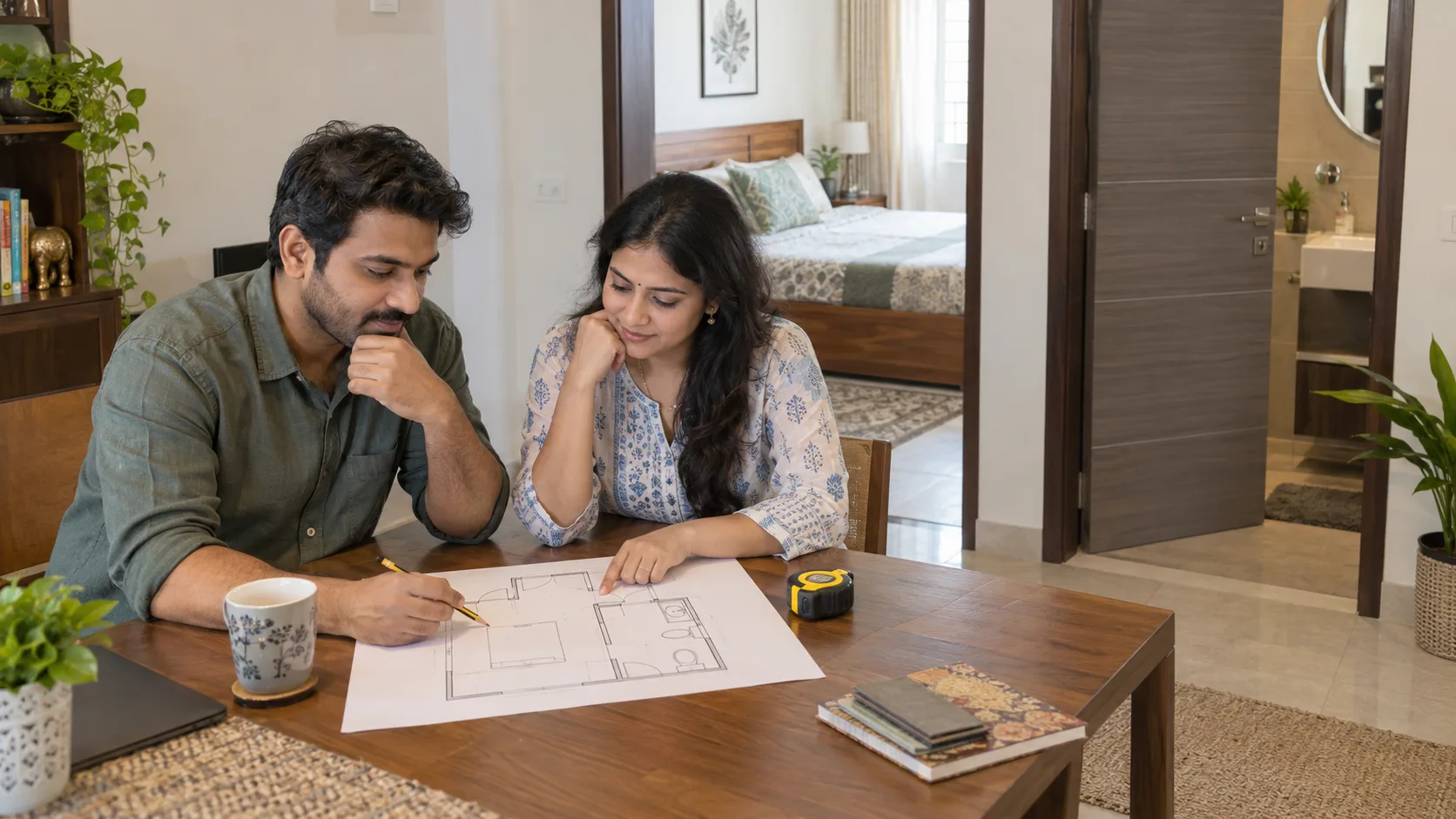
Three realistic planning examples
Compact 2BHK master bedroom
The attached bathroom door is opposite the foot of the bed. Moving the bed 20 centimetres leaves the wardrobe usable and shifts the direct line. A narrow screen beside the dresser adds privacy without narrowing the route to the bathroom. The family keeps the door closed overnight and runs the exhaust after showers.
Rented one bedroom flat
The tenant cannot change hinges or drill into the wall. The bathroom door closes properly, but a mirror across the bed reflects the doorway. Moving the mirror to the wardrobe side removes the reflection. The household adds a small freestanding screen only if the remaining passage stays clear.
New flat before purchase
A buyer notices the bathroom door from the planned bed position. On the actual floor plan, the room is wide enough for a side wall bed, but the proposed wardrobe would block that option. The buyer asks for furniture measurements and checks bathroom ventilation before deciding whether the flat suits the family.
Guest bedroom with shared bathroom
The door is visible from the guest bed through a short passage. Because the door is not at the foot-end and the bathroom is dry and well ventilated, the owner simply maintains the latch and places a small lamp near the passage. A large partition would crowd a room used only occasionally.
These are illustrative scenarios, not measured case studies. They show how the same Vastu question changes with room size and daily use. For planning another sleeping arrangement, see bedroom Vastu for sleep; for fixed small layouts, see small apartment Vastu.
Should you change the bathroom door during renovation?
If you are already renovating, an architect or qualified contractor can assess whether a door can be relocated or changed to a suitable sliding or outward opening type. That decision involves wall structure, plumbing, waterproofing, privacy, ventilation and local building requirements. A sliding door may save swing space, but the track and seal must suit a bathroom and remain easy to clean.
Do not start demolition solely because a Vastu diagram labels the door as a defect. Ask whether the change makes the room more usable and whether the expense is justified. Many apartments restrict wet area alterations; confirm society or building rules before work begins. The remedies without renovation guide offers reversible ideas to try first.
Bathroom door facing bed: do's and don'ts
Do
- Check the view from the pillow and the bed's foot.
- Keep the door functional and easy to close.
- Ventilate and dry the bathroom after use.
- Preserve a clear night walking path.
- Use a stable screen if it improves privacy.
- Investigate leaks and persistent smells promptly.
Don't
- Block the bathroom door with a heavy unit.
- Trap moisture behind an unwashed curtain.
- Move the bed into an uncomfortable corner.
- Assume a compass rule can diagnose dampness.
- Cover mould or seepage with décor.
- Alter plumbing or doors without permission.
At a viewing, take five minutes to check the bed position, wardrobe opening, bathroom ventilation, latch and evidence of leaks. The flat buying checklist and toilet Vastu for apartments can help you review the rest of the property. A single visible door should be considered alongside the actual condition of the home.
Common mistakes
Buying a large screen for a tiny passage
A screen that tips over or blocks the bathroom route creates a new problem. Measure the door swing and walking clearance first. Choose a smaller divider only if it can stand securely outside the path.
Keeping the door closed while dampness grows
Privacy is useful, but moisture must be removed. Repair a failed exhaust or leak before adding scent, plants or decoration. A fresh, dry bathroom is more valuable than a symbolic correction.
Changing a good bed position for one rule
Moving the bed may put it against a window, leave one sleeper with no access, or block a wardrobe. Compare the entire room before changing it. The best solution may be a door habit or a subtle visual boundary.
Frequently asked questions
Is a bathroom door facing the bed bad in Vastu?
Many practitioners prefer to separate the bathroom from the direct bed view. In a fixed flat, a closed door, reliable ventilation and privacy measures are practical improvements. The layout does not guarantee harm.
What is the simplest remedy for a toilet door facing the bed?
Start with a door that closes properly, a dry bathroom and a working exhaust. If the direct view still bothers you, consider a modest bed shift or slim screen after checking clearances.
Should the attached bathroom door stay closed all the time?
Close it for privacy and while sleeping if comfortable, but allow the bathroom to dry using its ventilation system. Do not leave dampness trapped behind a closed door.
Can I use a curtain in front of the bathroom door?
A washable curtain can soften the view if it stays outside the wet area and never blocks the door. A stable screen may be easier to keep dry and clean.
Will shifting the bed solve the problem?
It can improve the sightline when the shift leaves room to walk, open the wardrobe and use the bedroom door. Do not trade away comfortable sleep or safe access.
What can renters do without renovation?
Try closing the door, improving ventilation, adjusting furniture or using a freestanding screen. Ask permission before changing hinges, adding a closer or drilling.
What if a mirror reflects the bathroom door?
Look at the mirror from the bed. If it reflects the open doorway and feels distracting, change its angle or position. This is a simple visual fix.
Should I reject a flat because the bathroom door faces the bed?
Assess the full layout first: bed options, door swing, ventilation, leaks and usable storage. One door alignment rarely tells you whether a home will suit daily life.
Conclusion
A bathroom door facing the bed is best treated as a room planning question. Traditional Vastu favours a calmer separation between rest and bathing, while a modern flat may already have fixed walls and plumbing. Check the view from the bed, close a working door, keep the bathroom dry and ventilated, and use a small screen or furniture shift only when the room still functions well.
If you are buying or renovating, examine the plan before committing to costly changes. If you are renting, start with reversible steps. A comfortable bedroom and a well maintained bathroom are the most useful outcomes of this review.
Educational guidance. Vastu preferences do not replace qualified building, plumbing, ventilation or health advice.